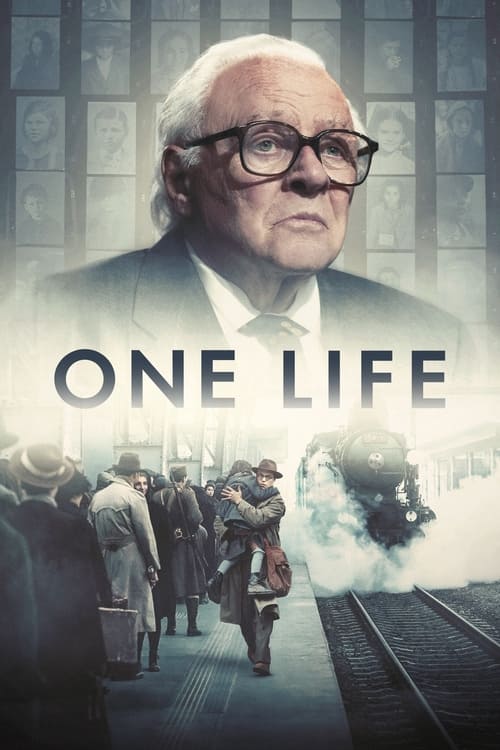
One Life
British stockbroker Nicholas Winton visits Czechoslovakia in the 1930s and forms plans to assist in the rescue of Jewish children before the onset of World War II, in an operation that came to be known as the Kindertransport.
The film earned $51.4M at the global box office.
3 wins & 2 nominations


Plot Structure
Story beats plotted across runtime


Narrative Arc
Emotional journey through the story's key moments
Story Circle
Blueprint 15-beat structure
Arcplot Score Breakdown
Weighted: Precision (70%) + Arc (15%) + Theme (15%)
One Life (2023) reveals deliberately positioned dramatic framework, characteristic of James Hawes's storytelling approach. This structural analysis examines how the film's 15-point plot structure maps to proven narrative frameworks across 1 hour and 49 minutes. With an Arcplot score of 7.4, the film balances conventional beats with creative variation.
Characters
Cast & narrative archetypes

Nicholas Winton (Old)
Nicholas Winton (Young)
Grete Winton
Doreen Warriner
Trevor Chadwick
Babette Winton
Martin Blake
Esther Kraus
Main Cast & Characters
Nicholas Winton (Old)
Played by Anthony Hopkins
The elderly Nicholas Winton in 1988, haunted by memories of his rescue mission and struggling with whether his efforts were enough, as he sorts through his scrapbook of the Kindertransport operation.
Nicholas Winton (Young)
Played by Johnny Flynn
The young London stockbroker in 1938-1939 who organized the rescue of 669 Jewish children from Nazi-occupied Czechoslovakia, driven by moral conviction and relentless determination.
Grete Winton
Played by Helena Bonham Carter
Nicholas's devoted wife who supports him through his later years and encourages him to share his story with the world, helping him process his survivor's guilt.
Doreen Warriner
Played by Romola Garai
A courageous British aid worker already in Prague helping refugees when Nicholas arrives, who becomes instrumental in coordinating the rescue operation on the ground.
Trevor Chadwick
Played by Alex Sharp
A dedicated schoolteacher who joins the rescue effort in Prague and takes on the dangerous work of organizing the children's transport out of Czechoslovakia.
Babette Winton
Played by Helena Bonham Carter
Nicholas's mother, a German-Jewish immigrant who fully supports her son's humanitarian mission and works tirelessly alongside him to find foster families for the children.
Martin Blake
Played by Jonathan Pryce
A British official who initially poses bureaucratic obstacles but eventually helps facilitate the rescue operation.
Esther Kraus
Played by Lena Olin
A Jewish mother in Prague desperately trying to save her children by getting them on the Kindertransport, representing the families who trusted Winton with their children's lives.
Structural Analysis
The Status Quo at 2 minutes (2% through the runtime) establishes 1988: Elderly Nicky Winton lives a quiet life in Maidenhead, haunted by memories. His scrapbook of children's photos remains hidden, representing unfinished business and suppressed guilt over those he couldn't save.. Of particular interest, this early placement immediately immerses viewers in the story world.
The inciting incident occurs at 12 minutes when 1938: Nicky witnesses the desperate conditions in the refugee camps firsthand—children separated from parents, families sleeping in freezing conditions. A mother begs him to take her children to safety. He realizes the enormity of what's at stake.. At 11% through the film, this Disruption aligns precisely with traditional story structure. This beat shifts the emotional landscape, launching the protagonist into the central conflict.
The First Threshold at 26 minutes marks the transition into Act II, occurring at 24% of the runtime. This illustrates the protagonist's commitment to 1938: Nicky makes the active decision to organize the rescue operation himself. He sets up an office in his hotel room, begins forging documents, and commits fully to the impossible mission of getting children out before war breaks out., moving from reaction to action.
At 55 minutes, the Midpoint arrives at 50% of the runtime—precisely centered, creating perfect narrative symmetry. Of particular interest, this crucial beat False victory: A major transport succeeds, hundreds of children are saved. Nicky feels triumphant. The operation seems sustainable. But the moment is undercut by the knowledge that war is approaching and time is running out. Stakes raise dramatically., fundamentally raising what's at risk. The emotional intensity shifts, dividing the narrative into clear before-and-after phases.
The Collapse moment at 78 minutes (71% through) represents the emotional nadir. Here, September 1, 1939: War breaks out. The largest transport—250 children waiting at Prague station—is cancelled. The train never leaves. All 250 children perish in the Holocaust. Nicky's greatest failure, the source of his decades of guilt. The "whiff of death" is literal and overwhelming., demonstrates the protagonist at their lowest point. This beat's placement in the final quarter sets up the climactic reversal.
The Second Threshold at 88 minutes initiates the final act resolution at 81% of the runtime. 1988: Nicky agrees to appear on BBC's "That's Life!" after his scrapbook is discovered. This decision to finally confront his past publicly represents synthesis—combining his 1938 actions with 1988 acceptance. He's ready to face the children he saved, now adults., demonstrating the transformation achieved throughout the journey.
Emotional Journey
One Life's emotional architecture traces a deliberate progression across 15 carefully calibrated beats.
Narrative Framework
This structural analysis employs structural analysis methodology used to understand storytelling architecture. By mapping One Life against these established plot points, we can identify how James Hawes utilizes or subverts traditional narrative conventions. The plot point approach reveals not only adherence to structural principles but also creative choices that distinguish One Life within the history genre.
Comparative Analysis
Additional history films include The Attacks Of 26/11, Joyeux Noel and Rob Roy.
Plot Points by Act
Act I
SetupStatus Quo
1988: Elderly Nicky Winton lives a quiet life in Maidenhead, haunted by memories. His scrapbook of children's photos remains hidden, representing unfinished business and suppressed guilt over those he couldn't save.
Theme
Nicky's wife Grete tells him, "You can't save everyone, Nicky. You did what you could." This statement of the film's central theme: the tension between the lives saved and the lives lost, and whether one good deed is enough when others suffer.
Worldbuilding
Dual timeline established. 1988: Nicky is retired, emotionally withdrawn. 1938: Young Nicky arrives in Prague at his friend Martin Blake's request, encountering refugee camps filled with Jewish families fleeing the Nazis. The scope of the crisis becomes clear.
Disruption
1938: Nicky witnesses the desperate conditions in the refugee camps firsthand—children separated from parents, families sleeping in freezing conditions. A mother begs him to take her children to safety. He realizes the enormity of what's at stake.
Resistance
Nicky debates whether he, a stockbroker with no political power, can make a difference. Martin and Doreen Warriner push him to act. He wrestles with the impossibility of the task: finding homes, navigating bureaucracy, raising funds. 1988: His mother's death triggers memories.
Act II
ConfrontationFirst Threshold
1938: Nicky makes the active decision to organize the rescue operation himself. He sets up an office in his hotel room, begins forging documents, and commits fully to the impossible mission of getting children out before war breaks out.
Mirror World
Nicky meets the children and families he's trying to save face-to-face. A young girl gives him a drawing. These personal connections transform the mission from abstract numbers to individual lives, embodying the theme of personal responsibility versus systemic evil.
Premise
The rescue operation unfolds: Nicky navigates British bureaucracy, finds foster families, arranges trains. Multiple transports succeed. Parallel 1988 timeline shows his reluctance to discuss the past. The "fun and games" of watching an ordinary man accomplish extraordinary things through determination and paperwork.
Midpoint
False victory: A major transport succeeds, hundreds of children are saved. Nicky feels triumphant. The operation seems sustainable. But the moment is undercut by the knowledge that war is approaching and time is running out. Stakes raise dramatically.
Opposition
Pressure intensifies as war looms. British bureaucracy becomes more difficult. Funding dries up. Families become harder to find. The Nazis' grip tightens. Each successful transport becomes more desperate. 1988: Nicky resists when people try to honor him, haunted by failure.
Collapse
September 1, 1939: War breaks out. The largest transport—250 children waiting at Prague station—is cancelled. The train never leaves. All 250 children perish in the Holocaust. Nicky's greatest failure, the source of his decades of guilt. The "whiff of death" is literal and overwhelming.
Crisis
1988: Nicky confronts his darkest emotions. He's carried the weight of those 250 children for 50 years, unable to forgive himself. Grete and others try to comfort him, but he cannot see past the lives lost to recognize the 669 lives saved.
Act III
ResolutionSecond Threshold
1988: Nicky agrees to appear on BBC's "That's Life!" after his scrapbook is discovered. This decision to finally confront his past publicly represents synthesis—combining his 1938 actions with 1988 acceptance. He's ready to face the children he saved, now adults.
Synthesis
The "That's Life!" appearance unfolds. Host Esther Rantzen asks if anyone in the audience owes their life to Nicky. One person stands, then another, then the entire audience—all the children he saved, now in their 60s. Nicky is overwhelmed. He finally sees the impact of his actions.
Transformation
Nicky embraces the survivors, tears streaming. The final image mirrors the opening: Nicky with his scrapbook, but now at peace. The children's photos represent not guilt but legacy. He transformed from a man haunted by 250 deaths to one who celebrates 669 lives—and their thousands of descendants.