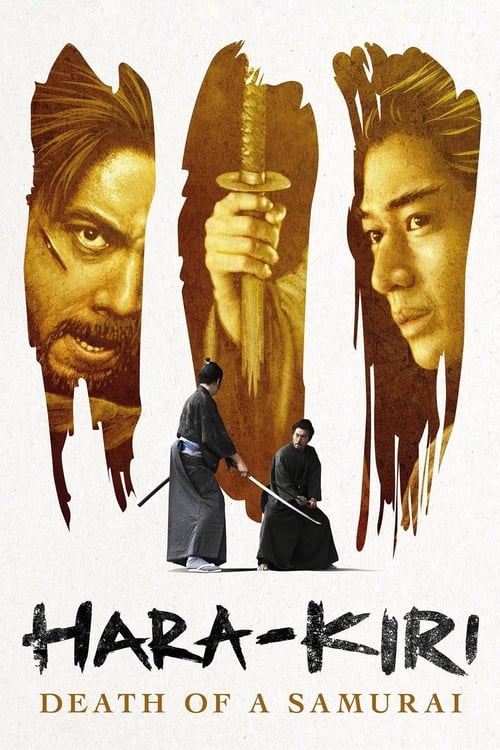
Hara-Kiri: Death of a Samurai
A tale of revenge, honor and disgrace, centering on a poverty-stricken samurai who discovers the fate of his ronin son-in-law, setting in motion a tense showdown of vengeance against the house of a feudal lord.
The film earned $5.4M at the global box office.


Plot Structure
Story beats plotted across runtime


Narrative Arc
Emotional journey through the story's key moments
Story Circle
Blueprint 15-beat structure
Arcplot Score Breakdown
Weighted: Precision (70%) + Arc (15%) + Theme (15%)
Hara-Kiri: Death of a Samurai (2011) exhibits strategically placed story structure, characteristic of Takashi Miike's storytelling approach. This structural analysis examines how the film's 15-point plot structure maps to proven narrative frameworks across 2 hours and 8 minutes. With an Arcplot score of 6.9, the film balances conventional beats with creative variation.
Characters
Cast & narrative archetypes

Hanshiro Tsugumo
Motome Chijiiwa
Kageyu Saito
Miho Tsugumo
Kingo Tsugumo
Jinai Chijiiwa
Main Cast & Characters
Hanshiro Tsugumo
Played by Ebizo Ichikawa
An elderly ronin who arrives at the Ii clan estate requesting to commit ritual suicide, but harbors a deeper agenda to expose the clan's cruelty.
Motome Chijiiwa
Played by Eita Nagayama
Hanshiro's son-in-law, a desperate young ronin who previously came to the estate seeking money through a false suicide request, leading to tragic consequences.
Kageyu Saito
Played by Koji Yakusho
The stern senior counselor of the Ii clan who oversees Hanshiro's request and recounts Motome's fate, representing rigid adherence to samurai code.
Miho Tsugumo
Played by Hikari Mitsushima
Hanshiro's beloved daughter and Motome's wife, who suffers from illness while her husband desperately seeks help for their family.
Kingo Tsugumo
Played by Takato Hosoyamada
Hanshiro and Miho's young grandson, an innocent child caught in the tragedy of his family's poverty and the clan's cruelty.
Jinai Chijiiwa
Played by Munetaka Aoki
Hanshiro's former lord and friend, a wise samurai who became a mentor figure before his death led to Hanshiro becoming ronin.
Structural Analysis
The Status Quo at 1 minutes (1% through the runtime) establishes Hanshiro Tsugumo arrives at the House of Ii, announcing his intention to commit ritual suicide in their courtyard. The opening establishes the rigid formality of the samurai world and the practice of honor-driven seppuku.. The analysis reveals that this early placement immediately immerses viewers in the story world.
The inciting incident occurs at 16 minutes when The revelation that Motome was forced to commit seppuku with his own bamboo blade—a horrifically painful and disgraceful death—reveals the cruelty beneath the veneer of honor. This disrupts any assumption that the House of Ii operates with true nobility.. At 12% through the film, this Disruption aligns precisely with traditional story structure. This beat shifts the emotional landscape, launching the protagonist into the central conflict.
The First Threshold at 32 minutes marks the transition into Act II, occurring at 25% of the runtime. This indicates the protagonist's commitment to Hanshiro reveals that Motome was his son-in-law, married to his daughter Miho. He commits to telling his own story, crossing the threshold from passive listener to active storyteller and challenger of the House of Ii's authority., moving from reaction to action.
At 65 minutes, the Midpoint arrives at 50% of the runtime—precisely centered, creating perfect narrative symmetry. The analysis reveals that this crucial beat Hanshiro reveals the full horror of Motome's death and its aftermath: Miho and Kingo died of illness shortly after, their suffering compounded by Motome's failure to obtain help. The emotional devastation is complete, transforming Hanshiro's purpose from one of honor to one of vengeance., fundamentally raising what's at risk. The emotional intensity shifts, dividing the narrative into clear before-and-after phases.
The Collapse moment at 96 minutes (75% through) represents the emotional nadir. Here, The House of Ii, abandoning all pretense of honor, orders their samurai to kill Hanshiro with firearms rather than face him in honest combat. This represents the death of the samurai code itself—the very thing the house claimed to uphold., indicates the protagonist at their lowest point. This beat's placement in the final quarter sets up the climactic reversal.
The Second Threshold at 103 minutes initiates the final act resolution at 80% of the runtime. Hanshiro is finally struck down by gunfire. His death is not a defeat but a threshold to immortality—his sacrifice has revealed the truth about the House of Ii's hollow honor, even if they will try to conceal it., demonstrating the transformation achieved throughout the journey.
Emotional Journey
Hara-Kiri: Death of a Samurai's emotional architecture traces a deliberate progression across 15 carefully calibrated beats.
Narrative Framework
This structural analysis employs systematic plot point analysis that identifies crucial turning points. By mapping Hara-Kiri: Death of a Samurai against these established plot points, we can identify how Takashi Miike utilizes or subverts traditional narrative conventions. The plot point approach reveals not only adherence to structural principles but also creative choices that distinguish Hara-Kiri: Death of a Samurai within the drama genre.
Takashi Miike's Structural Approach
Among the 6 Takashi Miike films analyzed on Arcplot, the average structural score is 6.9, demonstrating varied approaches to story architecture. Hara-Kiri: Death of a Samurai exemplifies the director's characteristic narrative technique. For comparative analysis, explore the complete Takashi Miike filmography.
Comparative Analysis
Additional drama films include After Thomas, South Pacific and Dirty Dancing: Havana Nights. For more Takashi Miike analyses, see One Missed Call, The Great Yokai War and Laplace's Witch.
Plot Points by Act
Act I
SetupStatus Quo
Hanshiro Tsugumo arrives at the House of Ii, announcing his intention to commit ritual suicide in their courtyard. The opening establishes the rigid formality of the samurai world and the practice of honor-driven seppuku.
Theme
Saito Kageyu, the senior counselor, warns Hanshiro about "suicide bluffers" who use the threat of seppuku to extort money. This introduces the film's central theme: the conflict between authentic honor and the hollow performance of samurai codes.
Worldbuilding
Saito recounts the tale of Motome Chijiiwa, a previous ronin who came seeking to commit seppuku. The story establishes the harsh reality of masterless samurai in peacetime, the decline of the warrior class, and the ruthless enforcement of samurai codes by the House of Ii.
Disruption
The revelation that Motome was forced to commit seppuku with his own bamboo blade—a horrifically painful and disgraceful death—reveals the cruelty beneath the veneer of honor. This disrupts any assumption that the House of Ii operates with true nobility.
Resistance
Saito continues the story of Motome's death as a warning to Hanshiro, believing this tale will deter him from his stated purpose. The narrative explores Motome's desperate circumstances and the house's pitiless response, setting up the moral stakes.
Act II
ConfrontationFirst Threshold
Hanshiro reveals that Motome was his son-in-law, married to his daughter Miho. He commits to telling his own story, crossing the threshold from passive listener to active storyteller and challenger of the House of Ii's authority.
Mirror World
Flashback to Hanshiro's peaceful life with his family: his daughter Miho, son-in-law Motome, and grandson Kingo. This loving domestic world mirrors and contrasts with the cold formality of the House of Ii, representing genuine human connection versus empty ritual.
Premise
Hanshiro's extended flashback narrative explores the "premise" of the film: examining what true honor means. We see Motome's desperate struggle to care for his sick family, his decision to sell his sword blades, and the human story behind his arrival at the House of Ii.
Midpoint
Hanshiro reveals the full horror of Motome's death and its aftermath: Miho and Kingo died of illness shortly after, their suffering compounded by Motome's failure to obtain help. The emotional devastation is complete, transforming Hanshiro's purpose from one of honor to one of vengeance.
Opposition
Hanshiro escalates his challenge to the house by revealing he has defeated and humiliated three of their samurai, taking their topknots. The house's attempts to maintain face and authority intensify as Hanshiro systematically dismantles their pretense of honor.
Collapse
The House of Ii, abandoning all pretense of honor, orders their samurai to kill Hanshiro with firearms rather than face him in honest combat. This represents the death of the samurai code itself—the very thing the house claimed to uphold.
Crisis
Hanshiro fights valiantly against overwhelming numbers, knowing he cannot win but determined to expose the house's corruption. This is his dark night of the soul—the moment where he completes his mission even as he faces certain death.
Act III
ResolutionSecond Threshold
Hanshiro is finally struck down by gunfire. His death is not a defeat but a threshold to immortality—his sacrifice has revealed the truth about the House of Ii's hollow honor, even if they will try to conceal it.
Synthesis
The aftermath of the battle shows the house attempting to restore order and save face. Saito orders the courtyard repaired and the incident concealed, but the audience has witnessed the truth. The film synthesizes its critique: honor without humanity is meaningless.
Transformation
The final image returns to the immaculate, empty courtyard of the House of Ii, its armor gleaming but hollow. The contrast with the opening is profound: what appeared honorable is now revealed as a facade. The transformation is in the audience's understanding, not the institution.