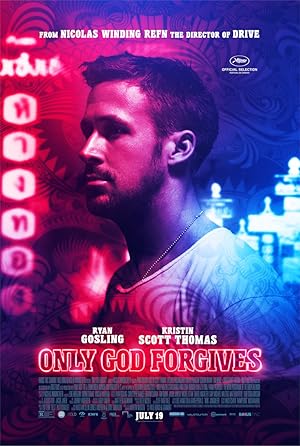
Only God Forgives
Bangkok. Ten years ago Julian (Ryan Gosling) killed a man and went on the run. Now he manages a Thai boxing club as a front for a drugs operation. Respected in the criminal underworld, deep inside, he feels empty. When Julian's brother murders an underage prostitute, the Police call on retired cop Chang (Vithaya Pansringarm) - the Angel of Vengeance. Chang allows the father to kill his daughter's murderer, then "restores order" by chopping off the man's right hand. Julian's mother Crystal (Dame Kristin Scott Thomas) - the head of a powerful criminal organization - arrives in Bangkok to collect her son's body. She dispatches Julian to find his killers and "raise Hell".
Despite its modest budget of $4.8M, Only God Forgives became a box office success, earning $10.3M worldwide—a 115% return.
14 wins & 20 nominations


Plot Structure
Story beats plotted across runtime


Narrative Arc
Emotional journey through the story's key moments
Story Circle
Blueprint 15-beat structure
Arcplot Score Breakdown
Weighted: Precision (70%) + Arc (15%) + Theme (15%)
Only God Forgives (2013) exhibits deliberately positioned narrative architecture, characteristic of Nicolas Winding Refn's storytelling approach. This structural analysis examines how the film's 15-point plot structure maps to proven narrative frameworks across 1 hour and 30 minutes. With an Arcplot score of 7.3, the film balances conventional beats with creative variation.
Characters
Cast & narrative archetypes

Julian
Crystal
Chang
Billy
Mai
Main Cast & Characters
Julian
Played by Ryan Gosling
A drug smuggler running a Thai boxing club in Bangkok who is haunted by guilt and controlled by his domineering mother. He struggles with repressed violence and seeks redemption through suffering.
Crystal
Played by Kristin Scott Thomas
Julian and Billy's ruthless mother and head of a criminal empire who arrives in Bangkok to avenge her eldest son's death. She is manipulative, cruel, and harbors dark secrets about her family.
Chang
Played by Vithaya Pansringarm
A mysterious police lieutenant who operates as a godlike figure of justice in Bangkok's underworld. He dispenses brutal retribution with his sword while maintaining an eerily calm demeanor.
Billy
Played by Tom Burke
Julian's older brother who commits a horrific crime that sets the story in motion. He is impulsive, violent, and represents unbridled evil.
Mai
Played by Rhatha Phongam
A Thai prostitute whom Julian hires as a companion. She represents a potential for connection that Julian is too damaged to fully embrace.
Structural Analysis
The Status Quo at 1 minutes (1% through the runtime) establishes Julian stands in the doorway of his Bangkok boxing club, arms at his sides, a hollow man running a Muay Thai gym as a front for drug smuggling. His clenched fists suggest barely suppressed violence in a neon-lit criminal underworld.. Structural examination shows that this early placement immediately immerses viewers in the story world.
The inciting incident occurs at 10 minutes when Julian learns his brother Billy has been killed. The phone call shatters his carefully maintained equilibrium in the criminal underworld, forcing him into a web of familial obligation and violence he cannot escape.. At 11% through the film, this Disruption aligns precisely with traditional story structure. This beat shifts the emotional landscape, launching the protagonist into the central conflict.
The First Threshold at 22 minutes marks the transition into Act II, occurring at 24% of the runtime. This demonstrates the protagonist's commitment to Julian chooses to confront Chang at his mother's command. He enters the restaurant where Chang sits alone, issuing the challenge that will draw him deeper into the cycle of violence. This is submission to Crystal's will, not heroism., moving from reaction to action.
At 45 minutes, the Midpoint arrives at 50% of the runtime—precisely centered, creating perfect narrative symmetry. Of particular interest, this crucial beat Chang kills Gordon, Crystal's lieutenant, in a karaoke bar, singing mournfully before and after the execution. The stakes raise - Chang is now directly targeting Crystal's operation. Julian realizes his mother's vengeance campaign will destroy them all. False defeat: they seem powerless against the Angel of Vengeance., fundamentally raising what's at risk. The emotional intensity shifts, dividing the narrative into clear before-and-after phases.
The Collapse moment at 66 minutes (73% through) represents the emotional nadir. Here, Chang executes Crystal with his sword, killing Julian's mother in front of him. The whiff of death is literal - the source of Julian's psychological torment dies, but he is too broken to feel liberation, only deeper emptiness and the weight of required vengeance., demonstrates the protagonist at their lowest point. This beat's placement in the final quarter sets up the climactic reversal.
The Second Threshold at 72 minutes initiates the final act resolution at 80% of the runtime. Julian kidnaps Chang's daughter, forcing the final confrontation. But this is not synthesis - it's capitulation to the cycle. Julian realizes he cannot kill Chang, cannot become the avenger his mother demanded. He offers his hands for punishment instead., demonstrating the transformation achieved throughout the journey.
Emotional Journey
Only God Forgives's emotional architecture traces a deliberate progression across 15 carefully calibrated beats.
Narrative Framework
This structural analysis employs proven narrative structure principles that track dramatic progression. By mapping Only God Forgives against these established plot points, we can identify how Nicolas Winding Refn utilizes or subverts traditional narrative conventions. The plot point approach reveals not only adherence to structural principles but also creative choices that distinguish Only God Forgives within the action genre.
Nicolas Winding Refn's Structural Approach
Among the 2 Nicolas Winding Refn films analyzed on Arcplot, the average structural score is 7.3, reflecting strong command of classical structure. Only God Forgives represents one of the director's most structurally precise works. For comparative analysis, explore the complete Nicolas Winding Refn filmography.
Comparative Analysis
Additional action films include The Bad Guys, Puss in Boots and Venom: The Last Dance. For more Nicolas Winding Refn analyses, see Drive.
Plot Points by Act
Act I
SetupStatus Quo
Julian stands in the doorway of his Bangkok boxing club, arms at his sides, a hollow man running a Muay Thai gym as a front for drug smuggling. His clenched fists suggest barely suppressed violence in a neon-lit criminal underworld.
Theme
Chang, the Angel of Vengeance, allows the father to kill Billy's murderer, then permits the father's men to blind him as equal retribution. "An eye for an eye" - the film's meditation on justice, vengeance, and whether violence can ever restore balance.
Worldbuilding
Bangkok's criminal ecosystem is established: Julian and Billy's drug operation, the boxing club front, the seedy underbelly of prostitution and violence. Billy rapes and murders a 16-year-old prostitute, setting the cycle of vengeance in motion. Chang delivers his brutal justice.
Disruption
Julian learns his brother Billy has been killed. The phone call shatters his carefully maintained equilibrium in the criminal underworld, forcing him into a web of familial obligation and violence he cannot escape.
Resistance
Crystal, Julian's monstrous mother, arrives in Bangkok demanding vengeance for Billy. She dominates Julian psychologically, emasculating him at dinner, forcing him toward confrontation with Chang. Julian resists, knowing Billy deserved his fate, but cannot defy his mother's will.
Act II
ConfrontationFirst Threshold
Julian chooses to confront Chang at his mother's command. He enters the restaurant where Chang sits alone, issuing the challenge that will draw him deeper into the cycle of violence. This is submission to Crystal's will, not heroism.
Mirror World
Mai, the prostitute Julian is obsessed with, represents an alternative to violence - a fantasy of connection and normalcy. She becomes the thematic mirror showing what Julian wants but cannot have: intimacy, escape, redemption from his mother's grip.
Premise
The promise of the premise: stylized violence as ritual. Chang systematically dismantles Crystal's hired killers with his sword. Julian fantasizes about cutting open his own hands. The film delivers its hypnotic, nightmarish vision of Bangkok as purgatory where damaged men enact cycles of punishment.
Midpoint
Chang kills Gordon, Crystal's lieutenant, in a karaoke bar, singing mournfully before and after the execution. The stakes raise - Chang is now directly targeting Crystal's operation. Julian realizes his mother's vengeance campaign will destroy them all. False defeat: they seem powerless against the Angel of Vengeance.
Opposition
Crystal intensifies her campaign, torturing Chang's informant. Julian's psychological deterioration accelerates - his Oedipal nightmare at dinner where Crystal exposes his sexual inadequacy. Chang closes in. Julian's fantasy life and reality blur as violence becomes inevitable.
Collapse
Chang executes Crystal with his sword, killing Julian's mother in front of him. The whiff of death is literal - the source of Julian's psychological torment dies, but he is too broken to feel liberation, only deeper emptiness and the weight of required vengeance.
Crisis
Julian sits in darkness with his mother's corpse, processing the loss. He hallucinates cutting open his own abdomen in front of Mai, a symbolic self-destruction. The dark night of the soul: Julian must decide whether to continue the cycle of vengeance or break free.
Act III
ResolutionSecond Threshold
Julian kidnaps Chang's daughter, forcing the final confrontation. But this is not synthesis - it's capitulation to the cycle. Julian realizes he cannot kill Chang, cannot become the avenger his mother demanded. He offers his hands for punishment instead.
Synthesis
The finale is submission, not victory. Chang brutally beats Julian, then releases him. Julian has learned what his mother never could: some debts cannot be paid, some violence cannot be answered. He releases Chang's daughter unharmed, accepting his place in the moral order.
Transformation
Julian sits alone in the boxing club, arms at his sides in the same position as the opening, but now stripped of his mother, his brother, his illusions. Still hollow, but aware of his emptiness. The cycle ends not in redemption but in terrible self-knowledge. A negative arc completed.