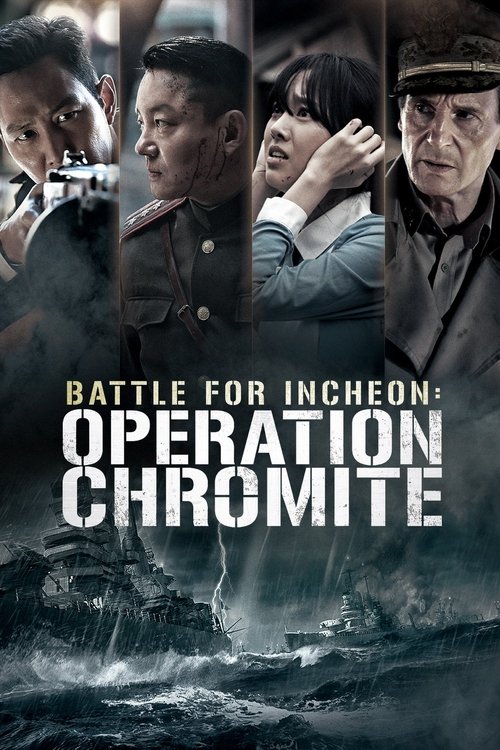
Operation Chromite
A squad of soldiers fight in the Korean War's crucial Battle of Incheon.
Despite its small-scale budget of $12.7M, Operation Chromite became a financial success, earning $49.2M worldwide—a 287% return. The film's bold vision found its audience, illustrating how strong storytelling can transcend budget limitations.
2 wins & 5 nominations
Plot Structure
Story beats plotted across runtime


Narrative Arc
Emotional journey through the story's key moments
Story Circle
Blueprint 15-beat structure
Arcplot Score Breakdown
Weighted: Precision (70%) + Arc (15%) + Theme (15%)
Operation Chromite (2016) reveals precise story structure, characteristic of John H. Lee's storytelling approach. This structural analysis examines how the film's 15-point plot structure maps to proven narrative frameworks across 1 hour and 51 minutes. With an Arcplot score of 7.0, the film balances conventional beats with creative variation.
Structural Analysis
The Status Quo at 1 minutes (1% through the runtime) establishes Korea 1950: The Korean War rages as North Korean forces push South Korean and UN troops to the Pusan Perimeter. The desperate military situation establishes a nation on the brink of total defeat.. Of particular interest, this early placement immediately immerses viewers in the story world.
The inciting incident occurs at 13 minutes when Captain Jang Hak-soo and his eight-man X-Ray team receive their mission: infiltrate Incheon disguised as North Korean inspection officers to gather intelligence on enemy defenses, mines, and tide patterns critical for the amphibious assault.. At 12% through the film, this Disruption aligns precisely with traditional story structure. This beat shifts the emotional landscape, launching the protagonist into the central conflict.
The First Threshold at 28 minutes marks the transition into Act II, occurring at 25% of the runtime. This indicates the protagonist's commitment to The X-Ray team fully commits to their covers, arriving in Incheon as North Korean officers. There is no turning back—they must maintain their deception while gathering intelligence, knowing one mistake will expose them all., moving from reaction to action.
At 56 minutes, the Midpoint arrives at 50% of the runtime—precisely centered, creating perfect narrative symmetry. The analysis reveals that this crucial beat The team successfully transmits critical intelligence about Incheon's defenses to MacArthur. This false victory gives hope—but a suspicious North Korean intelligence officer begins investigating irregularities, putting the entire team at risk., fundamentally raising what's at risk. The emotional intensity shifts, dividing the narrative into clear before-and-after phases.
The Collapse moment at 83 minutes (75% through) represents the emotional nadir. Here, The team is exposed and cornered. Several members are killed or captured by North Korean forces. Jang faces the devastating reality that his men have given their lives, and the mission—and the entire Incheon operation—hangs by a thread., demonstrates the protagonist at their lowest point. This beat's placement in the final quarter sets up the climactic reversal.
The Second Threshold at 89 minutes initiates the final act resolution at 80% of the runtime. Jang and the surviving team members choose to complete the mission, honoring their fallen brothers' sacrifice. They resolve to light the Palmido lighthouse—the signal that will guide the invasion fleet through the treacherous waters., demonstrating the transformation achieved throughout the journey.
Emotional Journey
Operation Chromite's emotional architecture traces a deliberate progression across 15 carefully calibrated beats.
Narrative Framework
This structural analysis employs a 15-point narrative structure framework that maps key story moments. By mapping Operation Chromite against these established plot points, we can identify how John H. Lee utilizes or subverts traditional narrative conventions. The plot point approach reveals not only adherence to structural principles but also creative choices that distinguish Operation Chromite within the history genre.
Comparative Analysis
Additional history films include The Attacks Of 26/11, Joyeux Noel and Rob Roy.
Plot Points by Act
Act I
SetupStatus Quo
Korea 1950: The Korean War rages as North Korean forces push South Korean and UN troops to the Pusan Perimeter. The desperate military situation establishes a nation on the brink of total defeat.
Theme
General MacArthur declares that Incheon is the key to turning the war around, stating that victory requires sacrifice and bold action—foreshadowing the theme that freedom demands the ultimate price from those who fight for it.
Worldbuilding
The film establishes the dire military situation: UN forces are cornered at Pusan, MacArthur faces opposition from military brass about his Incheon plan, and we meet the X-Ray intelligence unit who will infiltrate enemy territory.
Disruption
Captain Jang Hak-soo and his eight-man X-Ray team receive their mission: infiltrate Incheon disguised as North Korean inspection officers to gather intelligence on enemy defenses, mines, and tide patterns critical for the amphibious assault.
Resistance
The team prepares for infiltration, studying their covers and the risks involved. MacArthur debates with skeptical generals who consider Incheon impossible. The team crosses into enemy territory, aware that discovery means certain death.
Act II
ConfrontationFirst Threshold
The X-Ray team fully commits to their covers, arriving in Incheon as North Korean officers. There is no turning back—they must maintain their deception while gathering intelligence, knowing one mistake will expose them all.
Mirror World
Jang connects with local resistance fighters and civilians living under occupation, including those who have lost family to the war. Their courage despite overwhelming fear mirrors and reinforces the theme of sacrifice for something greater than oneself.
Premise
The X-Ray team operates undercover in Incheon, gathering intelligence on mine placements, troop positions, and coastal defenses. They navigate close calls with suspicious North Korean officers while MacArthur continues fighting for approval of Operation Chromite.
Midpoint
The team successfully transmits critical intelligence about Incheon's defenses to MacArthur. This false victory gives hope—but a suspicious North Korean intelligence officer begins investigating irregularities, putting the entire team at risk.
Opposition
The North Korean counterintelligence officer closes in on the X-Ray team. Team members are captured and interrogated. The team's cover begins to unravel as suspicion mounts, and they must protect their mission while their brothers are tortured.
Collapse
The team is exposed and cornered. Several members are killed or captured by North Korean forces. Jang faces the devastating reality that his men have given their lives, and the mission—and the entire Incheon operation—hangs by a thread.
Crisis
With the team decimated and their position compromised, the surviving members face impossible odds. The weight of their fallen comrades' sacrifice bears down as they must decide whether to abort or complete the mission at any cost.
Act III
ResolutionSecond Threshold
Jang and the surviving team members choose to complete the mission, honoring their fallen brothers' sacrifice. They resolve to light the Palmido lighthouse—the signal that will guide the invasion fleet through the treacherous waters.
Synthesis
The remaining team fights to reach and activate the Palmido lighthouse. MacArthur's fleet launches Operation Chromite. The lighthouse is lit, guiding the invasion force. The Incheon Landing succeeds, turning the tide of the Korean War.
Transformation
The liberation of Incheon and Seoul is achieved through the sacrifice of the X-Ray team. The film honors the real intelligence operatives whose names were classified, transforming anonymous soldiers into remembered heroes whose sacrifice secured freedom.