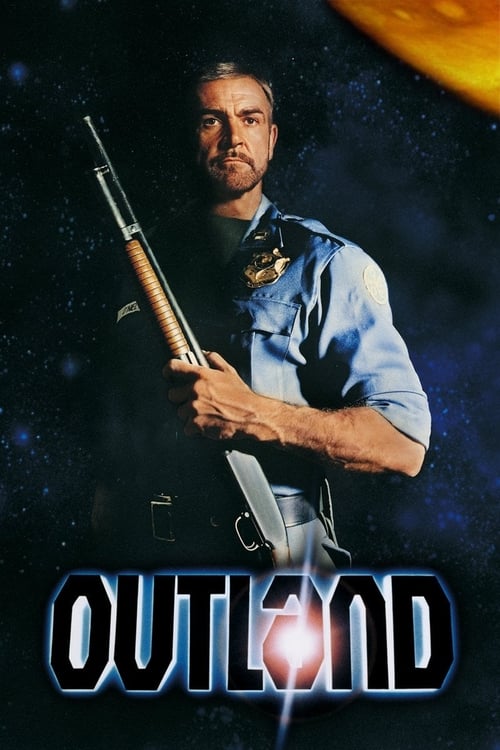
Outland
On the sunless moon Io, Marshall William T. O’Niel goes toe-to-toe with the corrupt manager of a mining colony and his gang of roughnecks while investigating a rash of worker suicides.
The film underperformed commercially against its moderate budget of $18.0M, earning $17.4M globally (-3% loss).
Nominated for 1 Oscar. 1 win & 7 nominations


Plot Structure
Story beats plotted across runtime


Narrative Arc
Emotional journey through the story's key moments
Story Circle
Blueprint 15-beat structure
Arcplot Score Breakdown
Weighted: Precision (70%) + Arc (15%) + Theme (15%)
Outland (1981) demonstrates precise narrative architecture, characteristic of Peter Hyams's storytelling approach. This structural analysis examines how the film's 15-point plot structure maps to proven narrative frameworks across 1 hour and 50 minutes. With an Arcplot score of 6.8, the film balances conventional beats with creative variation.
Structural Analysis
The Status Quo at 1 minutes (1% through the runtime) establishes Marshal William O'Niel arrives at the Con-Am 27 mining station on Io with his wife Carol and son Paul, beginning his new assignment as Federal District Marshal in this isolated, industrial outpost.. Notably, this early placement immediately immerses viewers in the story world.
The inciting incident occurs at 13 minutes when A worker named Tarlow goes violently psychotic and walks into an airlock without a suit, explosively decompressing. This shocking death disrupts O'Niel's routine assignment and triggers his investigation into what's happening to the miners.. At 12% through the film, this Disruption aligns precisely with traditional story structure. This beat shifts the emotional landscape, launching the protagonist into the central conflict.
The First Threshold at 28 minutes marks the transition into Act II, occurring at 25% of the runtime. This illustrates the protagonist's commitment to O'Niel commits to a full investigation despite warnings. When General Manager Sheppard offers him a bribe to look the other way, O'Niel refuses. Carol decides to leave on the next shuttle, taking their son—O'Niel chooses integrity over his family's unity., moving from reaction to action.
At 55 minutes, the Midpoint arrives at 50% of the runtime—precisely centered, creating perfect narrative symmetry. Notably, this crucial beat O'Niel destroys a major drug shipment, but Sheppard responds by sending a message to Earth requesting professional killers. O'Niel intercepts this transmission—he now knows assassins are coming on the next supply shuttle, and he has the countdown clock: 70 hours until they arrive., fundamentally raising what's at risk. The emotional intensity shifts, dividing the narrative into clear before-and-after phases.
The Collapse moment at 83 minutes (75% through) represents the emotional nadir. Here, With hours to go, O'Niel's last deputy Ballard abandons him, admitting he's too scared to help. O'Niel sits alone in the cafeteria as workers deliberately look away. Like Kane in High Noon, he faces the devastating realization that he will have to confront the killers completely alone., shows the protagonist at their lowest point. This beat's placement in the final quarter sets up the climactic reversal.
The Second Threshold at 88 minutes initiates the final act resolution at 80% of the runtime. Dr. Lazarus appears with a shotgun, choosing to stand with O'Niel. Her cynicism cracks as she admits she's tired of watching people die while doing nothing. This unexpected alliance gives O'Niel both tactical support and validation—someone else believes the fight is worth making., demonstrating the transformation achieved throughout the journey.
Emotional Journey
Outland's emotional architecture traces a deliberate progression across 15 carefully calibrated beats.
Narrative Framework
This structural analysis employs structural analysis methodology used to understand storytelling architecture. By mapping Outland against these established plot points, we can identify how Peter Hyams utilizes or subverts traditional narrative conventions. The plot point approach reveals not only adherence to structural principles but also creative choices that distinguish Outland within the science fiction genre.
Peter Hyams's Structural Approach
Among the 14 Peter Hyams films analyzed on Arcplot, the average structural score is 7.1, reflecting strong command of classical structure. Outland takes a more unconventional approach compared to the director's typical style. For comparative analysis, explore the complete Peter Hyams filmography.
Comparative Analysis
Additional science fiction films include The Postman, Mad Max 2 and AVP: Alien vs. Predator. For more Peter Hyams analyses, see Capricorn One, Timecop and The Musketeer.
Plot Points by Act
Act I
SetupStatus Quo
Marshal William O'Niel arrives at the Con-Am 27 mining station on Io with his wife Carol and son Paul, beginning his new assignment as Federal District Marshal in this isolated, industrial outpost.
Theme
Dr. Lazarus cynically tells O'Niel that nobody cares about the workers here—they come for the money and the company looks the other way. This establishes the theme of institutional corruption versus individual moral courage.
Worldbuilding
The mining colony's harsh environment is established: cramped quarters, dangerous work, surveillance everywhere, and an atmosphere of corporate indifference. Workers toil under extreme pressure while management prioritizes production quotas over safety. O'Niel settles in with his family, observing the station's operations.
Disruption
A worker named Tarlow goes violently psychotic and walks into an airlock without a suit, explosively decompressing. This shocking death disrupts O'Niel's routine assignment and triggers his investigation into what's happening to the miners.
Resistance
O'Niel investigates the suspicious deaths, discovering a pattern of workers going berserk. He debates whether to pursue the case or accept the easy explanation. Dr. Lazarus reluctantly provides medical information. His wife Carol, frustrated by another remote posting, urges him to let it go, but O'Niel cannot ignore his conscience.
Act II
ConfrontationFirst Threshold
O'Niel commits to a full investigation despite warnings. When General Manager Sheppard offers him a bribe to look the other way, O'Niel refuses. Carol decides to leave on the next shuttle, taking their son—O'Niel chooses integrity over his family's unity.
Mirror World
Dr. Marian Lazarus emerges as the thematic mirror to O'Niel. Though cynical and initially unwilling to get involved, she represents what O'Niel could become if he surrenders his principles—or what he needs to reach if he's to find an ally in this corrupt world.
Premise
O'Niel uses surveillance systems and detective work to uncover the drug operation. He traces the amphetamine-like substance that boosts productivity but causes psychotic breaks after prolonged use. The investigation leads him to Sheppard's smuggling network. Workers and deputies avoid him as word spreads that he's making trouble.
Midpoint
O'Niel destroys a major drug shipment, but Sheppard responds by sending a message to Earth requesting professional killers. O'Niel intercepts this transmission—he now knows assassins are coming on the next supply shuttle, and he has the countdown clock: 70 hours until they arrive.
Opposition
The countdown intensifies as O'Niel tries to rally support. One by one, his deputies refuse to stand with him—one quits, another claims to be sick. The workers and staff avoid him, fearing retaliation from the company. Sheppard confidently waits, knowing O'Niel stands alone. O'Niel prepares weapons and studies the station layout.
Collapse
With hours to go, O'Niel's last deputy Ballard abandons him, admitting he's too scared to help. O'Niel sits alone in the cafeteria as workers deliberately look away. Like Kane in High Noon, he faces the devastating realization that he will have to confront the killers completely alone.
Crisis
O'Niel contemplates his situation in the dark night of his soul. He could still leave, could still save himself. The weight of standing alone for a principle that no one else seems to value presses down on him. He reviews his weapons, knowing the assassins are professionals.
Act III
ResolutionSecond Threshold
Dr. Lazarus appears with a shotgun, choosing to stand with O'Niel. Her cynicism cracks as she admits she's tired of watching people die while doing nothing. This unexpected alliance gives O'Niel both tactical support and validation—someone else believes the fight is worth making.
Synthesis
The shuttle arrives with two assassins. A tense cat-and-mouse battle erupts through the station's industrial corridors, greenhouses, and maintenance areas. O'Niel and Lazarus work together, using knowledge of the station against the professional killers. O'Niel eliminates the assassins one by one, culminating in a direct confrontation with the final killer.
Transformation
O'Niel walks through the station's main corridor and publicly punches Sheppard, knocking him down in front of the workers. He then boards the shuttle to reunite with his family. The man who arrived as a quiet new marshal leaves as someone who proved that moral courage matters—even when you stand alone.