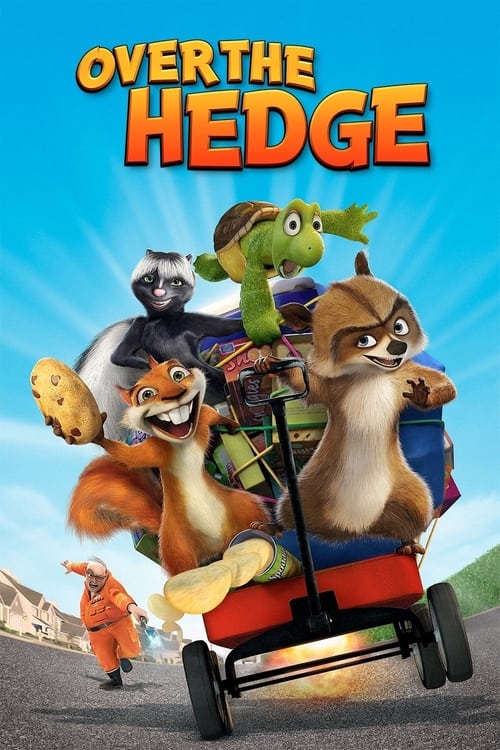
Over the Hedge
A scheming raccoon fools a mismatched family of forest creatures into helping him repay a debt of food, by invading the new suburban sprawl that popped up while they were hibernating – and learns a lesson about family himself.
Despite a considerable budget of $80.0M, Over the Hedge became a solid performer, earning $343.4M worldwide—a 329% return.
7 wins & 26 nominations


Plot Structure
Story beats plotted across runtime


Narrative Arc
Emotional journey through the story's key moments
Story Circle
Blueprint 15-beat structure
Arcplot Score Breakdown
Weighted: Precision (70%) + Arc (15%) + Theme (15%)
Over the Hedge (2006) showcases deliberately positioned dramatic framework, characteristic of Karey Kirkpatrick's storytelling approach. This structural analysis examines how the film's 15-point plot structure maps to proven narrative frameworks across 1 hour and 24 minutes. With an Arcplot score of 7.1, the film balances conventional beats with creative variation.
Characters
Cast & narrative archetypes

RJ
Verne
Hammy
Stella
Ozzie
Heather
Lou
Penny
Vincent
Gladys Sharp
Dwayne LaFontant
Main Cast & Characters
RJ
Played by Bruce Willis
A cunning raccoon con artist who manipulates a group of forest animals to help him gather food to repay a debt to a bear, but eventually learns the value of family and honesty.
Verne
Played by Garry Shandling
A cautious box turtle and leader of the woodland family who is skeptical of RJ but ultimately learns to embrace change while protecting his family.
Hammy
Played by Steve Carell
A hyperactive, naive squirrel with boundless energy and a love for cookies, whose innocent nature and incredible speed prove crucial to the group's success.
Stella
Played by Wanda Sykes
A confident skunk with low self-esteem about her smell who finds love and learns to embrace her unique qualities.
Ozzie
Played by William Shatner
A dramatic opossum father who plays dead at the slightest hint of danger and worries constantly about his daughter.
Heather
Played by Avril Lavigne
Ozzie's teenage opossum daughter who is embarrassed by her father's dramatic tendencies but loves him deeply.
Lou
Played by Eugene Levy
A gentle porcupine father and devoted husband to Penny, providing steady support to the woodland family.
Penny
Played by Catherine O'Hara
Lou's porcupine wife and mother to their triplets, she is nurturing and protective of her large family.
Vincent
Played by Nick Nolte
A menacing grizzly bear who threatens RJ's life over stolen food, serving as the dangerous force driving RJ's deception.
Gladys Sharp
Played by Allison Janney
The uptight, controlling president of the homeowners association who is obsessed with keeping her suburban neighborhood pristine and pest-free.
Dwayne LaFontant
Played by Thomas Haden Church
An eccentric and overly enthusiastic pest exterminator hired by Gladys to eliminate the woodland creatures.
Structural Analysis
The Status Quo at 1 minutes (1% through the runtime) establishes RJ the raccoon raids a vending machine and lives as a lone scavenger, establishing his solitary, opportunistic lifestyle driven by hunger and greed.. Significantly, this early placement immediately immerses viewers in the story world.
The inciting incident occurs at 8 minutes when RJ discovers the suburban neighborhood filled with food and spots Verne's family—realizing he can manipulate them to gather Vincent's food for him. The collision of these two story worlds.. At 10% through the film, this Disruption aligns precisely with traditional story structure. This beat shifts the emotional landscape, launching the protagonist into the central conflict.
The First Threshold at 20 minutes marks the transition into Act II, occurring at 24% of the runtime. This illustrates the protagonist's commitment to The family actively chooses to cross the hedge together for the first time, venturing into the human world to gather food. Verne reluctantly agrees, and they commit to RJ's plan., moving from reaction to action.
At 41 minutes, the Midpoint arrives at 49% of the runtime—precisely centered, creating perfect narrative symmetry. The analysis reveals that this crucial beat False victory: The animals succeed in gathering the massive wagon full of food—everything RJ needs for Vincent. But Gladys calls the Verminator, raising the stakes. RJ has the food but must now choose between his survival and the family., fundamentally raising what's at risk. The emotional intensity shifts, dividing the narrative into clear before-and-after phases.
The Collapse moment at 61 minutes (73% through) represents the emotional nadir. Here, Verne discovers RJ's true motives and exposes him to the family. The entire family is captured by the Verminator. RJ's deception dies, and he loses the only real friends he ever had. He takes the food to Vincent, completely alone., indicates the protagonist at their lowest point. This beat's placement in the final quarter sets up the climactic reversal.
The Second Threshold at 66 minutes initiates the final act resolution at 79% of the runtime. RJ makes the choice to sacrifice Vincent's food and his own safety to save the family. He returns, tricks Vincent, and formulates a plan combining his street smarts with Verne's family unity., demonstrating the transformation achieved throughout the journey.
Emotional Journey
Over the Hedge's emotional architecture traces a deliberate progression across 15 carefully calibrated beats.
Narrative Framework
This structural analysis employs proven narrative structure principles that track dramatic progression. By mapping Over the Hedge against these established plot points, we can identify how Karey Kirkpatrick utilizes or subverts traditional narrative conventions. The plot point approach reveals not only adherence to structural principles but also creative choices that distinguish Over the Hedge within the family genre.
Karey Kirkpatrick's Structural Approach
Among the 2 Karey Kirkpatrick films analyzed on Arcplot, the average structural score is 6.9, demonstrating varied approaches to story architecture. Over the Hedge represents one of the director's most structurally precise works. For comparative analysis, explore the complete Karey Kirkpatrick filmography.
Comparative Analysis
Additional family films include The Black Stallion, The Bad Guys and Ella Enchanted. For more Karey Kirkpatrick analyses, see Imagine That.
Plot Points by Act
Act I
SetupStatus Quo
RJ the raccoon raids a vending machine and lives as a lone scavenger, establishing his solitary, opportunistic lifestyle driven by hunger and greed.
Theme
Vincent the bear tells RJ, "That's my stuff! You take somebody's stuff and they will come after you." Theme of consequences and the value we place on possessions vs. relationships.
Worldbuilding
RJ tries to steal Vincent's massive food cache but destroys it. Vincent gives RJ one week to replace everything or be killed. Meanwhile, Verne's family awakens from hibernation to find a massive hedge has appeared, dividing their forest from a new suburb.
Disruption
RJ discovers the suburban neighborhood filled with food and spots Verne's family—realizing he can manipulate them to gather Vincent's food for him. The collision of these two story worlds.
Resistance
RJ ingratiates himself with the forest animals, teaching them about human food and the suburbs. Verne is skeptical and cautious, creating tension. RJ manipulates their fears and desires while building their trust.
Act II
ConfrontationFirst Threshold
The family actively chooses to cross the hedge together for the first time, venturing into the human world to gather food. Verne reluctantly agrees, and they commit to RJ's plan.
Mirror World
RJ experiences genuine fun and camaraderie with the family during their first successful raids. Hammy the squirrel and the others show RJ what real friendship looks like, contrasting with his manipulative intentions.
Premise
Heist sequences and montages of the animals raiding suburbia, gathering food, having close calls with Gladys and the Verminator. RJ gets closer to his goal while growing attached to the family despite himself.
Midpoint
False victory: The animals succeed in gathering the massive wagon full of food—everything RJ needs for Vincent. But Gladys calls the Verminator, raising the stakes. RJ has the food but must now choose between his survival and the family.
Opposition
The Verminator sets traps. Gladys intensifies her assault. Verne grows more suspicious of RJ. RJ's deception becomes harder to maintain. The animals face increasing danger, and RJ's internal conflict between self-preservation and genuine care intensifies.
Collapse
Verne discovers RJ's true motives and exposes him to the family. The entire family is captured by the Verminator. RJ's deception dies, and he loses the only real friends he ever had. He takes the food to Vincent, completely alone.
Crisis
RJ delivers the food to Vincent but cannot enjoy his survival. He watches the family being taken away and wrestles with his conscience. The moment of dark realization that stuff means nothing without relationships.
Act III
ResolutionSecond Threshold
RJ makes the choice to sacrifice Vincent's food and his own safety to save the family. He returns, tricks Vincent, and formulates a plan combining his street smarts with Verne's family unity.
Synthesis
The family works together with RJ to escape the Verminator and Gladys. Massive finale involving Hammy's energy drink sprint, the hedge destruction, and Vincent being defeated by his own greed. RJ and Verne unite their approaches.
Transformation
RJ is now part of the family, sharing a small amount of food together in the forest. Mirror to opening: RJ went from solitary scavenger hoarding food to someone who values relationships over possessions, eating together with loved ones.