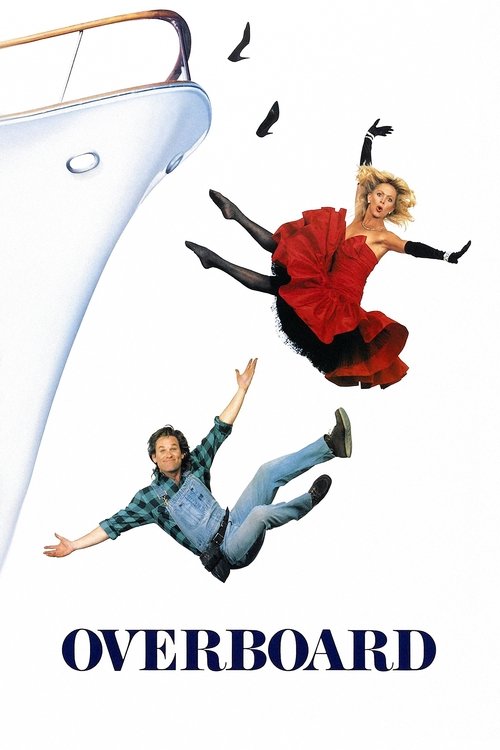
Overboard
Heiress Joanna Stayton hires carpenter Dean Proffitt to build a closet on her yacht—and refuses to pay him for the project when it's done. But after Joanna accidentally falls overboard and loses her memory, Dean sees an opportunity to get even.
Working with a moderate budget of $22.0M, the film achieved a steady performer with $26.7M in global revenue (+21% profit margin).


Plot Structure
Story beats plotted across runtime


Narrative Arc
Emotional journey through the story's key moments
Story Circle
Blueprint 15-beat structure
Arcplot Score Breakdown
Weighted: Precision (70%) + Arc (15%) + Theme (15%)
Overboard (1987) reveals carefully calibrated narrative architecture, characteristic of Garry Marshall's storytelling approach. This structural analysis examines how the film's 15-point plot structure maps to proven narrative frameworks across 1 hour and 52 minutes. With an Arcplot score of 6.6, the film balances conventional beats with creative variation.
Characters
Cast & narrative archetypes

Joanna Stayton
Dean Proffitt
Grant Stayton III
Billy Pratt
Andrew
Edith Mintz
Main Cast & Characters
Joanna Stayton
Played by Goldie Hawn
A spoiled, entitled heiress who loses her memory after falling overboard and is tricked into believing she's a working-class mother.
Dean Proffitt
Played by Kurt Russell
A working-class carpenter and widowed father of four boys who seeks revenge on Joanna by convincing her she's his wife.
Grant Stayton III
Played by Edward Herrmann
Joanna's wealthy, philandering husband who abandons her at the hospital when she loses her memory.
Billy Pratt
Played by Michael G. Hagerty
Dean's loyal best friend and drinking buddy who helps him execute the scheme to claim Joanna.
Andrew
Played by Roddy McDowall
The Stayton's dignified British butler who remains loyal to Joanna and eventually helps reunite her with her true identity.
Edith Mintz
Played by Katherine Helmond
Joanna's wealthy mother who initially shows little concern for her amnesiac daughter.
Structural Analysis
The Status Quo at 1 minutes (1% through the runtime) establishes Joanna Stayton, a wealthy and spoiled heiress, berates workers on her luxury yacht, establishing her as selfish, demanding, and loveless in her cold marriage to Grant.. Structural examination shows that this early placement immediately immerses viewers in the story world.
The inciting incident occurs at 14 minutes when Joanna refuses to pay Dean for his work, mocks his craftsmanship, and pushes him off her yacht into the harbor. Dean vows revenge as she throws his tools overboard.. At 12% through the film, this Disruption aligns precisely with traditional story structure. This beat shifts the emotional landscape, launching the protagonist into the central conflict.
The First Threshold at 28 minutes marks the transition into Act II, occurring at 25% of the runtime. This demonstrates the protagonist's commitment to Dean actively chooses to claim Joanna as his wife "Annie" at the hospital, bringing her home to his chaotic household. He commits to the deception, crossing into the new world of their reversed roles., moving from reaction to action.
At 57 minutes, the Midpoint arrives at 51% of the runtime—precisely centered, creating perfect narrative symmetry. Of particular interest, this crucial beat False victory: Joanna has transformed into a loving mother and partner. Dean and she share a romantic dance and kiss. The family is happy and whole—but it's built on a lie, raising the stakes for when truth emerges., fundamentally raising what's at risk. The emotional intensity shifts, dividing the narrative into clear before-and-after phases.
The Collapse moment at 84 minutes (75% through) represents the emotional nadir. Here, Grant arrives and "rescues" Joanna, revealing the truth about her identity. Her memory returns instantly. The life she built with Dean dies as she realizes everything was a lie. She leaves, heartbroken and furious., illustrates the protagonist at their lowest point. This beat's placement in the final quarter sets up the climactic reversal.
The Second Threshold at 91 minutes initiates the final act resolution at 81% of the runtime. Joanna overhears Grant admit he only wanted her back for her money, revealing his callousness. She realizes her real family is Dean and the boys. She chooses love and authenticity over wealth and pretense., demonstrating the transformation achieved throughout the journey.
Emotional Journey
Overboard's emotional architecture traces a deliberate progression across 15 carefully calibrated beats.
Narrative Framework
This structural analysis employs systematic plot point analysis that identifies crucial turning points. By mapping Overboard against these established plot points, we can identify how Garry Marshall utilizes or subverts traditional narrative conventions. The plot point approach reveals not only adherence to structural principles but also creative choices that distinguish Overboard within the comedy genre.
Garry Marshall's Structural Approach
Among the 14 Garry Marshall films analyzed on Arcplot, the average structural score is 6.9, demonstrating varied approaches to story architecture. Overboard takes a more unconventional approach compared to the director's typical style. For comparative analysis, explore the complete Garry Marshall filmography.
Comparative Analysis
Additional comedy films include The Bad Guys, Ella Enchanted and The Evening Star. For more Garry Marshall analyses, see Raising Helen, New Year's Eve and The Princess Diaries.
Plot Points by Act
Act I
SetupStatus Quo
Joanna Stayton, a wealthy and spoiled heiress, berates workers on her luxury yacht, establishing her as selfish, demanding, and loveless in her cold marriage to Grant.
Theme
Dean Proffitt tells his mother, "Nobody's born with money. You gotta work for it." This speaks to the film's central theme about class, dignity in labor, and earned versus inherited worth.
Worldbuilding
We meet Dean, a widowed carpenter struggling to raise four wild boys in their cramped home. He's hired to build a closet on Joanna's yacht, where she humiliates him and refuses to pay. Two worlds collide: privilege versus hardship.
Disruption
Joanna refuses to pay Dean for his work, mocks his craftsmanship, and pushes him off her yacht into the harbor. Dean vows revenge as she throws his tools overboard.
Resistance
Joanna falls overboard that night and develops amnesia. Dean sees a news report about the "mystery woman" and his friend Billy suggests using her amnesia for revenge. Dean debates whether to go through with this outrageous plan.
Act II
ConfrontationFirst Threshold
Dean actively chooses to claim Joanna as his wife "Annie" at the hospital, bringing her home to his chaotic household. He commits to the deception, crossing into the new world of their reversed roles.
Mirror World
Joanna begins her "new life" with Dean and the boys. This relationship becomes the thematic heart: through domestic labor and family connection, she'll learn what Dean already knows about true worth and dignity.
Premise
The fun and games: Joanna struggles with housework, childrearing, and poverty while Dean enjoys his revenge. Gradually, she becomes a better mother and person, the boys soften, and genuine affection develops between Dean and "Annie."
Midpoint
False victory: Joanna has transformed into a loving mother and partner. Dean and she share a romantic dance and kiss. The family is happy and whole—but it's built on a lie, raising the stakes for when truth emerges.
Opposition
Dean falls genuinely in love with Joanna but guilt plagues him. Meanwhile, Grant discovers his wife's whereabouts and plots to reclaim her for financial reasons. The lies close in as Dean struggles to confess the truth.
Collapse
Grant arrives and "rescues" Joanna, revealing the truth about her identity. Her memory returns instantly. The life she built with Dean dies as she realizes everything was a lie. She leaves, heartbroken and furious.
Crisis
Joanna returns to her wealthy life but feels empty. Dean and the boys are devastated. Both process their loss—Joanna realizes her old life is hollow, while Dean recognizes he truly loved her despite how it started.
Act III
ResolutionSecond Threshold
Joanna overhears Grant admit he only wanted her back for her money, revealing his callousness. She realizes her real family is Dean and the boys. She chooses love and authenticity over wealth and pretense.
Synthesis
Dean and the boys race to the yacht to win Joanna back. She meets them halfway, diving off the yacht. They reunite in the water. She chooses her new life, and together they sail away as a true family.
Transformation
Joanna and Dean sail off together with the boys, now a united family. The once-selfish heiress has become a loving mother and partner, having found true worth through love and honest work, not wealth.