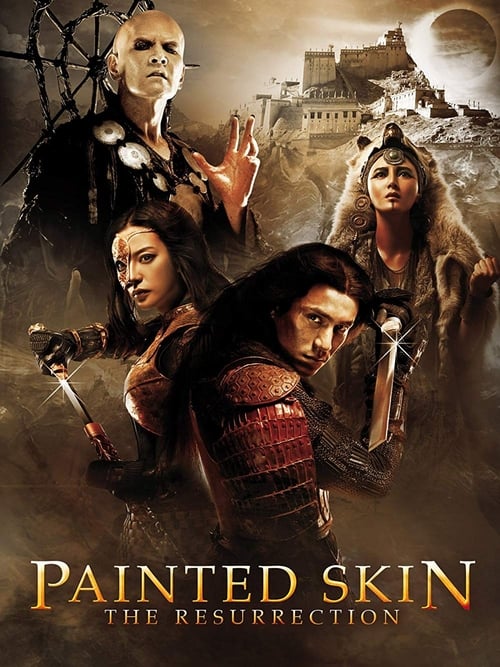
Painted Skin: The Resurrection
According to demon lore, it takes hundreds of years to attain human form. Even then, lacking a human heart, a demon cannot experience the true pains and passions of existence. However, there is a legend that if a pure human heart is freely offered to a demon, it can become a mortal and experience true life. Sequel of Painted Skin (2008).
The film earned $103.1M at the global box office.
11 wins & 10 nominations


Plot Structure
Story beats plotted across runtime


Narrative Arc
Emotional journey through the story's key moments
Story Circle
Blueprint 15-beat structure
Arcplot Score Breakdown
Weighted: Precision (70%) + Arc (15%) + Theme (15%)
Painted Skin: The Resurrection (2012) exhibits precise narrative design, characteristic of Wuershan's storytelling approach. This structural analysis examines how the film's 15-point plot structure maps to proven narrative frameworks across 2 hours and 11 minutes. With an Arcplot score of 6.8, the film balances conventional beats with creative variation.
Characters
Cast & narrative archetypes

Xiaowei
Princess Jing
Huo Xin
Que'er
Pang Lang
Tianyin
Main Cast & Characters
Xiaowei
Played by Zhou Xun
A fox demon trapped under ice for 500 years who yearns to become human and experience true love, willing to manipulate others to achieve her goal.
Princess Jing
Played by Zhao Wei
A scarred princess who hides behind a golden mask, secretly in love with her general Huo Xin but unwilling to reveal her disfigured face to him.
Huo Xin
Played by Chen Kun
A loyal general devoted to protecting Princess Jing, bound by duty and honor while harboring deep feelings for her.
Que'er
Played by Yang Mi
A bird demon and Xiaowei's devoted companion who transforms into a human woman, fiercely loyal to her mistress despite her own growing humanity.
Pang Lang
Played by Feng Shaofeng
A demon hunter who encounters the group and becomes entangled with Que'er, his feelings conflicting with his duty to slay demons.
Tianyin
Played by Fei Xiang
A demon-catching shaman with mystical abilities who assists Pang Lang and provides spiritual insight into the supernatural threats.
Structural Analysis
The Status Quo at 2 minutes (1% through the runtime) establishes Xiaowei, a fox demon, is trapped in her demonic form after 500 years, desperately longing to become human. Princess Jing wears a golden bird mask to hide facial scars from a bear attack years ago.. Notably, this early placement immediately immerses viewers in the story world.
The inciting incident occurs at 16 minutes when Xiaowei and Princess Jing's paths cross when bandits attack. In the chaos, they are both injured, and Xiaowei sees an opportunity - the Princess could be the willing heart donor she needs.. At 12% through the film, this Disruption aligns precisely with traditional story structure. This beat shifts the emotional landscape, launching the protagonist into the central conflict.
The First Threshold at 33 minutes marks the transition into Act II, occurring at 25% of the runtime. This indicates the protagonist's commitment to Xiaowei makes a fateful choice: instead of immediately pursuing Princess Jing's heart, she uses her powers to swap their appearances, giving the Princess her beautiful face while taking on the scarred, masked appearance herself., moving from reaction to action.
At 66 minutes, the Midpoint arrives at 50% of the runtime—precisely centered, creating perfect narrative symmetry. Of particular interest, this crucial beat False defeat: Xiaowei realizes she is truly falling in love with Huo Xin, but her demonic nature is becoming unstable. She must consume a heart soon or die, yet doing so would mean destroying the humanity she's discovered. The demon hunter Que'er begins to suspect the truth., fundamentally raising what's at risk. The emotional intensity shifts, dividing the narrative into clear before-and-after phases.
The Collapse moment at 98 minutes (75% through) represents the emotional nadir. Here, All is lost: The truth is revealed to Huo Xin, who feels betrayed by Xiaowei's deception. Xiaowei's demon form nearly kills her as she refuses to take a heart by force. Princess Jing reclaims her identity. Xiaowei faces death alone, having lost both her chance at humanity and the love she found., reveals the protagonist at their lowest point. This beat's placement in the final quarter sets up the climactic reversal.
The Second Threshold at 105 minutes initiates the final act resolution at 80% of the runtime. Breakthrough: Princess Jing makes a stunning choice - she offers her heart to Xiaowei willingly, not out of manipulation but genuine compassion. Huo Xin realizes that his love for Xiaowei was real regardless of appearance, embodying the theme that true love sees the soul., demonstrating the transformation achieved throughout the journey.
Emotional Journey
Painted Skin: The Resurrection's emotional architecture traces a deliberate progression across 15 carefully calibrated beats.
Narrative Framework
This structural analysis employs structural analysis methodology used to understand storytelling architecture. By mapping Painted Skin: The Resurrection against these established plot points, we can identify how Wuershan utilizes or subverts traditional narrative conventions. The plot point approach reveals not only adherence to structural principles but also creative choices that distinguish Painted Skin: The Resurrection within the drama genre.
Wuershan's Structural Approach
Among the 2 Wuershan films analyzed on Arcplot, the average structural score is 6.8, demonstrating varied approaches to story architecture. Painted Skin: The Resurrection exemplifies the director's characteristic narrative technique. For comparative analysis, explore the complete Wuershan filmography.
Comparative Analysis
Additional drama films include After Thomas, South Pacific and Dirty Dancing: Havana Nights. For more Wuershan analyses, see Creation of the Gods I: Kingdom of Storms.
Plot Points by Act
Act I
SetupStatus Quo
Xiaowei, a fox demon, is trapped in her demonic form after 500 years, desperately longing to become human. Princess Jing wears a golden bird mask to hide facial scars from a bear attack years ago.
Theme
A character observes that "true beauty comes from within, not from one's appearance" - establishing the central question of whether love requires physical beauty or sees deeper.
Worldbuilding
Introduction to the fantasy world where demons and humans coexist. Princess Jing lives in isolation due to her masked face. Xiaowei learns that consuming a willing human heart can make her human. Guard captain Huo Xin serves Princess Jing loyally despite never seeing her face.
Disruption
Xiaowei and Princess Jing's paths cross when bandits attack. In the chaos, they are both injured, and Xiaowei sees an opportunity - the Princess could be the willing heart donor she needs.
Resistance
Xiaowei uses her magic to heal Princess Jing, creating a bond. She debates her plan internally - should she manipulate the Princess or find another way? Meanwhile, she encounters Huo Xin and begins to develop unexpected feelings, complicating her mission.
Act II
ConfrontationFirst Threshold
Xiaowei makes a fateful choice: instead of immediately pursuing Princess Jing's heart, she uses her powers to swap their appearances, giving the Princess her beautiful face while taking on the scarred, masked appearance herself.
Mirror World
Now in the Princess's body, Xiaowei begins a relationship with Huo Xin, who doesn't recognize the switch. Their growing connection becomes the emotional heart of the story, teaching Xiaowei about genuine love versus obsession with appearances.
Premise
The "promise of the premise" - exploring what happens when a demon experiences human life and love. Xiaowei (as Princess Jing) navigates court life and deepens her bond with Huo Xin, while the real Princess Jing (in Xiaowei's beautiful body) experiences life without her mask for the first time.
Midpoint
False defeat: Xiaowei realizes she is truly falling in love with Huo Xin, but her demonic nature is becoming unstable. She must consume a heart soon or die, yet doing so would mean destroying the humanity she's discovered. The demon hunter Que'er begins to suspect the truth.
Opposition
Pressure intensifies from all sides. Que'er investigates the identity swap. Princess Jing begins to understand what has happened and wants her life back. Xiaowei's demonic form deteriorates, causing her pain. Huo Xin senses something is wrong but doesn't understand what.
Collapse
All is lost: The truth is revealed to Huo Xin, who feels betrayed by Xiaowei's deception. Xiaowei's demon form nearly kills her as she refuses to take a heart by force. Princess Jing reclaims her identity. Xiaowei faces death alone, having lost both her chance at humanity and the love she found.
Crisis
Xiaowei retreats to face her fate, resigned to dying as a demon. Huo Xin processes his anger and confusion, while Princess Jing grapples with unexpected empathy for the demon who gave her a gift even while plotting against her. Each character reflects on what真正的爱 (true love) means.
Act III
ResolutionSecond Threshold
Breakthrough: Princess Jing makes a stunning choice - she offers her heart to Xiaowei willingly, not out of manipulation but genuine compassion. Huo Xin realizes that his love for Xiaowei was real regardless of appearance, embodying the theme that true love sees the soul.
Synthesis
The finale brings resolution: Xiaowei refuses Princess Jing's sacrifice, choosing to die with her humanity intact rather than live by taking an innocent life. Huo Xin and the Princess work together to find another solution. The final confrontation addresses both external threats and internal transformations.
Transformation
Closing image shows the transformed characters: Xiaowei has achieved humanity not through taking a heart, but through learning to love selflessly. Princess Jing no longer hides behind a mask, having found inner confidence. The final images mirror the opening but show profound internal change.