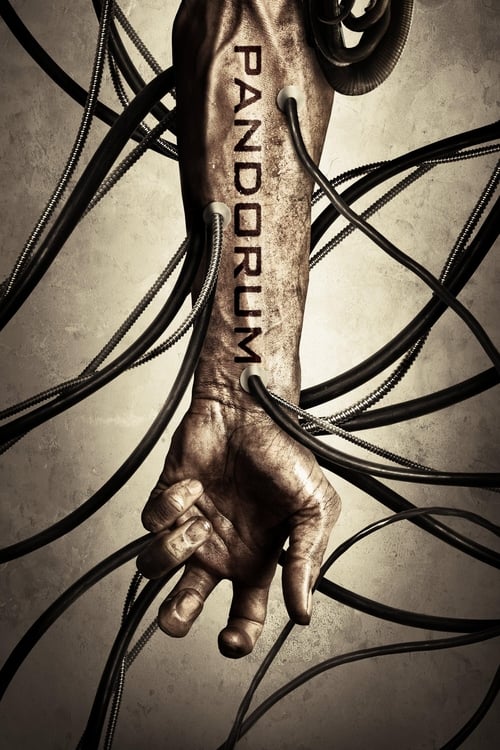
Pandorum
Two crew members wake up on an abandoned spacecraft with no idea who they are, how long they've been asleep, or what their mission is. The two soon discover they're actually not alone – and the reality of their situation is more horrifying than they could have imagined.
The film disappointed at the box office against its moderate budget of $33.0M, earning $20.6M globally (-37% loss). While initial box office returns were modest, the film has gained appreciation for its unique voice within the action genre.


Plot Structure
Story beats plotted across runtime


Narrative Arc
Emotional journey through the story's key moments
Story Circle
Blueprint 15-beat structure
Arcplot Score Breakdown
Weighted: Precision (70%) + Arc (15%) + Theme (15%)
Pandorum (2009) reveals precise dramatic framework, characteristic of Christian Alvart's storytelling approach. This structural analysis examines how the film's 15-point plot structure maps to proven narrative frameworks across 1 hour and 48 minutes. With an Arcplot score of 6.9, the film balances conventional beats with creative variation.
Characters
Cast & narrative archetypes

Corporal Bower
Lieutenant Payton
Nadia
Manh
Leland
Corporal Gallo
Main Cast & Characters
Corporal Bower
Played by Ben Foster
A flight engineer who awakens from hypersleep with amnesia aboard the generation ship Elysium, struggling to survive while uncovering the horrifying truth about the vessel's fate.
Lieutenant Payton
Played by Dennis Quaid
A commanding officer who awakens alongside Bower, guiding him remotely while battling his own psychological demons and a dark secret about his identity.
Nadia
Played by Antje Traue
A tough geneticist who has survived aboard the ship for years, possessing crucial knowledge about the mutant hunters and becoming Bower's key ally.
Manh
Played by Cung Le
A skilled Vietnamese warrior who has adapted to survive in the ship's dangerous environment, communicating primarily through actions rather than words.
Leland
Played by Eddie Rouse
A disturbed survivor who has resorted to cannibalism and murder to survive, representing the psychological breakdown that isolation can cause.
Corporal Gallo
Played by Cam Gigandet
A former crew member whose descent into pandorum led to catastrophic actions that doomed most of the ship's passengers, serving as a dark mirror to the protagonists.
Structural Analysis
The Status Quo at 1 minutes (1% through the runtime) establishes Bower awakens violently from hypersleep in a malfunctioning pod, disoriented and suffering memory loss. The claustrophobic, dark ship interior establishes an atmosphere of isolation and dread as he struggles to remember who he is.. Notably, this early placement immediately immerses viewers in the story world.
The inciting incident occurs at 13 minutes when Bower discovers the bridge is sealed and unreachable. Strange noises echo through the corridors, and they realize they're not alone on the ship. Something hostile is lurking in the darkness, forcing Bower to venture into the ship's depths.. At 12% through the film, this Disruption aligns precisely with traditional story structure. This beat shifts the emotional landscape, launching the protagonist into the central conflict.
The First Threshold at 27 minutes marks the transition into Act II, occurring at 25% of the runtime. This indicates the protagonist's commitment to Bower witnesses the Hunters - feral, cannibalistic mutants - killing a survivor. He makes the conscious choice to push deeper into the ship to reach the reactor, knowing he must navigate through their territory to save everyone aboard., moving from reaction to action.
At 54 minutes, the Midpoint arrives at 50% of the runtime—precisely centered, creating perfect narrative symmetry. Significantly, this crucial beat The survivors discover the horrifying truth: the Hunters were once human passengers who devolved over generations. The ship has been drifting for 923 years, not the months they believed. Earth is gone, and they are the last remnants of humanity - a false defeat that reframes everything., fundamentally raising what's at risk. The emotional intensity shifts, dividing the narrative into clear before-and-after phases.
The Collapse moment at 81 minutes (75% through) represents the emotional nadir. Here, Payton is revealed to BE Gallo - the madman who murdered the original crew and jettisoned the colonists, causing the mutation. Bower realizes the man guiding him is the architect of all this horror. Manh is killed. All hope seems lost as the reactor nears total failure., indicates the protagonist at their lowest point. This beat's placement in the final quarter sets up the climactic reversal.
The Second Threshold at 86 minutes initiates the final act resolution at 80% of the runtime. Bower refuses to succumb to Pandorum or despair. He realizes that reaching the reactor is still the mission - Gallo's madness doesn't change what must be done. He and Nadia fight through the Hunters with renewed determination to save what remains of humanity., demonstrating the transformation achieved throughout the journey.
Emotional Journey
Pandorum's emotional architecture traces a deliberate progression across 15 carefully calibrated beats.
Narrative Framework
This structural analysis employs a 15-point narrative structure framework that maps key story moments. By mapping Pandorum against these established plot points, we can identify how Christian Alvart utilizes or subverts traditional narrative conventions. The plot point approach reveals not only adherence to structural principles but also creative choices that distinguish Pandorum within the action genre.
Christian Alvart's Structural Approach
Among the 2 Christian Alvart films analyzed on Arcplot, the average structural score is 7.1, reflecting strong command of classical structure. Pandorum takes a more unconventional approach compared to the director's typical style. For comparative analysis, explore the complete Christian Alvart filmography.
Comparative Analysis
Additional action films include The Bad Guys, Puss in Boots and Venom: The Last Dance. For more Christian Alvart analyses, see Case 39.
Plot Points by Act
Act I
SetupStatus Quo
Bower awakens violently from hypersleep in a malfunctioning pod, disoriented and suffering memory loss. The claustrophobic, dark ship interior establishes an atmosphere of isolation and dread as he struggles to remember who he is.
Theme
Payton, also awakened, references the psychological condition called Pandorum - a space-induced psychosis caused by extended deep space travel. He warns that isolation and fear can cause people to lose their minds and their humanity.
Worldbuilding
Bower and Payton piece together their situation: they're aboard the Elysium, a colony ship carrying the last of humanity to a new world. The ship appears abandoned, power is failing, and neither can remember their mission or how long they've been asleep.
Disruption
Bower discovers the bridge is sealed and unreachable. Strange noises echo through the corridors, and they realize they're not alone on the ship. Something hostile is lurking in the darkness, forcing Bower to venture into the ship's depths.
Resistance
Bower crawls through the ship's ventilation system while Payton guides him via radio. Bower encounters evidence of violence and discovers the ship has been overrun. He debates whether to continue or return, but the failing reactor means survival depends on reaching it.
Act II
ConfrontationFirst Threshold
Bower witnesses the Hunters - feral, cannibalistic mutants - killing a survivor. He makes the conscious choice to push deeper into the ship to reach the reactor, knowing he must navigate through their territory to save everyone aboard.
Mirror World
Bower encounters Nadia, a fierce survivor who has adapted to life on the ship. She represents what he could become - someone who has found a way to stay alive and retain purpose. Their uneasy alliance introduces the possibility of hope through human connection.
Premise
Bower navigates the nightmarish ship with Nadia and other survivors including Manh. They fight Hunters, traverse dangerous sections, and piece together what happened to the crew. The promise of the premise delivers claustrophobic sci-fi horror as they struggle toward the reactor.
Midpoint
The survivors discover the horrifying truth: the Hunters were once human passengers who devolved over generations. The ship has been drifting for 923 years, not the months they believed. Earth is gone, and they are the last remnants of humanity - a false defeat that reframes everything.
Opposition
Meanwhile, Payton confronts a survivor named Gallo who reveals he was the original flight crew member who caused the catastrophe. The Hunters close in on Bower's group. Leland sacrifices himself. The dual threats of the monsters and the psychological horror of Pandorum intensify.
Collapse
Payton is revealed to BE Gallo - the madman who murdered the original crew and jettisoned the colonists, causing the mutation. Bower realizes the man guiding him is the architect of all this horror. Manh is killed. All hope seems lost as the reactor nears total failure.
Crisis
Bower and Nadia are cornered by Hunters as Gallo/Payton taunts them over the radio, revealing his nihilistic philosophy. Bower struggles with despair as he processes that humanity's last hope was sabotaged by one of their own, and the person he trusted was the enemy all along.
Act III
ResolutionSecond Threshold
Bower refuses to succumb to Pandorum or despair. He realizes that reaching the reactor is still the mission - Gallo's madness doesn't change what must be done. He and Nadia fight through the Hunters with renewed determination to save what remains of humanity.
Synthesis
Bower reaches the reactor and initiates the reset. Gallo attacks them but Bower fights back. In the struggle, a window breaks revealing the ultimate twist: the Elysium has been underwater on Tanis all along - they reached their destination 923 years ago. The ship begins to flood.
Transformation
Bower and Nadia escape in an emergency pod and surface on Tanis - a beautiful, habitable world. Other pods surface around them as the colonists finally awaken. The final text reveals 1,213 survivors begin humanity's new chapter, transforming from lost souls to founders of a new civilization.