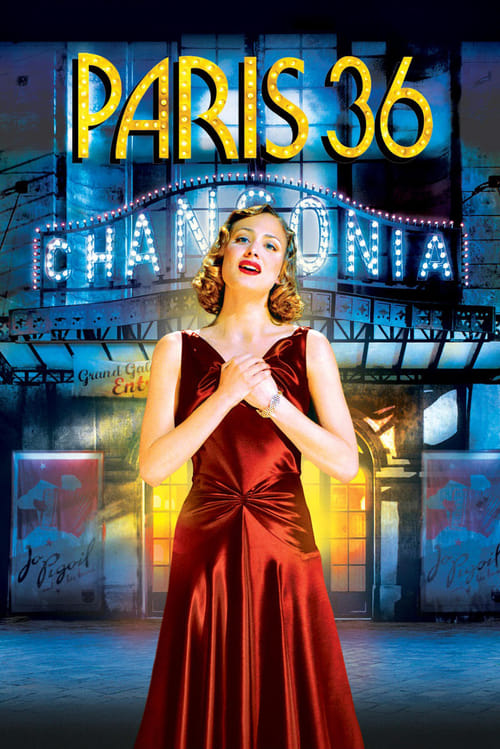
Paris 36
A star is born in a time of both celebration and instability in this historical drama with music from director Christophe Barratier. In the spring of 1936, Paris is in a state of uncertainty; while the rise of the Third Reich in Germany worries many, a leftist union-oriented candidate, Léon Blum, has been voted into power, and organized labor is feeling its new power by standing up to management.
The film earned $12.9M at the global box office.
Nominated for 1 Oscar. 3 wins & 7 nominations


Plot Structure
Story beats plotted across runtime


Narrative Arc
Emotional journey through the story's key moments
Story Circle
Blueprint 15-beat structure
Arcplot Score Breakdown
Weighted: Precision (70%) + Arc (15%) + Theme (15%)
Paris 36 (2008) reveals strategically placed narrative design, characteristic of Christophe Barratier's storytelling approach. This structural analysis examines how the film's 15-point plot structure maps to proven narrative frameworks across 2 hours. With an Arcplot score of 7.3, the film balances conventional beats with creative variation.
Characters
Cast & narrative archetypes

Pigoil
Milou
Douce
Jacky Jacquet
Galapiat
Jojo
M. Dolapine
Main Cast & Characters
Pigoil
Played by Gerard Jugnot
A devoted stagehand at the Chansonia music hall whose life is upended when the theater closes and his wife leaves him, taking their son. He becomes the heart of the effort to reopen the theater.
Milou
Played by Clovis Cornillac
A charming Communist activist and aspiring performer who joins the fight to save the Chansonia while pursuing his romantic interests.
Douce
Played by Nora Arnezeder
A young, talented singer discovered by the group who becomes the star attraction of the reopened Chansonia, harboring a secret past.
Jacky Jacquet
Played by Kad Merad
A flamboyant performer and acrobat who brings energy and comedy to the Chansonia troupe while navigating his own personal struggles.
Galapiat
Played by Bernard-Pierre Donnadieu
A ruthless local gangster who controls the neighborhood through intimidation and has sinister designs on both the theater and Douce.
Jojo
Played by Maxence Perrin
Pigoil's young son who is caught between his separated parents and shares his father's love for the theater.
M. Dolapine
Played by Pierre Richard
The theater's aging manager who initially resists change but ultimately supports the workers' efforts to save the Chansonia.
Structural Analysis
The Status Quo at 1 minutes (1% through the runtime) establishes The Chansonia music hall in 1936 Paris, a place of joy and community for the working-class neighborhood, operates under traditional management.. The analysis reveals that this early placement immediately immerses viewers in the story world.
The inciting incident occurs at 14 minutes when The theater is shut down by the owner, leaving the performers and staff unemployed. Pigoil and the troupe are thrown into the street during the worst economic crisis.. At 12% through the film, this Disruption aligns precisely with traditional story structure. This beat shifts the emotional landscape, launching the protagonist into the central conflict.
The First Threshold at 29 minutes marks the transition into Act II, occurring at 24% of the runtime. This indicates the protagonist's commitment to Pigoil and the troupe make the active decision to occupy the theater and reopen it themselves as a cooperative, defying the authorities and former owner., moving from reaction to action.
At 59 minutes, the Midpoint arrives at 49% of the runtime—precisely centered, creating perfect narrative symmetry. Notably, this crucial beat The Chansonia achieves its greatest triumph with a spectacular show that becomes the talk of Paris. False victory: success seems assured, but political and personal forces are gathering against them., fundamentally raising what's at risk. The emotional intensity shifts, dividing the narrative into clear before-and-after phases.
The Collapse moment at 88 minutes (74% through) represents the emotional nadir. Here, The theater is violently shut down by authorities allied with fascist forces. The dream dies as the community is brutally dispersed. Pigoil loses both the theater and connection to his son., indicates the protagonist at their lowest point. This beat's placement in the final quarter sets up the climactic reversal.
The Second Threshold at 95 minutes initiates the final act resolution at 79% of the runtime. Pigoil realizes that the spirit of what they created cannot be destroyed by force. He gathers the troupe for one final stand, understanding that hope itself is the victory, not the building., demonstrating the transformation achieved throughout the journey.
Emotional Journey
Paris 36's emotional architecture traces a deliberate progression across 15 carefully calibrated beats.
Narrative Framework
This structural analysis employs structural analysis methodology used to understand storytelling architecture. By mapping Paris 36 against these established plot points, we can identify how Christophe Barratier utilizes or subverts traditional narrative conventions. The plot point approach reveals not only adherence to structural principles but also creative choices that distinguish Paris 36 within the drama genre.
Christophe Barratier's Structural Approach
Among the 2 Christophe Barratier films analyzed on Arcplot, the average structural score is 7.2, reflecting strong command of classical structure. Paris 36 represents one of the director's most structurally precise works. For comparative analysis, explore the complete Christophe Barratier filmography.
Comparative Analysis
Additional drama films include After Thomas, South Pacific and Dirty Dancing: Havana Nights. For more Christophe Barratier analyses, see War of the Buttons.
Plot Points by Act
Act I
SetupStatus Quo
The Chansonia music hall in 1936 Paris, a place of joy and community for the working-class neighborhood, operates under traditional management.
Theme
A character speaks about the importance of dreams and hope during hard times, establishing the theme that art and community can triumph over economic despair.
Worldbuilding
Introduction to the Chansonia theater community: Pigoil the stage manager, Millie the aspiring singer, Jacky the young son separated from his father, and the economic struggles of Depression-era Paris.
Disruption
The theater is shut down by the owner, leaving the performers and staff unemployed. Pigoil and the troupe are thrown into the street during the worst economic crisis.
Resistance
The troupe debates whether to fight for the theater or give up. Pigoil struggles with taking leadership. His ex-wife won't let him see his son Jacky, adding personal stakes to his desperation.
Act II
ConfrontationFirst Threshold
Pigoil and the troupe make the active decision to occupy the theater and reopen it themselves as a cooperative, defying the authorities and former owner.
Mirror World
Millie emerges as the star performer, representing the new creative spirit. Her relationship with Pigoil deepens, and she becomes the embodiment of the hope and beauty the theater represents.
Premise
The promise of the premise: the theater flourishes under worker control, spectacular musical numbers delight audiences, the community rallies together, and Pigoil reconnects with his son.
Midpoint
The Chansonia achieves its greatest triumph with a spectacular show that becomes the talk of Paris. False victory: success seems assured, but political and personal forces are gathering against them.
Opposition
Political tensions rise with the fascist movement threatening the neighborhood. The former owner schemes to reclaim the theater. Personal conflicts intensify as romantic triangles and custody battles complicate matters.
Collapse
The theater is violently shut down by authorities allied with fascist forces. The dream dies as the community is brutally dispersed. Pigoil loses both the theater and connection to his son.
Crisis
Pigoil and the troupe face their darkest hour, processing the loss of everything they built. The community that came together begins to fragment under the weight of defeat and political violence.
Act III
ResolutionSecond Threshold
Pigoil realizes that the spirit of what they created cannot be destroyed by force. He gathers the troupe for one final stand, understanding that hope itself is the victory, not the building.
Synthesis
The troupe stages a defiant final performance. Personal relationships are resolved as the characters face the uncertain future together. The community reunites one last time in the face of approaching war.
Transformation
Final image mirrors the opening but transformed: the theater may be closed, but the community remains united. Pigoil and his son are reunited, and the spirit of hope survives despite political darkness.