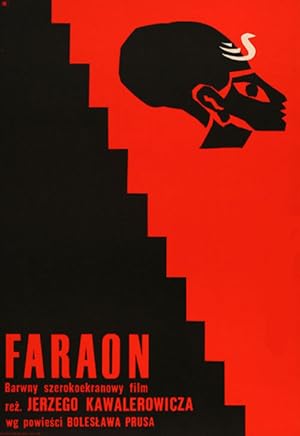
Pharaoh
Young Pharaoh Ramses XIII clashes with Egypt's clergy over influence on the affairs of the state and its coffers.
Working with a small-scale budget of $10.0M, the film achieved a modest success with $10.0M in global revenue (+0% profit margin).

Plot Structure
Story beats plotted across runtime


Narrative Arc
Emotional journey through the story's key moments
Story Circle
Blueprint 15-beat structure
Arcplot Score Breakdown
Weighted: Precision (70%) + Arc (15%) + Theme (15%)
Pharaoh (1966) exemplifies precise story structure, characteristic of Jerzy Kawalerowicz's storytelling approach. This structural analysis examines how the film's 15-point plot structure maps to proven narrative frameworks across 2 hours and 31 minutes. With an Arcplot score of 6.7, the film balances conventional beats with creative variation.
Structural Analysis
The Status Quo at 2 minutes (1% through the runtime) establishes Prince Ramses commands Egyptian military forces in the desert, establishing his position as heir apparent and his ambitious, commanding nature within the ancient kingdom's rigid hierarchy.. Significantly, this early placement immediately immerses viewers in the story world.
The inciting incident occurs at 18 minutes when Ramses' military campaign is sabotaged by priestly interference when they halt his advance during a solar eclipse, demonstrating their power to override royal military authority and humiliating the prince before his troops.. At 12% through the film, this Disruption aligns precisely with traditional story structure. This beat shifts the emotional landscape, launching the protagonist into the central conflict.
The First Threshold at 38 minutes marks the transition into Act II, occurring at 25% of the runtime. This demonstrates the protagonist's commitment to Upon his father's death, Ramses ascends to the throne as Pharaoh, actively choosing to pursue his agenda of breaking priestly power and restoring the treasury, crossing from powerless prince to ruling monarch., moving from reaction to action.
At 76 minutes, the Midpoint arrives at 50% of the runtime—precisely centered, creating perfect narrative symmetry. Notably, this crucial beat Ramses achieves a false victory when he appears to have outmaneuvered the priests politically and secured foreign alliances, believing he has the upper hand in his struggle against Herhor and the temple establishment., fundamentally raising what's at risk. The emotional intensity shifts, dividing the narrative into clear before-and-after phases.
The Collapse moment at 113 minutes (75% through) represents the emotional nadir. Here, Sarah is murdered by the priests, and Ramses discovers the depth of the conspiracy against him—his allies eliminated, his plans exposed, and his beloved killed. The whiff of death surrounds everything he cherished., indicates the protagonist at their lowest point. This beat's placement in the final quarter sets up the climactic reversal.
The Second Threshold at 121 minutes initiates the final act resolution at 80% of the runtime. Ramses resolves to seize the temple treasures by force during a solar eclipse, planning to use the priests' own tool of astronomical manipulation against them in a final desperate gambit for power., demonstrating the transformation achieved throughout the journey.
Emotional Journey
Pharaoh's emotional architecture traces a deliberate progression across 15 carefully calibrated beats.
Narrative Framework
This structural analysis employs systematic plot point analysis that identifies crucial turning points. By mapping Pharaoh against these established plot points, we can identify how Jerzy Kawalerowicz utilizes or subverts traditional narrative conventions. The plot point approach reveals not only adherence to structural principles but also creative choices that distinguish Pharaoh within the adventure genre.
Comparative Analysis
Additional adventure films include The Black Stallion, The Bad Guys and Puss in Boots.
Plot Points by Act
Act I
SetupStatus Quo
Prince Ramses commands Egyptian military forces in the desert, establishing his position as heir apparent and his ambitious, commanding nature within the ancient kingdom's rigid hierarchy.
Theme
High Priest Herhor warns that the gods and their servants hold true power in Egypt, subtly stating that even pharaohs must bow to divine authority—foreshadowing the central conflict between secular and religious power.
Worldbuilding
The complex political landscape of ancient Egypt is established: the aging Pharaoh, the ambitious prince Ramses, the scheming priesthood led by Herhor, the treasury depleted by priestly control, and the foreign threats on Egypt's borders.
Disruption
Ramses' military campaign is sabotaged by priestly interference when they halt his advance during a solar eclipse, demonstrating their power to override royal military authority and humiliating the prince before his troops.
Resistance
Ramses struggles with his powerlessness as prince, receiving counsel from various advisors. He debates whether to openly challenge the priests or bide his time, while his father's health declines and the priesthood consolidates power.
Act II
ConfrontationFirst Threshold
Upon his father's death, Ramses ascends to the throne as Pharaoh, actively choosing to pursue his agenda of breaking priestly power and restoring the treasury, crossing from powerless prince to ruling monarch.
Mirror World
Ramses' relationship with Sarah, the Jewish woman who bears his son, represents an alternative path of personal happiness and human connection outside the political machinations, embodying themes of love versus duty.
Premise
Ramses exercises pharaonic power, implementing reforms, challenging priestly authority, forming alliances with foreign powers, and attempting to reclaim the vast temple treasures for the state—the promise of a reformer king fulfilled.
Midpoint
Ramses achieves a false victory when he appears to have outmaneuvered the priests politically and secured foreign alliances, believing he has the upper hand in his struggle against Herhor and the temple establishment.
Opposition
The priesthood launches a sophisticated counter-offensive using religious prophecy, manipulation of the masses, assassination of Ramses' allies, and the murder of Sarah to systematically dismantle the pharaoh's power base.
Collapse
Sarah is murdered by the priests, and Ramses discovers the depth of the conspiracy against him—his allies eliminated, his plans exposed, and his beloved killed. The whiff of death surrounds everything he cherished.
Crisis
Ramses mourns Sarah and confronts his isolation. He processes the magnitude of his losses but refuses to surrender, steeling himself for a final confrontation with the priesthood despite knowing the odds against him.
Act III
ResolutionSecond Threshold
Ramses resolves to seize the temple treasures by force during a solar eclipse, planning to use the priests' own tool of astronomical manipulation against them in a final desperate gambit for power.
Synthesis
Ramses leads his forces against the temple during the eclipse, but the priests have anticipated his move. The confrontation culminates in betrayal and violence as the institutional power of the priesthood proves insurmountable.
Transformation
Ramses is assassinated, his reforms undone, and the priesthood installs a puppet pharaoh. The final image shows the eternal cycle of priestly domination continuing—a tragic mirror to the ambitious prince of the opening.