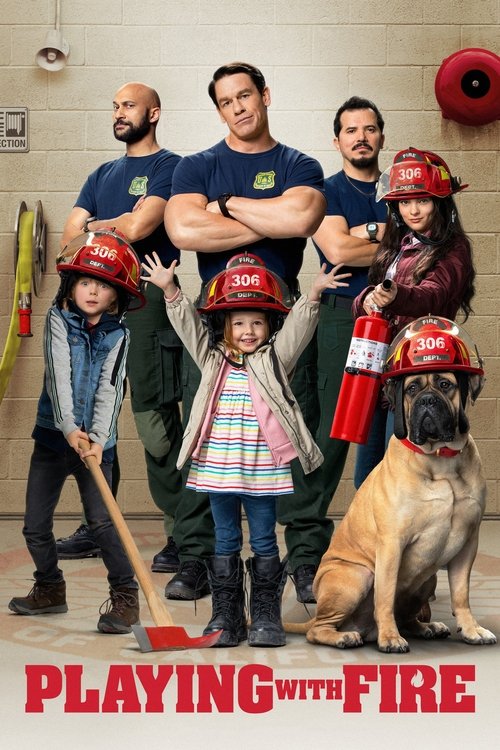
Playing with Fire
A crew of rugged firefighters meet their match when attempting to rescue three rambunctious kids.
Despite a moderate budget of $29.9M, Playing with Fire became a box office success, earning $69.4M worldwide—a 132% return.
2 wins & 2 nominations


Plot Structure
Story beats plotted across runtime


Narrative Arc
Emotional journey through the story's key moments
Story Circle
Blueprint 15-beat structure
Arcplot Score Breakdown
Weighted: Precision (70%) + Arc (15%) + Theme (15%)
Playing with Fire (2019) reveals precise dramatic framework, characteristic of Andy Fickman's storytelling approach. This structural analysis examines how the film's 15-point plot structure maps to proven narrative frameworks across 1 hour and 36 minutes. With an Arcplot score of 6.8, the film balances conventional beats with creative variation.
Characters
Cast & narrative archetypes

Jake Carson
Mark Rogers
Rodrigo Torres
Axe
Brynn
Will
Zoey
Dr. Amy Hicks
Commander Richards
Main Cast & Characters
Jake Carson
Played by John Cena
A by-the-book superintendent of a smoke jumping crew who must learn to loosen up when three children are left in his care after a rescue mission.
Mark Rogers
Played by Keegan-Michael Key
Jake's loyal and optimistic second-in-command who bonds quickly with the children and provides comic relief.
Rodrigo Torres
Played by John Leguizamo
A tough firefighter on Jake's crew who has a sensitive side that emerges when caring for the children.
Axe
Played by Tyler Mane
A large, intimidating, and mostly silent member of the crew who forms an unexpected connection with the youngest child.
Brynn
Played by Brianna Hildebrand
The eldest of the three siblings, a responsible and protective teenager who initially clashes with Jake.
Will
Played by Christian Convery
The middle child, a mischievous and energetic boy who causes chaos at the fire station.
Zoey
Played by Finley Rose Slater
The youngest sibling, an adorable toddler who forms a special bond with Axe.
Dr. Amy Hicks
Played by Judy Greer
A scientist studying toads near the fire station who becomes Jake's love interest.
Commander Richards
Played by Dennis Haysbert
Jake's demanding superior who is evaluating him for a promotion to division commander.
Structural Analysis
The Status Quo at 1 minutes (1% through the runtime) establishes Smokejumper Superintendent Jake Carson runs his elite wildfire crew like a military unit - disciplined, efficient, and emotionally distant. He's focused solely on professional excellence and getting promoted to commander.. The analysis reveals that this early placement immediately immerses viewers in the story world.
The inciting incident occurs at 12 minutes when While responding to a cabin fire, Jake and his crew rescue three siblings - Brynn, Will, and Zoey - but cannot locate their parents. They're forced to take the children back to the firehouse temporarily.. At 12% through the film, this Disruption aligns precisely with traditional story structure. This beat shifts the emotional landscape, launching the protagonist into the central conflict.
The First Threshold at 24 minutes marks the transition into Act II, occurring at 26% of the runtime. This reveals the protagonist's commitment to Social services cannot immediately place the children, so Jake is forced to keep them at the firehouse for an extended period. He reluctantly commits to caring for them while maintaining this won't change anything., moving from reaction to action.
At 48 minutes, the Midpoint arrives at 50% of the runtime—precisely centered, creating perfect narrative symmetry. Of particular interest, this crucial beat Jake learns he got the promotion to commander - a false victory. He's achieved his professional goal, but realizes it means leaving the station and the kids. He celebrates but feels conflicted for the first time., fundamentally raising what's at risk. The emotional intensity shifts, dividing the narrative into clear before-and-after phases.
The Collapse moment at 72 minutes (76% through) represents the emotional nadir. Here, The children are taken away to reunite with their parents. Jake lets them go without fighting for them or expressing his true feelings. The firehouse returns to its old sterile order - the "death" of the family he'd built., indicates the protagonist at their lowest point. This beat's placement in the final quarter sets up the climactic reversal.
The Second Threshold at 77 minutes initiates the final act resolution at 81% of the runtime. Jake decides to fight for his found family. He realizes that being a leader means being emotionally present, not just professionally competent. He chooses connection over the promotion and heads to stop the children from leaving., demonstrating the transformation achieved throughout the journey.
Emotional Journey
Playing with Fire's emotional architecture traces a deliberate progression across 15 carefully calibrated beats.
Narrative Framework
This structural analysis employs proven narrative structure principles that track dramatic progression. By mapping Playing with Fire against these established plot points, we can identify how Andy Fickman utilizes or subverts traditional narrative conventions. The plot point approach reveals not only adherence to structural principles but also creative choices that distinguish Playing with Fire within the family genre.
Andy Fickman's Structural Approach
Among the 7 Andy Fickman films analyzed on Arcplot, the average structural score is 7.1, reflecting strong command of classical structure. Playing with Fire takes a more unconventional approach compared to the director's typical style. For comparative analysis, explore the complete Andy Fickman filmography.
Comparative Analysis
Additional family films include The Black Stallion, The Bad Guys and Ella Enchanted. For more Andy Fickman analyses, see You Again, Parental Guidance and Paul Blart: Mall Cop 2.
Plot Points by Act
Act I
SetupStatus Quo
Smokejumper Superintendent Jake Carson runs his elite wildfire crew like a military unit - disciplined, efficient, and emotionally distant. He's focused solely on professional excellence and getting promoted to commander.
Theme
One of Jake's crew members mentions that "there's more to life than just the job" and talks about family, foreshadowing Jake's journey toward understanding connection and vulnerability.
Worldbuilding
Introduction to Jake's firehouse crew - his tight-knit team of smokejumpers including Mark, Rodrigo, and Axe. They're competent firefighters but emotionally underdeveloped men. Jake is awaiting word on his promotion to commander.
Disruption
While responding to a cabin fire, Jake and his crew rescue three siblings - Brynn, Will, and Zoey - but cannot locate their parents. They're forced to take the children back to the firehouse temporarily.
Resistance
Jake and his crew struggle with basic childcare as they wait for social services. The children are chaotic and needy, completely disrupting the firehouse order. Jake resists getting attached, insisting this is temporary.
Act II
ConfrontationFirst Threshold
Social services cannot immediately place the children, so Jake is forced to keep them at the firehouse for an extended period. He reluctantly commits to caring for them while maintaining this won't change anything.
Mirror World
Dr. Amy Hicks, a nature scientist, arrives and creates an immediate connection with the children. She represents emotional openness and nurturing - everything Jake has walled off. A potential romance begins.
Premise
The "firemen as babysitters" comedy we came for. Jake and his crew fumble through childcare - birthday parties, princess tea parties, dealing with tantrums. Despite resistance, Jake begins bonding with the kids, especially Brynn.
Midpoint
Jake learns he got the promotion to commander - a false victory. He's achieved his professional goal, but realizes it means leaving the station and the kids. He celebrates but feels conflicted for the first time.
Opposition
Jake becomes genuinely attached to the children and Amy, but his emotional unavailability creates problems. The children's parents are found. Jake must choose between his promotion (old life) and his new connections (new life). He struggles to express his feelings.
Collapse
The children are taken away to reunite with their parents. Jake lets them go without fighting for them or expressing his true feelings. The firehouse returns to its old sterile order - the "death" of the family he'd built.
Crisis
Jake is miserable in his empty firehouse. His crew confronts him about shutting down emotionally. He realizes he's lost something precious by refusing to be vulnerable and that his promotion means nothing without people to share it with.
Act III
ResolutionSecond Threshold
Jake decides to fight for his found family. He realizes that being a leader means being emotionally present, not just professionally competent. He chooses connection over the promotion and heads to stop the children from leaving.
Synthesis
Jake and his crew race to catch the children before they leave. He makes a grand gesture, finally expressing his feelings and asking to remain in their lives. He turns down the promotion to stay at the firehouse. The family reunites.
Transformation
Jake is shown with the children and Amy at the firehouse - now a warm, lived-in space full of toys and laughter. The rigid military commander has become a nurturing father figure who balances strength with emotional openness.