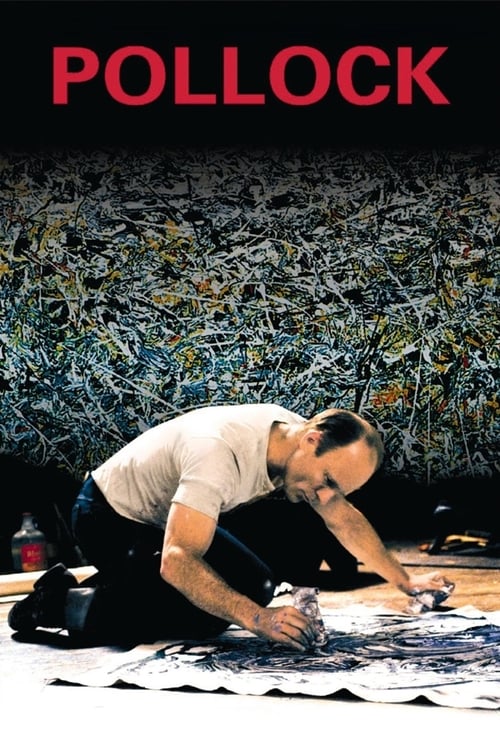
Pollock
In August of 1949, Life Magazine ran a banner headline that begged the question: "Jackson Pollock: Is he the greatest living painter in the United States?" The film is a look back into the life of an extraordinary man, a man who has fittingly been called "an artist dedicated to concealment, a celebrity who nobody knew." As he struggled with self-doubt, engaging in a lonely tug-of-war between needing to express himself and wanting to shut the world out, Pollock began a downward spiral.
Working with a small-scale budget of $6.0M, the film achieved a steady performer with $11.0M in global revenue (+83% profit margin).
1 Oscar. 3 wins & 10 nominations


Plot Structure
Story beats plotted across runtime


Narrative Arc
Emotional journey through the story's key moments
Story Circle
Blueprint 15-beat structure
Arcplot Score Breakdown
Weighted: Precision (70%) + Arc (15%) + Theme (15%)
Pollock (2000) showcases carefully calibrated narrative design, characteristic of Ed Harris's storytelling approach. This structural analysis examines how the film's 15-point plot structure maps to proven narrative frameworks across 2 hours and 12 minutes. With an Arcplot score of 7.0, the film balances conventional beats with creative variation.
Characters
Cast & narrative archetypes

Jackson Pollock
Lee Krasner
Peggy Guggenheim
Ruth Kligman
Clement Greenberg
Howard Putzel
Charles Pollock
Sande Pollock
Main Cast & Characters
Jackson Pollock
Played by Ed Harris
Brilliant but self-destructive abstract expressionist painter struggling with alcoholism, depression, and the pressures of artistic fame.
Lee Krasner
Played by Marcia Gay Harden
Accomplished abstract painter who becomes Pollock's wife, manager, and fierce protector, sacrificing her own career for his.
Peggy Guggenheim
Played by Amy Madigan
Wealthy art collector and patron who gives Pollock his first major gallery show and commissions his breakthrough mural.
Ruth Kligman
Played by Jennifer Connelly
Young artist who becomes Pollock's mistress in his final years, surviving the car crash that kills him.
Clement Greenberg
Played by Jeffrey Tambor
Influential art critic who champions Pollock's work and helps establish abstract expressionism as a major art movement.
Howard Putzel
Played by Bud Cort
Art dealer who recognizes Pollock's talent early and connects him with Peggy Guggenheim.
Charles Pollock
Played by Matthew Sussman
Jackson's older brother who provides emotional support and worries about his sibling's self-destructive behavior.
Sande Pollock
Played by Robert Knott
Jackson's brother who shares a New York apartment with him early in his career.
Structural Analysis
The Status Quo at 1 minutes (1% through the runtime) establishes Jackson Pollock drinks heavily at a crowded Greenwich Village party in 1941, an unknown, struggling artist surrounded by the established art world elite, isolated and insecure.. Significantly, this early placement immediately immerses viewers in the story world.
The inciting incident occurs at 16 minutes when Lee Krasner forcefully inserts herself into Jackson's life, declaring his work important and positioning herself as his advocate, disrupting his isolated, self-pitying existence.. At 12% through the film, this Disruption aligns precisely with traditional story structure. This beat shifts the emotional landscape, launching the protagonist into the central conflict.
The First Threshold at 33 minutes marks the transition into Act II, occurring at 25% of the runtime. This illustrates the protagonist's commitment to Peggy Guggenheim offers Jackson his first solo show and a contract, marking his entry into the professional art world. Jackson accepts, committing to the career Lee has pushed him toward., moving from reaction to action.
At 67 minutes, the Midpoint arrives at 50% of the runtime—precisely centered, creating perfect narrative symmetry. Structural examination shows that this crucial beat Jackson achieves massive success and recognition as America's greatest living painter. False victory: fame and validation seem to be everything he wanted, but the pressure and his inner demons remain unaddressed., fundamentally raising what's at risk. The emotional intensity shifts, dividing the narrative into clear before-and-after phases.
The Collapse moment at 99 minutes (75% through) represents the emotional nadir. Here, Lee leaves Jackson after years of abuse and betrayal. Alone in the house, Jackson is completely isolated, his marriage destroyed, his creativity dead, drinking himself to oblivion. The relationship that saved him is gone., reveals the protagonist at their lowest point. This beat's placement in the final quarter sets up the climactic reversal.
The Second Threshold at 105 minutes initiates the final act resolution at 80% of the runtime. Jackson gets drunk and decides to drive with his mistress and her friend. The decision to get behind the wheel while intoxicated—a final act of self-destruction and refusal to change., demonstrating the transformation achieved throughout the journey.
Emotional Journey
Pollock's emotional architecture traces a deliberate progression across 15 carefully calibrated beats.
Narrative Framework
This structural analysis employs structural analysis methodology used to understand storytelling architecture. By mapping Pollock against these established plot points, we can identify how Ed Harris utilizes or subverts traditional narrative conventions. The plot point approach reveals not only adherence to structural principles but also creative choices that distinguish Pollock within the drama genre.
Ed Harris's Structural Approach
Among the 2 Ed Harris films analyzed on Arcplot, the average structural score is 7.2, reflecting strong command of classical structure. Pollock takes a more unconventional approach compared to the director's typical style. For comparative analysis, explore the complete Ed Harris filmography.
Comparative Analysis
Additional drama films include After Thomas, South Pacific and Dirty Dancing: Havana Nights. For more Ed Harris analyses, see Appaloosa.
Plot Points by Act
Act I
SetupStatus Quo
Jackson Pollock drinks heavily at a crowded Greenwich Village party in 1941, an unknown, struggling artist surrounded by the established art world elite, isolated and insecure.
Theme
Lee Krasner tells Jackson, "You have to learn to say no to yourself," addressing his lack of discipline and self-destructive tendencies that will define his arc.
Worldbuilding
Establishment of Jackson's chaotic life: his alcoholism, poverty, creative struggles, relationship with his brothers, and the competitive New York art scene. Lee Krasner emerges as both critic and admirer of his raw talent.
Disruption
Lee Krasner forcefully inserts herself into Jackson's life, declaring his work important and positioning herself as his advocate, disrupting his isolated, self-pitying existence.
Resistance
Lee mentors Jackson, introduces him to influential figures like Peggy Guggenheim, pushes him toward sobriety and productivity. Jackson resists, drinks, struggles with self-doubt, but Lee persists in believing in his genius.
Act II
ConfrontationFirst Threshold
Peggy Guggenheim offers Jackson his first solo show and a contract, marking his entry into the professional art world. Jackson accepts, committing to the career Lee has pushed him toward.
Mirror World
Jackson and Lee marry and move to Springs, Long Island, leaving the city behind. Their partnership deepens as the thematic relationship that will test whether Jackson can balance art, love, and self-control.
Premise
Jackson develops his revolutionary drip-painting technique in the barn studio. Creative breakthrough after breakthrough, Life magazine feature, growing fame. The promise of artistic genius fulfilled as he becomes "Jack the Dripper."
Midpoint
Jackson achieves massive success and recognition as America's greatest living painter. False victory: fame and validation seem to be everything he wanted, but the pressure and his inner demons remain unaddressed.
Opposition
Success intensifies Jackson's self-destructive tendencies. He returns to drinking, becomes abusive toward Lee, has an affair, can't paint. Critics turn on him. Lee's sacrifice and devotion are repaid with cruelty. Everything unravels.
Collapse
Lee leaves Jackson after years of abuse and betrayal. Alone in the house, Jackson is completely isolated, his marriage destroyed, his creativity dead, drinking himself to oblivion. The relationship that saved him is gone.
Crisis
Jackson spirals in solitude and self-pity. Brief moments suggest awareness of what he's lost, but he remains trapped in his alcoholism and inability to create, the darkness consuming him completely.
Act III
ResolutionSecond Threshold
Jackson gets drunk and decides to drive with his mistress and her friend. The decision to get behind the wheel while intoxicated—a final act of self-destruction and refusal to change.
Synthesis
The car crash kills Jackson at age 44. Aftermath: Lee receives the news, grieves, and ultimately dedicates herself to preserving his legacy, completing the sacrifice she began decades earlier.
Transformation
Lee stands alone in Jackson's studio, surrounded by his paintings. The final image mirrors the opening: Jackson remains absent, destroyed by his demons, but his art—and Lee's devotion—endures. A tragedy of unrealized transformation.