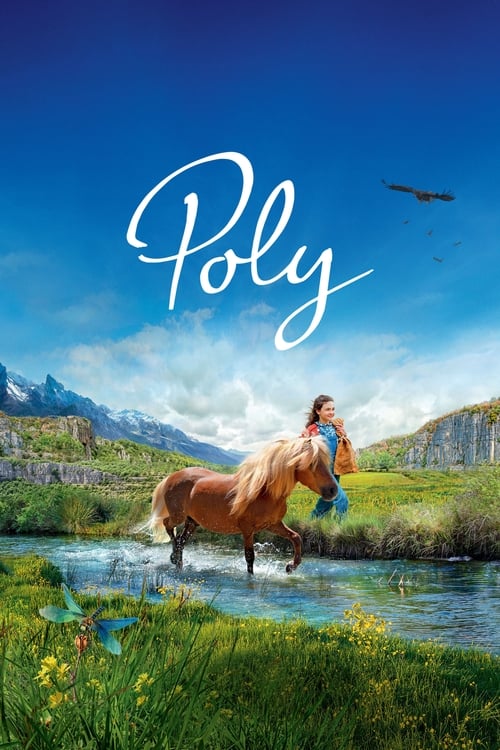
Poly
The adventures of Shetland pony Poly in the South of France.
The film earned $5.2M at the global box office.
Plot Structure
Story beats plotted across runtime


Narrative Arc
Emotional journey through the story's key moments
Story Circle
Blueprint 15-beat structure
Arcplot Score Breakdown
Weighted: Precision (70%) + Arc (15%) + Theme (15%)
Poly (2020) showcases meticulously timed narrative design, characteristic of Nicolas Vanier's storytelling approach. This structural analysis examines how the film's 15-point plot structure maps to proven narrative frameworks across 1 hour and 42 minutes. With an Arcplot score of 7.4, the film balances conventional beats with creative variation.
Characters
Cast & narrative archetypes

Cecile
Louise
Victor
Brancalou
Solange
Le Maire
Main Cast & Characters
Cecile
Played by Elisa de Lambert
A lonely young girl who moves to a small village with her mother and forms a deep bond with an escaped circus pony named Poly.
Louise
Played by Julie Gayet
Cecile's caring but overworked mother who is trying to build a new life for herself and her daughter in a rural village.
Victor
Played by Francois Cluzet
A kind-hearted local man who becomes a father figure to Cecile and helps protect Poly from the circus.
Brancalou
Played by Patrick Timsit
The cruel circus owner who mistreats his animals and relentlessly pursues Poly to recapture him.
Solange
Played by Camille Cottin
A warm village woman who befriends Louise and helps the family integrate into the community.
Le Maire
Played by Guillaume De Tonquedec
The village mayor who must navigate between protecting local interests and dealing with the circus's claims.
Structural Analysis
The Status Quo at 1 minutes (1% through the runtime) establishes Tyler, a lonely boy struggling with his parents' absence, is shown isolated at home under the care of his aunt, establishing his emotional distance and need for connection.. The analysis reveals that this early placement immediately immerses viewers in the story world.
The inciting incident occurs at 12 minutes when Tyler discovers Poly, an orphaned baby parrot, creating an immediate bond. This unexpected encounter disrupts his isolated routine and sparks hope for connection.. At 12% through the film, this Disruption aligns precisely with traditional story structure. This beat shifts the emotional landscape, launching the protagonist into the central conflict.
The First Threshold at 26 minutes marks the transition into Act II, occurring at 25% of the runtime. This shows the protagonist's commitment to Tyler makes the active choice to fully commit to protecting and raising Poly, accepting the responsibility and challenges that come with caring for another life., moving from reaction to action.
At 51 minutes, the Midpoint arrives at 50% of the runtime—precisely centered, creating perfect narrative symmetry. Structural examination shows that this crucial beat Authorities discover Poly and declare the bird must be surrendered to a wildlife facility. Tyler's world is threatened; what seemed like a perfect situation suddenly faces external opposition., fundamentally raising what's at risk. The emotional intensity shifts, dividing the narrative into clear before-and-after phases.
The Collapse moment at 77 minutes (75% through) represents the emotional nadir. Here, Poly is taken away despite Tyler's efforts. He loses his best friend and companion, experiencing profound grief and a metaphorical death of his newfound happiness and confidence., reveals the protagonist at their lowest point. This beat's placement in the final quarter sets up the climactic reversal.
The Second Threshold at 82 minutes initiates the final act resolution at 80% of the runtime. Tyler realizes that love and connection are worth fighting for, even in the face of loss. He chooses to take action one final time, combining what he's learned about community with his determination., demonstrating the transformation achieved throughout the journey.
Emotional Journey
Poly's emotional architecture traces a deliberate progression across 15 carefully calibrated beats.
Narrative Framework
This structural analysis employs proven narrative structure principles that track dramatic progression. By mapping Poly against these established plot points, we can identify how Nicolas Vanier utilizes or subverts traditional narrative conventions. The plot point approach reveals not only adherence to structural principles but also creative choices that distinguish Poly within the family genre.
Nicolas Vanier's Structural Approach
Among the 2 Nicolas Vanier films analyzed on Arcplot, the average structural score is 7.3, reflecting strong command of classical structure. Poly represents one of the director's most structurally precise works. For comparative analysis, explore the complete Nicolas Vanier filmography.
Comparative Analysis
Additional family films include The Black Stallion, The Bad Guys and Ella Enchanted. For more Nicolas Vanier analyses, see Spread Your Wings.
Plot Points by Act
Act I
SetupStatus Quo
Tyler, a lonely boy struggling with his parents' absence, is shown isolated at home under the care of his aunt, establishing his emotional distance and need for connection.
Theme
Tyler's aunt mentions that "sometimes the things we need most come from the most unexpected places," hinting at the theme of finding family and connection in surprising ways.
Worldbuilding
Introduction to Tyler's world: his strained relationship with peers, his aunt's attempts to care for him, his father's deployment, and his mother's demanding work schedule that keeps her away.
Disruption
Tyler discovers Poly, an orphaned baby parrot, creating an immediate bond. This unexpected encounter disrupts his isolated routine and sparks hope for connection.
Resistance
Tyler debates whether to keep Poly secret, learns to care for the bird, and begins to open up emotionally. His aunt becomes suspicious but supportive, guiding him toward responsibility.
Act II
ConfrontationFirst Threshold
Tyler makes the active choice to fully commit to protecting and raising Poly, accepting the responsibility and challenges that come with caring for another life.
Mirror World
Tyler begins forming genuine friendships with other kids who are drawn to Poly, experiencing the connection and community he's been missing. The bird becomes a bridge to others.
Premise
The fun of raising Poly: teaching the parrot tricks, adventures together, Tyler gaining confidence and social connections, and the joy of their unique bond flourishing.
Midpoint
Authorities discover Poly and declare the bird must be surrendered to a wildlife facility. Tyler's world is threatened; what seemed like a perfect situation suddenly faces external opposition.
Opposition
Tyler fights to keep Poly through legal and emotional channels, but bureaucratic forces close in. His relationships strain under pressure, and his inexperience with advocacy becomes apparent.
Collapse
Poly is taken away despite Tyler's efforts. He loses his best friend and companion, experiencing profound grief and a metaphorical death of his newfound happiness and confidence.
Crisis
Tyler retreats into isolation and despair, questioning whether opening his heart was worth the pain. He processes the loss and contemplates giving up entirely.
Act III
ResolutionSecond Threshold
Tyler realizes that love and connection are worth fighting for, even in the face of loss. He chooses to take action one final time, combining what he's learned about community with his determination.
Synthesis
Tyler rallies his community, family, and friends in a final effort to reunite with Poly through proper legal channels, demonstrating his growth in connecting with others and fighting for what matters.
Transformation
Tyler is reunited with Poly, surrounded by family and friends. Where he was once isolated, he's now connected; where he was afraid to love, he's now open and confident.