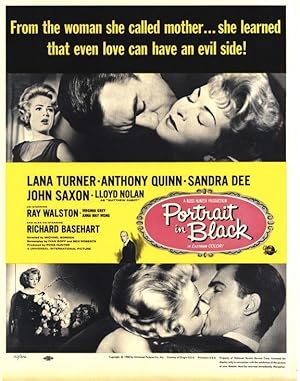
Portrait in Black
Lana Turner and Anthony Quinn are lovers who murder Lana's cruel, but wealthy husband, played by Lloyd Nolan. Since Quinn is her husband's physician, the murder is easily committed, but blackmail, guilt and suspicion are the unanticipated results.
Despite its limited budget of $1.4M, Portrait in Black became a massive hit, earning $9.2M worldwide—a remarkable 557% return. The film's innovative storytelling attracted moviegoers, showing that strong storytelling can transcend budget limitations.

Plot Structure
Story beats plotted across runtime


Narrative Arc
Emotional journey through the story's key moments
Story Circle
Blueprint 15-beat structure
Arcplot Score Breakdown
Weighted: Precision (70%) + Arc (15%) + Theme (15%)
Portrait in Black (1960) demonstrates strategically placed narrative design, characteristic of Michael Gordon's storytelling approach. This structural analysis examines how the film's 15-point plot structure maps to proven narrative frameworks across 1 hour and 52 minutes. With an Arcplot score of 7.4, the film balances conventional beats with creative variation.
Characters
Cast & narrative archetypes

Sheila Donahue Cabot
Dr. David Rivera
Howard Mason
Cob Donahue
Tawny Blair
Matthew Donahue Cabot
Miss Lee
Blake Richards
Main Cast & Characters
Sheila Donahue Cabot
Played by Lana Turner
The beautiful, unhappy wife of a dying shipping magnate who becomes entangled in a passionate affair with her husband's doctor, leading to murder and blackmail.
Dr. David Rivera
Played by Anthony Quinn
A skilled physician who falls in love with his patient's wife, conspiring with her to murder her husband and becoming consumed by guilt and paranoia.
Howard Mason
Played by Richard Basehart
The loyal business manager and trusted family friend who discovers the murder and attempts to blackmail the lovers.
Cob Donahue
Played by John Saxon
Sheila's stepson who harbors suspicions about his father's death and romantic feelings that complicate the family dynamics.
Tawny Blair
Played by Sandra Dee
Cob's vivacious girlfriend who provides lighter moments amid the dark intrigue of the household.
Matthew Donahue Cabot
Played by Lloyd Nolan
The tyrannical, terminally ill shipping tycoon whose cruel treatment of his wife drives her to desperation and murder.
Miss Lee
Played by Anna May Wong
The efficient and observant nurse who tends to the ailing Matthew Cabot and witnesses the household tensions.
Blake Richards
Played by Ray Walston
The district attorney who investigates the suspicious circumstances surrounding Matthew Cabot's death.
Structural Analysis
The Status Quo at 1 minutes (1% through the runtime) establishes Sheila Cabot lives in a luxurious mansion, married to wealthy invalid Matthew Cabot, presenting the facade of a devoted wife while trapped in a loveless marriage caring for her demanding, bedridden husband.. Notably, this early placement immediately immerses viewers in the story world.
The inciting incident occurs at 14 minutes when Matthew reveals he knows about Sheila's affair and threatens to destroy both her and David, cutting her off completely and promising to ruin David's medical career, leaving the lovers desperate and cornered.. At 13% through the film, this Disruption is delayed, allowing extended setup of the story world. This beat shifts the emotional landscape, launching the protagonist into the central conflict.
The First Threshold at 28 minutes marks the transition into Act II, occurring at 25% of the runtime. This indicates the protagonist's commitment to Sheila and David actively decide to murder Matthew. David administers a lethal injection disguised as medication, crossing the moral threshold from which there is no return, transforming them from adulterers into murderers., moving from reaction to action.
At 56 minutes, the Midpoint arrives at 50% of the runtime—precisely centered, creating perfect narrative symmetry. The analysis reveals that this crucial beat The blackmailer reveals detailed knowledge of the murder and demands payment. What seemed like a successful crime is revealed as completely compromised—someone witnessed everything, and the false security of getting away with murder shatters completely., fundamentally raising what's at risk. The emotional intensity shifts, dividing the narrative into clear before-and-after phases.
The Collapse moment at 84 minutes (75% through) represents the emotional nadir. Here, The blackmailer is revealed to be someone close to them, and in their panic to silence the threat, another death occurs. The body count rises, and any hope of redemption or escape dies as they spiral deeper into murderous desperation., illustrates the protagonist at their lowest point. This beat's placement in the final quarter sets up the climactic reversal.
The Second Threshold at 90 minutes initiates the final act resolution at 80% of the runtime. The police close in with evidence, and Sheila realizes confession is the only path to psychological freedom. She understands that living in the golden cage of guilt is worse than any prison, and the only escape from the trap they created is to face justice., demonstrating the transformation achieved throughout the journey.
Emotional Journey
Portrait in Black's emotional architecture traces a deliberate progression across 15 carefully calibrated beats.
Narrative Framework
This structural analysis employs systematic plot point analysis that identifies crucial turning points. By mapping Portrait in Black against these established plot points, we can identify how Michael Gordon utilizes or subverts traditional narrative conventions. The plot point approach reveals not only adherence to structural principles but also creative choices that distinguish Portrait in Black within the crime genre.
Michael Gordon's Structural Approach
Among the 2 Michael Gordon films analyzed on Arcplot, the average structural score is 7.2, reflecting strong command of classical structure. Portrait in Black represents one of the director's most structurally precise works. For comparative analysis, explore the complete Michael Gordon filmography.
Comparative Analysis
Additional crime films include The Bad Guys, Rustom and The Whole Ten Yards. For more Michael Gordon analyses, see Move Over, Darling.
Plot Points by Act
Act I
SetupStatus Quo
Sheila Cabot lives in a luxurious mansion, married to wealthy invalid Matthew Cabot, presenting the facade of a devoted wife while trapped in a loveless marriage caring for her demanding, bedridden husband.
Theme
Dr. David Rivera tells Sheila, "Some cages are made of gold, but they're still cages," foreshadowing the thematic exploration of guilt, entrapment, and the price of freedom through murder.
Worldbuilding
Establishment of Sheila's gilded cage existence, her affair with Dr. David Rivera, Matthew's tyrannical control over the household and business, and the introduction of supporting characters including secretary Cathy, stepson Blake, and Howard Mason.
Disruption
Matthew reveals he knows about Sheila's affair and threatens to destroy both her and David, cutting her off completely and promising to ruin David's medical career, leaving the lovers desperate and cornered.
Resistance
Sheila and David agonize over their impossible situation, debating options as Matthew's threats intensify. David's medical knowledge presents a dangerous opportunity, and the couple wrestles with a monstrous decision they can't unmake.
Act II
ConfrontationFirst Threshold
Sheila and David actively decide to murder Matthew. David administers a lethal injection disguised as medication, crossing the moral threshold from which there is no return, transforming them from adulterers into murderers.
Mirror World
The introduction of the blackmailer subplot begins when mysterious threats emerge. This mirror relationship forces Sheila to confront the truth that freedom through murder only creates a new, more terrible prison of guilt and fear.
Premise
The "perfect murder" premise plays out as Sheila and David attempt to enjoy their freedom and continue their affair, but anonymous blackmail letters arrive, someone knows their secret, and paranoia mounts as they try to identify the blackmailer while maintaining innocence.
Midpoint
The blackmailer reveals detailed knowledge of the murder and demands payment. What seemed like a successful crime is revealed as completely compromised—someone witnessed everything, and the false security of getting away with murder shatters completely.
Opposition
Escalating blackmail payments drain resources and nerves. Sheila and David turn on each other under pressure, their relationship deteriorating as guilt and suspicion consume them. They investigate who might know, growing increasingly desperate and paranoid as the trap tightens.
Collapse
The blackmailer is revealed to be someone close to them, and in their panic to silence the threat, another death occurs. The body count rises, and any hope of redemption or escape dies as they spiral deeper into murderous desperation.
Crisis
Sheila and David face the darkness of what they've become—multiple murders, destroyed lives, and the realization that their crime has created only horror and damnation. Their relationship is poisoned beyond repair by guilt and mutual blame.
Act III
ResolutionSecond Threshold
The police close in with evidence, and Sheila realizes confession is the only path to psychological freedom. She understands that living in the golden cage of guilt is worse than any prison, and the only escape from the trap they created is to face justice.
Synthesis
The final confrontation with law enforcement unfolds as the web of lies unravels completely. Sheila and David's fates are sealed as evidence mounts, relationships are destroyed, and the full price of their crimes becomes unavoidable and absolute.
Transformation
Sheila, broken and hollow, faces her fate having lost everything—freedom, love, innocence, and soul. The closing image shows her transformed from a woman in a gilded cage to a woman imprisoned by irreversible guilt and consequence, the ultimate price of murderous freedom.