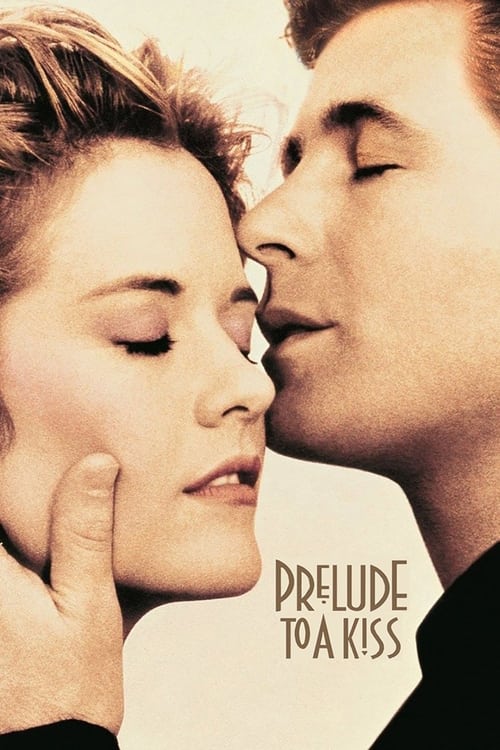
Prelude to a Kiss
A couple fall in love despite the girl's pessimistic outlook. As they struggle to come to terms with their relationship, something supernatural happens that tests it.
The film earned $22.7M at the global box office.
Plot Structure
Story beats plotted across runtime


Narrative Arc
Emotional journey through the story's key moments
Story Circle
Blueprint 15-beat structure
Arcplot Score Breakdown
Weighted: Precision (70%) + Arc (15%) + Theme (15%)
Prelude to a Kiss (1992) reveals deliberately positioned plot construction, characteristic of Norman René's storytelling approach. This structural analysis examines how the film's 15-point plot structure maps to proven narrative frameworks across 1 hour and 45 minutes. With an Arcplot score of 7.3, the film balances conventional beats with creative variation.
Characters
Cast & narrative archetypes

Peter Hoskins
Rita Boyle
Julius
Dr. Boyle
Mrs. Boyle
Taylor
Main Cast & Characters
Peter Hoskins
Played by Alec Baldwin
A romantic publisher who falls deeply in love with Rita but struggles when she mysteriously changes after their wedding.
Rita Boyle
Played by Meg Ryan
A free-spirited bartender who marries Peter but switches souls with an elderly stranger at their wedding.
Julius
Played by Sydney Walker
A mysterious elderly man dying of cancer who kisses the bride at the wedding, unknowingly causing a soul swap.
Dr. Boyle
Played by Ned Beatty
Rita's father, a supportive and loving parent concerned about his daughter's welfare.
Mrs. Boyle
Played by Patty Duke
Rita's warm and perceptive mother who notices something is wrong with her daughter.
Taylor
Played by Stanley Tucci
Peter's best friend and confidant who tries to help him through his marital crisis.
Structural Analysis
The Status Quo at 1 minutes (1% through the runtime) establishes Peter works as a bartender and publisher, living a safe, measured life avoiding emotional risks and deep connections.. Of particular interest, this early placement immediately immerses viewers in the story world.
The inciting incident occurs at 13 minutes when Peter proposes to Rita, and she accepts, committing to marriage despite her fears and anxieties about life and death.. At 13% through the film, this Disruption is delayed, allowing extended setup of the story world. This beat shifts the emotional landscape, launching the protagonist into the central conflict.
The First Threshold at 26 minutes marks the transition into Act II, occurring at 25% of the runtime. This shows the protagonist's commitment to Peter and Rita marry in the garden ceremony; an elderly stranger (Julius) crashes the wedding and kisses the bride., moving from reaction to action.
At 53 minutes, the Midpoint arrives at 50% of the runtime—precisely centered, creating perfect narrative symmetry. Of particular interest, this crucial beat Peter discovers the truth: the old man Julius and Rita switched souls/bodies when he kissed her at the wedding. False defeat—his wife is gone., fundamentally raising what's at risk. The emotional intensity shifts, dividing the narrative into clear before-and-after phases.
The Collapse moment at 79 minutes (75% through) represents the emotional nadir. Here, Peter locates the real Rita (in Julius's dying body) and realizes she may die permanently trapped in the old man's body; death looms literally., reveals the protagonist at their lowest point. This beat's placement in the final quarter sets up the climactic reversal.
The Second Threshold at 84 minutes initiates the final act resolution at 80% of the runtime. Peter realizes true love means accepting the whole person—body and soul—and convinces Julius to switch back, appealing to his humanity and compassion., demonstrating the transformation achieved throughout the journey.
Emotional Journey
Prelude to a Kiss's emotional architecture traces a deliberate progression across 15 carefully calibrated beats.
Narrative Framework
This structural analysis employs a 15-point narrative structure framework that maps key story moments. By mapping Prelude to a Kiss against these established plot points, we can identify how Norman René utilizes or subverts traditional narrative conventions. The plot point approach reveals not only adherence to structural principles but also creative choices that distinguish Prelude to a Kiss within the drama genre.
Comparative Analysis
Additional drama films include After Thomas, South Pacific and Dirty Dancing: Havana Nights.
Plot Points by Act
Act I
SetupStatus Quo
Peter works as a bartender and publisher, living a safe, measured life avoiding emotional risks and deep connections.
Theme
Rita's father or friend discusses the nature of love and identity, asking what makes someone who they are—their soul or their body.
Worldbuilding
Peter meets Rita at a party; despite her anxious, hypochondriac nature and his cynicism, they fall deeply in love through courtship montage.
Disruption
Peter proposes to Rita, and she accepts, committing to marriage despite her fears and anxieties about life and death.
Resistance
Wedding preparations unfold; Rita expresses fears about mortality and change; they navigate family dynamics and pre-wedding jitters.
Act II
ConfrontationFirst Threshold
Peter and Rita marry in the garden ceremony; an elderly stranger (Julius) crashes the wedding and kisses the bride.
Mirror World
On the honeymoon, Peter realizes something is profoundly wrong—Rita acts like a stranger, doesn't know intimate details, behaves completely differently.
Premise
Peter lives with this stranger in Rita's body; he investigates what happened while struggling with loving the soul versus the physical person.
Midpoint
Peter discovers the truth: the old man Julius and Rita switched souls/bodies when he kissed her at the wedding. False defeat—his wife is gone.
Opposition
Peter must find Julius (now in Rita's body) to reverse the swap; struggles with what love means—is it the body or the soul he loves?
Collapse
Peter locates the real Rita (in Julius's dying body) and realizes she may die permanently trapped in the old man's body; death looms literally.
Crisis
Peter confronts the darkness of potentially losing Rita forever and must decide if he loves her soul enough to fight for her return.
Act III
ResolutionSecond Threshold
Peter realizes true love means accepting the whole person—body and soul—and convinces Julius to switch back, appealing to his humanity and compassion.
Synthesis
The kiss reverses the swap; Rita returns to her own body; Peter and Rita reunite, transformed by understanding what truly matters in love.
Transformation
Peter and Rita together, now deeply connected, having learned that love transcends the physical—they embrace life and each other without fear.