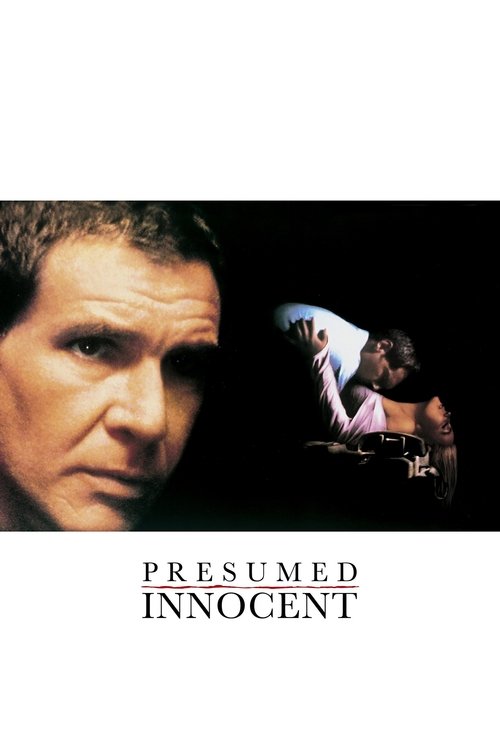
Presumed Innocent
Rusty Sabich is a deputy prosecutor engaged in an obsessive affair with a coworker who is murdered. Soon after, he's accused of the crime. And his fight to clear his name becomes a whirlpool of lies and hidden passions.
Despite a respectable budget of $22.0M, Presumed Innocent became a box office phenomenon, earning $221.3M worldwide—a remarkable 906% return.
1 win & 3 nominations


Plot Structure
Story beats plotted across runtime


Narrative Arc
Emotional journey through the story's key moments
Story Circle
Blueprint 15-beat structure
Arcplot Score Breakdown
Weighted: Precision (70%) + Arc (15%) + Theme (15%)
Presumed Innocent (1990) showcases precise story structure, characteristic of Alan J. Pakula's storytelling approach. This structural analysis examines how the film's 15-point plot structure maps to proven narrative frameworks across 2 hours and 7 minutes. With an Arcplot score of 7.4, the film balances conventional beats with creative variation.
Characters
Cast & narrative archetypes

Rusty Sabich
Barbara Sabich
Sandy Stern
Carolyn Polhemus
Raymond Horgan
Nico Della Guardia
Tommy Molto
Judge Larren Lyttle
Main Cast & Characters
Rusty Sabich
Played by Harrison Ford
A chief deputy prosecutor accused of murdering his colleague and former lover Carolyn Polhemus. He must prove his innocence while dealing with personal and professional betrayal.
Barbara Sabich
Played by Bonnie Bedelia
Rusty's wife who stands by him during the trial despite knowing about his affair. Intelligent and complex, hiding depths beneath her composed exterior.
Sandy Stern
Played by Raúl Juliá
Rusty's defense attorney, a skilled and methodical lawyer who carefully constructs the defense strategy. Calm, strategic, and deeply professional.
Carolyn Polhemus
Played by Greta Scacchi
A murdered deputy prosecutor and Rusty's former lover. Her death and the secrets surrounding her life drive the central mystery.
Raymond Horgan
Played by Brian Dennehy
The district attorney and Rusty's mentor who loses re-election and distances himself from Rusty after the murder accusation.
Nico Della Guardia
Played by Tom Mardirosian
The ambitious prosecutor who defeats Horgan and aggressively pursues the case against Rusty. Politically motivated and ruthless.
Tommy Molto
Played by Joe Grifasi
The prosecuting attorney working under Della Guardia, zealously pursuing Rusty's conviction with personal animosity.
Judge Larren Lyttle
Played by Paul Winfield
The trial judge presiding over Rusty's case. Fair but stern, maintaining order in a highly charged courtroom.
Structural Analysis
The Status Quo at 2 minutes (1% through the runtime) establishes Rusty Sabich is introduced as a respected chief deputy prosecutor in the DA's office, established in his professional world of law and order. His voice-over reflects on the nature of justice and the legal system.. The analysis reveals that this early placement immediately immerses viewers in the story world.
The inciting incident occurs at 15 minutes when Carolyn Polhemus is found brutally murdered in her apartment. Rusty is assigned to investigate the case, despite his secret past relationship with her, creating an immediate conflict of interest and personal danger.. At 12% through the film, this Disruption aligns precisely with traditional story structure. This beat shifts the emotional landscape, launching the protagonist into the central conflict.
The First Threshold at 33 minutes marks the transition into Act II, occurring at 26% of the runtime. This demonstrates the protagonist's commitment to Rusty is arrested and charged with Carolyn's murder. He must now actively defend himself, transitioning from investigator to accused, entering the world of the defendant rather than the prosecutor., moving from reaction to action.
At 64 minutes, the Midpoint arrives at 50% of the runtime—precisely centered, creating perfect narrative symmetry. Of particular interest, this crucial beat The prosecution presents devastating evidence: Rusty's fingerprints and other physical evidence linking him to the crime scene. What seemed like a winnable case now appears dire. False defeat—the case seems lost., fundamentally raising what's at risk. The emotional intensity shifts, dividing the narrative into clear before-and-after phases.
The Collapse moment at 96 minutes (75% through) represents the emotional nadir. Here, The prosecution rests with overwhelming evidence against Rusty. His marriage appears broken, his career destroyed, and conviction seems certain. The death of his former life is complete—whether literally imprisoned or not, the man he was is gone., shows the protagonist at their lowest point. This beat's placement in the final quarter sets up the climactic reversal.
The Second Threshold at 102 minutes initiates the final act resolution at 80% of the runtime. Sandy Stern reveals that evidence was tampered with and moves for dismissal. The judge dismisses the case due to prosecutorial misconduct. Rusty is freed, vindicated legally if not personally. New information provides the breakthrough., demonstrating the transformation achieved throughout the journey.
Emotional Journey
Presumed Innocent's emotional architecture traces a deliberate progression across 15 carefully calibrated beats.
Narrative Framework
This structural analysis employs a 15-point narrative structure framework that maps key story moments. By mapping Presumed Innocent against these established plot points, we can identify how Alan J. Pakula utilizes or subverts traditional narrative conventions. The plot point approach reveals not only adherence to structural principles but also creative choices that distinguish Presumed Innocent within the mystery genre.
Alan J. Pakula's Structural Approach
Among the 11 Alan J. Pakula films analyzed on Arcplot, the average structural score is 7.3, reflecting strong command of classical structure. Presumed Innocent represents one of the director's most structurally precise works. For comparative analysis, explore the complete Alan J. Pakula filmography.
Comparative Analysis
Additional mystery films include Lone Star, The Wicker Man and A Soldier's Story. For more Alan J. Pakula analyses, see The Pelican Brief, All the President's Men and Consenting Adults.
Plot Points by Act
Act I
SetupStatus Quo
Rusty Sabich is introduced as a respected chief deputy prosecutor in the DA's office, established in his professional world of law and order. His voice-over reflects on the nature of justice and the legal system.
Theme
Discussion about the ambiguity of truth and justice in the legal system. A colleague or superior notes that in the law, "the truth is what you can prove," establishing the film's exploration of objective truth versus legal maneuvering.
Worldbuilding
Setup of Rusty's world: his position in the DA's office under Raymond Horgan, his marriage to Barbara, the political pressures of the upcoming election, and the introduction of his past affair with colleague Carolyn Polhemus.
Disruption
Carolyn Polhemus is found brutally murdered in her apartment. Rusty is assigned to investigate the case, despite his secret past relationship with her, creating an immediate conflict of interest and personal danger.
Resistance
Rusty investigates Carolyn's murder while concealing his affair. He debates whether to reveal his relationship, seeks advice from his friend detective Lipranzer, and navigates the political fallout as DA Horgan loses the election to Nico Della Guardia.
Act II
ConfrontationFirst Threshold
Rusty is arrested and charged with Carolyn's murder. He must now actively defend himself, transitioning from investigator to accused, entering the world of the defendant rather than the prosecutor.
Mirror World
Rusty's relationship with defense attorney Sandy Stern deepens. Stern represents the thematic counterpoint—a man who operates within the system with integrity while understanding its flaws. He becomes Rusty's guide through the mirror world of being accused.
Premise
The trial proceedings. Rusty and Stern work to build a defense, uncovering evidence, dealing with prosecution tactics, and exploring the premise: a prosecutor on trial, experiencing the system from the other side. The courtroom becomes the arena for truth versus legal strategy.
Midpoint
The prosecution presents devastating evidence: Rusty's fingerprints and other physical evidence linking him to the crime scene. What seemed like a winnable case now appears dire. False defeat—the case seems lost.
Opposition
The prosecution intensifies its case. Rusty's personal life unravels as Barbara learns details of the affair. Evidence mounts, witnesses testify, and the defense struggles. Rusty's marriage deteriorates and his freedom hangs by a thread.
Collapse
The prosecution rests with overwhelming evidence against Rusty. His marriage appears broken, his career destroyed, and conviction seems certain. The death of his former life is complete—whether literally imprisoned or not, the man he was is gone.
Crisis
Rusty faces the darkness of potential conviction and life imprisonment. He contemplates his choices, his affair, and the destruction of everything he valued. A period of reflection before the final push.
Act III
ResolutionSecond Threshold
Sandy Stern reveals that evidence was tampered with and moves for dismissal. The judge dismisses the case due to prosecutorial misconduct. Rusty is freed, vindicated legally if not personally. New information provides the breakthrough.
Synthesis
Rusty returns home to attempt reconciliation with Barbara. He processes what happened and who was truly responsible. The final revelation: Barbara murdered Carolyn out of jealousy and rage. Rusty must choose between justice and protecting his wife.
Transformation
Rusty, now knowing the truth about Barbara's guilt, chooses to protect her and remain silent. The prosecutor who sought justice now embodies the film's theme: truth and justice are not the same. He is transformed from idealist to pragmatist, accepting moral ambiguity.