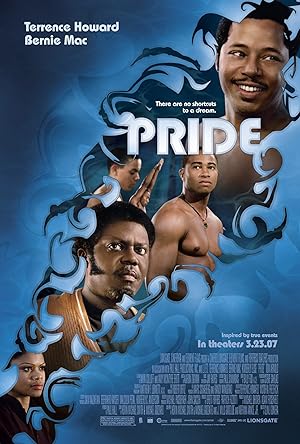
Pride
The determined Jim Ellis starts a swim team for troubled teens at the Philadelphia Department of Recreation.
The film box office disappointment against its respectable budget of $20.0M, earning $7.1M globally (-65% loss). While initial box office returns were modest, the film has gained appreciation for its fresh perspective within the drama genre.
2 wins & 3 nominations


Plot Structure
Story beats plotted across runtime


Narrative Arc
Emotional journey through the story's key moments
Story Circle
Blueprint 15-beat structure
Arcplot Score Breakdown
Weighted: Precision (70%) + Arc (15%) + Theme (15%)
Pride (2007) showcases deliberately positioned plot construction, characteristic of Sunu Gonera's storytelling approach. This structural analysis examines how the film's 15-point plot structure maps to proven narrative frameworks across 1 hour and 44 minutes. With an Arcplot score of 7.3, the film balances conventional beats with creative variation.
Characters
Cast & narrative archetypes

Jim Ellis
Elston
Marcus
Andre
Hakim
Reggie
Walt
Sue Davis
Main Cast & Characters
Jim Ellis
Played by Terrence Howard
A determined swim teacher who starts a competitive swim team at an inner-city Philadelphia recreation center, fighting against racism and institutional barriers.
Elston
Played by Bernie Mac
The recreation center manager who becomes Jim's ally and mentor, helping him navigate institutional challenges and support the swim team.
Marcus
Played by Kevin Phillips
A talented but troubled young swimmer who becomes one of the team's star athletes and undergoes significant personal growth.
Andre
Played by Nate Parker
One of the original PDR (Philadelphia Department of Recreation) swim team members who shows natural swimming ability and leadership.
Hakim
Played by Kevin Dunn
A dedicated swimmer on the team who struggles with self-doubt but pushes through to achieve success.
Reggie
Played by Evan Ross
A young team member who provides heart and determination despite facing challenges both in and out of the pool.
Walt
Played by Tom Arnold
A supportive member of the community who helps Jim navigate the bureaucratic and social challenges.
Sue Davis
Played by Kimberly Elise
A supportive figure who helps Jim with the team and provides encouragement.
Structural Analysis
The Status Quo at 1 minutes (1% through the runtime) establishes Jim Ellis arrives at the dilapidated Marcus Foster Recreation Center in a rough Philadelphia neighborhood, idealistic but facing a world resistant to change.. Structural examination shows that this early placement immediately immerses viewers in the story world.
The inciting incident occurs at 13 minutes when The city announces the recreation center will be shut down and demolished, threatening the only safe haven for the neighborhood kids.. At 12% through the film, this Disruption aligns precisely with traditional story structure. This beat shifts the emotional landscape, launching the protagonist into the central conflict.
The First Threshold at 27 minutes marks the transition into Act II, occurring at 26% of the runtime. This illustrates the protagonist's commitment to Jim makes the active choice to form a competitive swim team, committing to teach the kids to swim and enter them in official meets despite having no resources or support., moving from reaction to action.
At 52 minutes, the Midpoint arrives at 50% of the runtime—precisely centered, creating perfect narrative symmetry. Notably, this crucial beat The PDR team wins their first significant meet, gaining recognition and respect. False victory: they appear to be succeeding, but this raises the stakes and intensifies opposition., fundamentally raising what's at risk. The emotional intensity shifts, dividing the narrative into clear before-and-after phases.
The Collapse moment at 79 minutes (76% through) represents the emotional nadir. Here, The recreation center is officially condemned for demolition, and the team faces disqualification from the state championship. Everything Jim fought for appears lost., illustrates the protagonist at their lowest point. This beat's placement in the final quarter sets up the climactic reversal.
The Second Threshold at 84 minutes initiates the final act resolution at 81% of the runtime. Jim realizes the team has already won by proving their worth and finding their pride. He and the team decide to compete in the championship anyway, not for validation but for themselves., demonstrating the transformation achieved throughout the journey.
Emotional Journey
Pride's emotional architecture traces a deliberate progression across 15 carefully calibrated beats.
Narrative Framework
This structural analysis employs systematic plot point analysis that identifies crucial turning points. By mapping Pride against these established plot points, we can identify how Sunu Gonera utilizes or subverts traditional narrative conventions. The plot point approach reveals not only adherence to structural principles but also creative choices that distinguish Pride within the drama genre.
Comparative Analysis
Additional drama films include After Thomas, South Pacific and Dirty Dancing: Havana Nights.
Plot Points by Act
Act I
SetupStatus Quo
Jim Ellis arrives at the dilapidated Marcus Foster Recreation Center in a rough Philadelphia neighborhood, idealistic but facing a world resistant to change.
Theme
Elston tells Jim, "You can't save everybody," establishing the theme of one person's power to make a difference despite overwhelming odds.
Worldbuilding
Introduction to the struggling recreation center, the at-risk youth of the neighborhood, systemic racism in 1970s Philadelphia, and Jim's background as a swimmer facing discrimination.
Disruption
The city announces the recreation center will be shut down and demolished, threatening the only safe haven for the neighborhood kids.
Resistance
Jim debates how to save the center and help the kids. He discovers the old pool, resists the easy path of leaving, and begins recruiting troubled teens despite skepticism from Elston and the community.
Act II
ConfrontationFirst Threshold
Jim makes the active choice to form a competitive swim team, committing to teach the kids to swim and enter them in official meets despite having no resources or support.
Mirror World
The relationship between Jim and the team members deepens, particularly with Andre, as they begin to trust him and see swimming as more than just a sport but a path to dignity.
Premise
The "fun and games" of building the team: teaching kids who can't swim, facing racism at white swim clubs, small victories in early meets, and the team finding identity and pride.
Midpoint
The PDR team wins their first significant meet, gaining recognition and respect. False victory: they appear to be succeeding, but this raises the stakes and intensifies opposition.
Opposition
Increased resistance from racist officials, internal team conflicts, violence in the neighborhood threatens team members, pressure mounts from all sides, and Jim's methods are questioned.
Collapse
The recreation center is officially condemned for demolition, and the team faces disqualification from the state championship. Everything Jim fought for appears lost.
Crisis
Jim and the team process their devastating losses. Dark night of questioning whether any of it mattered, whether they can continue, and what success really means.
Act III
ResolutionSecond Threshold
Jim realizes the team has already won by proving their worth and finding their pride. He and the team decide to compete in the championship anyway, not for validation but for themselves.
Synthesis
The team competes in the state championship with newfound purpose, combining Jim's coaching with their own determination, swimming not to prove others wrong but to honor themselves.
Transformation
Final image shows the team standing proud together, transformed from at-risk youth into confident young men who found dignity and purpose. Jim succeeded in saving them by teaching them to save themselves.