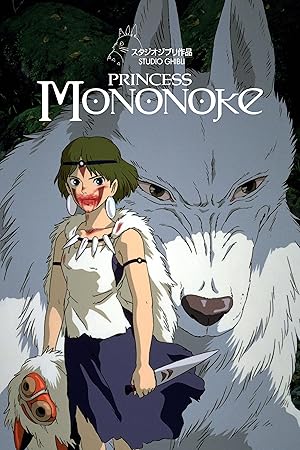
Princess Mononoke
While protecting his village from rampaging boar-god/demon, a confident young warrior, Ashitaka, is stricken by a deadly curse. To save his life, he must journey to the forests of the west. Once there, he's embroiled in a fierce campaign that humans were waging on the forest. The ambitious Lady Eboshi and her loyal clan use their guns against the gods of the forest and a brave young woman, Princess Mononoke, who was raised by a wolf-god. Ashitaka sees the good in both sides and tries to stem the flood of blood. This is met by animosity by both sides as they each see him as supporting the enemy.
Despite a respectable budget of $23.5M, Princess Mononoke became a commercial juggernaut, earning $176.5M worldwide—a remarkable 651% return.
14 wins & 6 nominations


Plot Structure
Story beats plotted across runtime


Narrative Arc
Emotional journey through the story's key moments
Story Circle
Blueprint 15-beat structure
Arcplot Score Breakdown
Weighted: Precision (70%) + Arc (15%) + Theme (15%)
Princess Mononoke (1997) reveals meticulously timed narrative architecture, characteristic of Hayao Miyazaki's storytelling approach. This structural analysis examines how the film's 15-point plot structure maps to proven narrative frameworks across 2 hours and 14 minutes. With an Arcplot score of 4.6, the film takes an unconventional approach to traditional narrative frameworks.
Structural Analysis
The Status Quo at 1 minutes (1% through the runtime) establishes Ashitaka lives peacefully as a prince of the Emishi village, a harmonious community isolated from the warring kingdoms of feudal Japan. He is a skilled warrior and respected member of his tribe.. Significantly, this early placement immediately immerses viewers in the story world.
The inciting incident occurs at 14 minutes when Ashitaka is cursed with a death mark after killing a demon boar god (later revealed to be Nago, corrupted by an iron ball from Irontown). The curse grants him supernatural strength but will eventually consume and kill him. He must leave his village forever to seek a cure in the west.. At 11% through the film, this Disruption aligns precisely with traditional story structure. This beat shifts the emotional landscape, launching the protagonist into the central conflict.
The First Threshold at 30 minutes marks the transition into Act II, occurring at 22% of the runtime. This illustrates the protagonist's commitment to Ashitaka enters the sacred forest and crosses into the realm of the great Forest Spirit. He discovers two wounded men and chooses to bring them to Irontown despite the danger, actively stepping into the conflict between humans and nature gods., moving from reaction to action.
At 60 minutes, the Midpoint arrives at 45% of the runtime—arriving early, accelerating into Act IIb complications. Notably, this crucial beat San and the wolves attack Irontown to kill Lady Eboshi. Ashitaka intervenes to stop the violence, taking bullets from both sides. In a display of cursed strength, he opens the town gates and carries the wounded San into the forest, declaring "I'm going to see with eyes unclouded by hate." He collapses from his wounds., fundamentally raising what's at risk. The emotional intensity shifts, dividing the narrative into clear before-and-after phases.
The Collapse moment at 90 minutes (67% through) represents the emotional nadir. Here, Lady Eboshi decapitates the Forest Spirit at the moment of its transformation into the Night Walker. The god's headless form becomes a mindless force of death, spreading a toxic sludge that dissolves everything it touches. The forest begins to die, and all the forest gods face annihilation. The ancient balance is shattered., reveals the protagonist at their lowest point. This beat's placement in the final quarter sets up the climactic reversal.
The Second Threshold at 96 minutes initiates the final act resolution at 71% of the runtime. Ashitaka and San realize they must return the Forest Spirit's head to restore balance. They see clearly that neither human nor nature can survive without the other. They choose to work together, transcending their different origins, to heal the wounded god and save both worlds., demonstrating the transformation achieved throughout the journey.
Emotional Journey
Princess Mononoke's emotional architecture traces a deliberate progression across 15 carefully calibrated beats.
Narrative Framework
This structural analysis employs systematic plot point analysis that identifies crucial turning points. By mapping Princess Mononoke against these established plot points, we can identify how Hayao Miyazaki utilizes or subverts traditional narrative conventions. The plot point approach reveals not only adherence to structural principles but also creative choices that distinguish Princess Mononoke within the animation genre.
Hayao Miyazaki's Structural Approach
Among the 13 Hayao Miyazaki films analyzed on Arcplot, the average structural score is 5.6, showcasing experimental approaches to narrative form. Princess Mononoke takes a more unconventional approach compared to the director's typical style. For comparative analysis, explore the complete Hayao Miyazaki filmography.
Comparative Analysis
Additional animation films include The Bad Guys, Puss in Boots and Violet Evergarden: Eternity and the Auto Memory Doll. For more Hayao Miyazaki analyses, see Kiki's Delivery Service, My Neighbor Totoro and Howl's Moving Castle.
Plot Points by Act
Act I
SetupStatus Quo
Ashitaka lives peacefully as a prince of the Emishi village, a harmonious community isolated from the warring kingdoms of feudal Japan. He is a skilled warrior and respected member of his tribe.
Theme
The wise woman tells Ashitaka: "You cannot alter your fate. However, you can rise to meet it." This establishes the film's central theme about accepting one's destiny while choosing how to face it, and the balance between humanity and nature.
Worldbuilding
Establishment of the Emishi village, their peaceful way of life, the spiritual connection to nature, and the isolation from the outside world. Introduction of the wise woman, village elders, and Ashitaka's role as prince and protector.
Disruption
Ashitaka is cursed with a death mark after killing a demon boar god (later revealed to be Nago, corrupted by an iron ball from Irontown). The curse grants him supernatural strength but will eventually consume and kill him. He must leave his village forever to seek a cure in the west.
Resistance
Ashitaka journeys west, grappling with his exile and cursed fate. He encounters monk Jigo who warns him about the conflicts between humans and forest gods, and learns about Lady Eboshi and Irontown. He witnesses the devastation of war and the iron ball that caused Nago's corruption.
Act II
ConfrontationFirst Threshold
Ashitaka enters the sacred forest and crosses into the realm of the great Forest Spirit. He discovers two wounded men and chooses to bring them to Irontown despite the danger, actively stepping into the conflict between humans and nature gods.
Mirror World
Ashitaka meets San (Princess Mononoke), the wolf-girl raised by the wolf goddess Moro. She embodies the opposite perspective—complete rejection of humanity and total devotion to nature. She is his thematic counterpoint and eventually his path to understanding balance.
Premise
Ashitaka explores both worlds: Irontown, where Lady Eboshi has created a haven for outcasts while destroying the forest, and the forest realm where ancient gods fight for survival. He witnesses the complexity of both sides—Eboshi's compassion for lepers and former brothel workers versus her destruction of nature, and the forest gods' beauty versus their capacity for violence.
Midpoint
San and the wolves attack Irontown to kill Lady Eboshi. Ashitaka intervenes to stop the violence, taking bullets from both sides. In a display of cursed strength, he opens the town gates and carries the wounded San into the forest, declaring "I'm going to see with eyes unclouded by hate." He collapses from his wounds.
Opposition
The forces of destruction intensify. Jigo reveals his plan to kill the Forest Spirit and take its head for the Emperor. Lady Eboshi prepares for war against both the forest gods and the samurai Lord Asano. San takes Ashitaka to the Forest Spirit who heals him but cannot remove his curse. Their bond deepens, but the conflicts escalate toward inevitable catastrophe.
Collapse
Lady Eboshi decapitates the Forest Spirit at the moment of its transformation into the Night Walker. The god's headless form becomes a mindless force of death, spreading a toxic sludge that dissolves everything it touches. The forest begins to die, and all the forest gods face annihilation. The ancient balance is shattered.
Crisis
Ashitaka and San witness the total devastation as the headless Forest Spirit destroys everything in its path. The wolf goddess Moro is killed. The forest is dying. Both Irontown and the forest face complete annihilation. The darkness seems absolute and irreversible.
Act III
ResolutionSecond Threshold
Ashitaka and San realize they must return the Forest Spirit's head to restore balance. They see clearly that neither human nor nature can survive without the other. They choose to work together, transcending their different origins, to heal the wounded god and save both worlds.
Synthesis
Ashitaka and San battle Jigo's men to reclaim the head. They return it to the Forest Spirit at sunrise. The god takes back its head, releases a healing wave that restores the forest, and then dissolves into wind. Ashitaka's curse is lifted. Life returns to the forest, though the ancient gods are gone, marking a new era where humans and nature must coexist without the old magic.
Transformation
San and Ashitaka stand together in the recovering forest. San chooses to remain in the forest while Ashitaka will help rebuild Irontown, but they promise to see each other and work together. Unlike the opening where Ashitaka was isolated in his peaceful village, he now bridges two worlds, eyes unclouded, accepting a complex future.