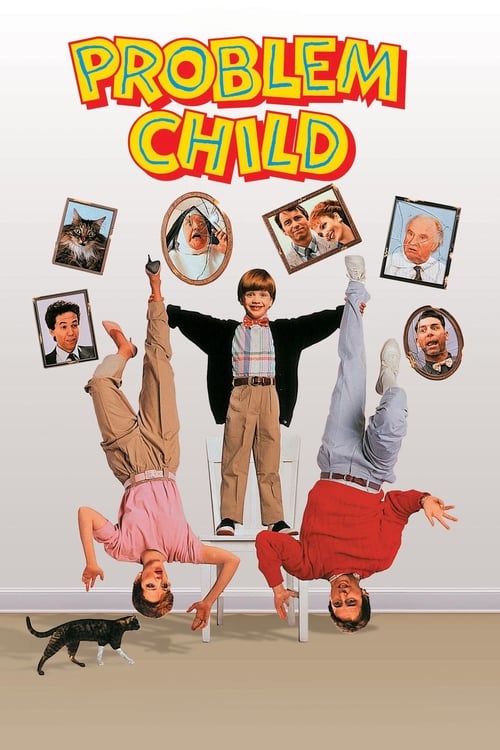
Problem Child
Ben Healy and his social climbing wife Flo adopt fun-loving seven year old Junior. But they soon discover he's a little monster as he turns a camping trip, a birthday party and even a baseball game into comic nightmares.
Despite its tight budget of $10.0M, Problem Child became a commercial juggernaut, earning $72.0M worldwide—a remarkable 620% return. The film's fresh perspective found its audience, proving that strong storytelling can transcend budget limitations.


Plot Structure
Story beats plotted across runtime


Narrative Arc
Emotional journey through the story's key moments
Story Circle
Blueprint 15-beat structure
Arcplot Score Breakdown
Weighted: Precision (70%) + Arc (15%) + Theme (15%)
Problem Child (1990) demonstrates precise narrative design, characteristic of Dennis Dugan's storytelling approach. This structural analysis examines how the film's 15-point plot structure maps to proven narrative frameworks across 1 hour and 21 minutes. With an Arcplot score of 7.7, the film showcases strong structural fundamentals.
Characters
Cast & narrative archetypes

Junior Healy
Ben Healy
Flo Healy
Big Ben Healy
Igor Peabody
Roy Walton
Main Cast & Characters
Junior Healy
Played by Michael Oliver
A mischievous, troublemaking orphan with a penchant for chaos who terrorizes his adoptive father and everyone around him.
Ben Healy
Played by John Ritter
A mild-mannered sporting goods salesman desperate to have a son, who adopts Junior despite mounting evidence of the boy's destructive nature.
Flo Healy
Played by Amy Yasbeck
Ben's materialistic and social-climbing wife who wants a perfect child for appearances and grows increasingly hostile toward Junior.
Big Ben Healy
Played by Jack Warden
Ben's tyrannical and domineering father who owns the sporting goods store and constantly belittles his son.
Igor Peabody
Played by Gilbert Gottfried
The sinister director of the orphanage who knows Junior's true destructive nature and manipulates the Healys into adopting him.
Roy Walton
Played by Michael Richards
Ben's smug and competitive neighbor who flaunts his perfect family and becomes a target of Junior's pranks.
Structural Analysis
The Status Quo at 1 minutes (1% through the runtime) establishes Ben and Flo Healy are a childless couple desperate for a family. Ben is a weak-willed man dominated by his controlling father Big Ben, living an unfulfilled life.. Of particular interest, this early placement immediately immerses viewers in the story world.
The inciting incident occurs at 10 minutes when Junior is presented to the Healys as their adoptive son. The nuns deliberately hide Junior's true nature, and the Healys unknowingly adopt the most destructive child in the orphanage.. At 12% through the film, this Disruption aligns precisely with traditional story structure. This beat shifts the emotional landscape, launching the protagonist into the central conflict.
The First Threshold at 20 minutes marks the transition into Act II, occurring at 24% of the runtime. This reveals the protagonist's commitment to Ben makes the active choice to commit to being Junior's father despite the mounting evidence of his destructive behavior. He crosses into Act 2, accepting the challenge of raising this problem child., moving from reaction to action.
At 41 minutes, the Midpoint arrives at 51% of the runtime—precisely centered, creating perfect narrative symmetry. Notably, this crucial beat A major public disaster caused by Junior (likely involving Big Ben's important event) raises the stakes. The community and family turn against Junior, and Ben must choose between his son and his father's approval. False defeat., fundamentally raising what's at risk. The emotional intensity shifts, dividing the narrative into clear before-and-after phases.
The Collapse moment at 61 minutes (76% through) represents the emotional nadir. Here, Ben and Flo decide to return Junior to the orphanage, giving up on him. Junior faces rejection again, and Ben's dreams of fatherhood die. The relationship that carried the theme appears to be lost., illustrates the protagonist at their lowest point. This beat's placement in the final quarter sets up the climactic reversal.
The Second Threshold at 64 minutes initiates the final act resolution at 79% of the runtime. Ben realizes that Junior needs unconditional love and that he needs to stand up to his father and choose his son. He synthesizes the lesson: being a real father means acceptance, not control. He chooses Junior over approval., demonstrating the transformation achieved throughout the journey.
Emotional Journey
Problem Child's emotional architecture traces a deliberate progression across 15 carefully calibrated beats.
Narrative Framework
This structural analysis employs structural analysis methodology used to understand storytelling architecture. By mapping Problem Child against these established plot points, we can identify how Dennis Dugan utilizes or subverts traditional narrative conventions. The plot point approach reveals not only adherence to structural principles but also creative choices that distinguish Problem Child within the comedy genre.
Dennis Dugan's Structural Approach
Among the 13 Dennis Dugan films analyzed on Arcplot, the average structural score is 7.3, reflecting strong command of classical structure. Problem Child represents one of the director's most structurally precise works. For comparative analysis, explore the complete Dennis Dugan filmography.
Comparative Analysis
Additional comedy films include The Bad Guys, Ella Enchanted and The Evening Star. For more Dennis Dugan analyses, see Jack and Jill, Grown Ups 2 and Grown Ups.
Plot Points by Act
Act I
SetupStatus Quo
Ben and Flo Healy are a childless couple desperate for a family. Ben is a weak-willed man dominated by his controlling father Big Ben, living an unfulfilled life.
Theme
The nun at the orphanage warns that Junior needs "unconditional love" from a parent who accepts him as he is, hinting at the film's core theme about accepting people despite their flaws.
Worldbuilding
Establishes the Healys' desperate attempts to adopt, Junior's history of terrorizing previous adoptive families, Ben's subservience to his father Big Ben, and the orphanage's struggle with Junior's destructive behavior.
Disruption
Junior is presented to the Healys as their adoptive son. The nuns deliberately hide Junior's true nature, and the Healys unknowingly adopt the most destructive child in the orphanage.
Resistance
Ben attempts to bond with Junior while Junior systematically creates chaos. Ben debates whether he can handle this child but is pressured by his desire to please his father and prove himself as a parent.
Act II
ConfrontationFirst Threshold
Ben makes the active choice to commit to being Junior's father despite the mounting evidence of his destructive behavior. He crosses into Act 2, accepting the challenge of raising this problem child.
Mirror World
Junior and Ben begin developing their relationship. Junior represents what Ben needs to learn: authenticity, standing up for oneself, and rejecting others' expectations. Their bond becomes the emotional core.
Premise
The fun and games of Junior wreaking havoc while Ben tries to maintain normalcy. Junior's pranks escalate, causing chaos at birthday parties, school, and in the neighborhood. Ben struggles to control him while protecting him.
Midpoint
A major public disaster caused by Junior (likely involving Big Ben's important event) raises the stakes. The community and family turn against Junior, and Ben must choose between his son and his father's approval. False defeat.
Opposition
Pressure mounts from all sides: Big Ben demands they return Junior, Flo wavers in her commitment, the community rejects them, and Junior's behavior worsens. Ben's weakness and people-pleasing tendencies fail him.
Collapse
Ben and Flo decide to return Junior to the orphanage, giving up on him. Junior faces rejection again, and Ben's dreams of fatherhood die. The relationship that carried the theme appears to be lost.
Crisis
Ben processes the loss and recognizes his failure. He realizes he has repeated the pattern of conditional love, rejecting Junior just like everyone else. He understands what he truly needs to do.
Act III
ResolutionSecond Threshold
Ben realizes that Junior needs unconditional love and that he needs to stand up to his father and choose his son. He synthesizes the lesson: being a real father means acceptance, not control. He chooses Junior over approval.
Synthesis
Ben races to get Junior back, stands up to Big Ben for the first time, and fights for his son. He proves his love through action, accepting Junior completely. Father and son reunite and form a real family.
Transformation
Ben has transformed from a weak people-pleaser into a confident father who stands up for his family. Junior has found the unconditional love he needed. They are a real family, flaws and all.