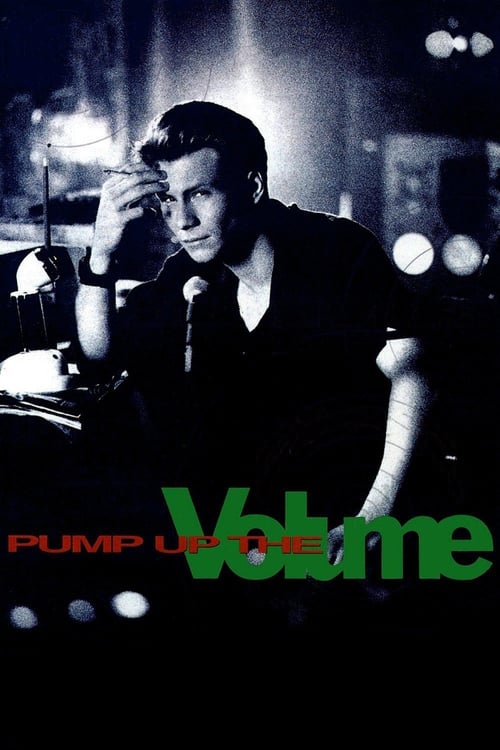
Pump Up the Volume
Mark Hunter, a lonely high school student, uses his shortwave radio to moonlight as the popular pirate DJ "Hard Harry." When his show gets blamed for a teen committing suicide, the students clash with high school faculty and the authorities.
The film earned $11.5M at the global box office.
3 wins & 5 nominations


Plot Structure
Story beats plotted across runtime


Narrative Arc
Emotional journey through the story's key moments
Story Circle
Blueprint 15-beat structure
Arcplot Score Breakdown
Weighted: Precision (70%) + Arc (15%) + Theme (15%)
Pump Up the Volume (1990) reveals precise narrative architecture, characteristic of Allan Moyle's storytelling approach. This structural analysis examines how the film's 15-point plot structure maps to proven narrative frameworks across 1 hour and 42 minutes. With an Arcplot score of 7.5, the film showcases strong structural fundamentals.
Characters
Cast & narrative archetypes

Mark Hunter
Nora Diniro
Principal Loretta Creswood
Brian Hunter
Marla Hunter
Paige Woodward
Main Cast & Characters
Mark Hunter
Played by Christian Slater
A shy high school student who transforms into the rebellious pirate radio DJ "Hard Harry" at night, challenging authority and inspiring his peers.
Nora Diniro
Played by Samantha Mathis
An intelligent, outspoken student and aspiring poet who becomes drawn to Mark after recognizing him as Hard Harry.
Principal Loretta Creswood
Played by Annie Ross
The authoritarian school principal determined to maintain order and expel troublemakers to improve the school's statistics.
Brian Hunter
Played by Scott Paulin
Mark's well-meaning but emotionally distant father who struggles to connect with his introverted son.
Marla Hunter
Played by Mimi Kennedy
Mark's concerned mother who tries to bridge the gap between her husband and son.
Paige Woodward
Played by Cheryl Pollak
A popular student who becomes obsessed with discovering Hard Harry's identity and gets close to Mark.
Structural Analysis
The Status Quo at 1 minutes (1% through the runtime) establishes Mark Hunter is introduced as a painfully shy, isolated teenager in suburban Arizona, unable to connect with his peers at school. He eats lunch alone, silent and invisible in the high school social landscape.. Significantly, this early placement immediately immerses viewers in the story world.
The inciting incident occurs at 13 minutes when Nora Diniro, a fellow student and aspiring poet, publicly defends Hard Harry in class against their teacher's condemnation. This brings Mark's secret broadcast into the school's consciousness as a real cultural force, raising the stakes significantly.. At 13% through the film, this Disruption is delayed, allowing extended setup of the story world. This beat shifts the emotional landscape, launching the protagonist into the central conflict.
The First Threshold at 26 minutes marks the transition into Act II, occurring at 26% of the runtime. This reveals the protagonist's commitment to Mark makes the active choice to escalate his broadcasts into direct confrontation with authority. He reads Malcolm's desperate letter on air and begins explicitly attacking the school administration's policies, transforming from entertainer to activist., moving from reaction to action.
At 52 minutes, the Midpoint arrives at 51% of the runtime—precisely centered, creating perfect narrative symmetry. Notably, this crucial beat Malcolm Kaiser commits suicide. Mark learns of the death during a broadcast, devastated. This false defeat transforms everything: the stakes become life and death, Mark confronts the real consequences of his influence, and the fun and games are definitively over., fundamentally raising what's at risk. The emotional intensity shifts, dividing the narrative into clear before-and-after phases.
The Collapse moment at 77 minutes (76% through) represents the emotional nadir. Here, Mark is caught by his parents mid-broadcast. His secret identity is exposed to them, his safe space violated. Simultaneously, the FCC triangulates his location. Everything collapses: the death of his anonymity, the death of his sanctuary, the death of Hard Harry as he knew it., shows the protagonist at their lowest point. This beat's placement in the final quarter sets up the climactic reversal.
The Second Threshold at 82 minutes initiates the final act resolution at 80% of the runtime. Mark decides to do one final broadcast, this time as himself—no more hiding. He synthesizes Mark and Harry into one authentic identity. Nora and students rally to help him transmit while mobile, evading the FCC. He chooses truth over safety., demonstrating the transformation achieved throughout the journey.
Emotional Journey
Pump Up the Volume's emotional architecture traces a deliberate progression across 15 carefully calibrated beats.
Narrative Framework
This structural analysis employs structural analysis methodology used to understand storytelling architecture. By mapping Pump Up the Volume against these established plot points, we can identify how Allan Moyle utilizes or subverts traditional narrative conventions. The plot point approach reveals not only adherence to structural principles but also creative choices that distinguish Pump Up the Volume within the music genre.
Allan Moyle's Structural Approach
Among the 2 Allan Moyle films analyzed on Arcplot, the average structural score is 7.6, reflecting strong command of classical structure. Pump Up the Volume takes a more unconventional approach compared to the director's typical style. For comparative analysis, explore the complete Allan Moyle filmography.
Comparative Analysis
Additional music films include South Pacific, Dirty Dancing: Havana Nights and Yesterday. For more Allan Moyle analyses, see Empire Records.
Plot Points by Act
Act I
SetupStatus Quo
Mark Hunter is introduced as a painfully shy, isolated teenager in suburban Arizona, unable to connect with his peers at school. He eats lunch alone, silent and invisible in the high school social landscape.
Theme
Mark's father says, "You can't be afraid to express yourself," during an awkward dinner conversation. This establishes the central theme: finding one's authentic voice and the courage to speak truth in a silenced world.
Worldbuilding
Mark's dual existence is established: silent wallflower by day, Hard Harry the provocative pirate radio DJ by night. We see the oppressive suburban conformity, the controlling school administration under Principal Creswood, and the underground following Harry is building among frustrated teens.
Disruption
Nora Diniro, a fellow student and aspiring poet, publicly defends Hard Harry in class against their teacher's condemnation. This brings Mark's secret broadcast into the school's consciousness as a real cultural force, raising the stakes significantly.
Resistance
Mark debates how far to push his broadcasts as they gain popularity and controversy. The school administration begins investigating. He receives letters from suffering students, including one from depressed Malcolm Kaiser. Mark wrestles with his responsibility and power.
Act II
ConfrontationFirst Threshold
Mark makes the active choice to escalate his broadcasts into direct confrontation with authority. He reads Malcolm's desperate letter on air and begins explicitly attacking the school administration's policies, transforming from entertainer to activist.
Mirror World
Mark and Nora connect in person when she visits him under the pretense of finding Hard Harry. Their relationship develops as the thematic counterpoint: two isolated people finding authentic connection through honest expression, showing Mark what he truly needs beyond the radio persona.
Premise
Hard Harry becomes a full-blown phenomenon. Students organize around his message. Mark experiences the thrill of having impact and connecting with Nora. The broadcasts grow bolder, funnier, more dangerous. The promise of the premise: what if one voice could wake up an entire silenced generation?
Midpoint
Malcolm Kaiser commits suicide. Mark learns of the death during a broadcast, devastated. This false defeat transforms everything: the stakes become life and death, Mark confronts the real consequences of his influence, and the fun and games are definitively over.
Opposition
The FCC begins tracking Mark's signal. Principal Creswood intensifies her crackdown, expelling students. Mark's parents grow suspicious. His relationship with Nora strains under his secrets. The school board manipulates Malcolm's death for political purposes. The walls close in from every direction.
Collapse
Mark is caught by his parents mid-broadcast. His secret identity is exposed to them, his safe space violated. Simultaneously, the FCC triangulates his location. Everything collapses: the death of his anonymity, the death of his sanctuary, the death of Hard Harry as he knew it.
Crisis
Mark sits in darkness with his parents, the equipment silent. He processes the loss of his secret identity and confronts his responsibility for Malcolm's death. He must decide who he really is: the silent Mark or the vocal Harry, and whether speaking out is worth the cost.
Act III
ResolutionSecond Threshold
Mark decides to do one final broadcast, this time as himself—no more hiding. He synthesizes Mark and Harry into one authentic identity. Nora and students rally to help him transmit while mobile, evading the FCC. He chooses truth over safety.
Synthesis
Mark broadcasts his final show while driving through town, students helping him stay mobile. He speaks his truth directly, inspiring the community to act. He confronts the administration's corruption publicly. Students stage a massive show of solidarity. He accepts arrest on his own terms, having sparked real change.
Transformation
Mark stands before the crowd of students and media, no longer hiding. He speaks calmly and openly as himself for the first time, transformed from the silent boy at the opening into someone who has found his authentic voice in the light, not just the darkness.