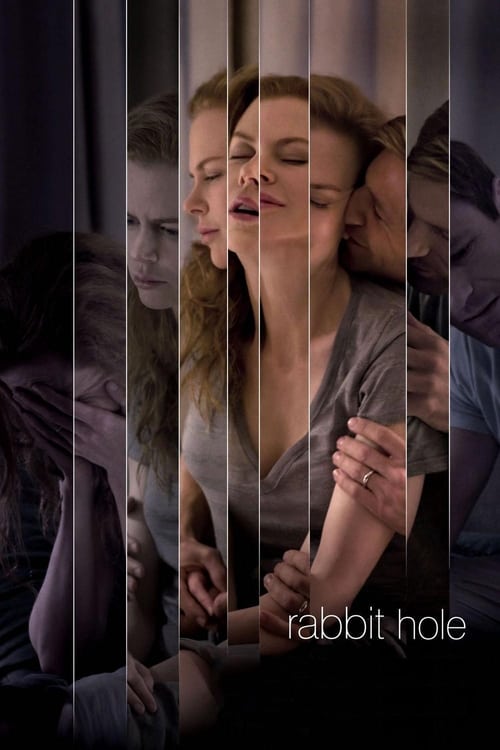
Rabbit Hole
Life for a happy couple is turned upside down after their young son dies in an accident.
Working with a modest budget of $5.0M, the film achieved a modest success with $5.1M in global revenue (+3% profit margin).
Nominated for 1 Oscar. 7 wins & 42 nominations


Plot Structure
Story beats plotted across runtime


Narrative Arc
Emotional journey through the story's key moments
Story Circle
Blueprint 15-beat structure
Arcplot Score Breakdown
Weighted: Precision (70%) + Arc (15%) + Theme (15%)
Rabbit Hole (2010) demonstrates deliberately positioned story structure, characteristic of John Cameron Mitchell's storytelling approach. This structural analysis examines how the film's 15-point plot structure maps to proven narrative frameworks across 1 hour and 31 minutes. With an Arcplot score of 7.1, the film balances conventional beats with creative variation.
Characters
Cast & narrative archetypes

Becca Corbett
Howie Corbett
Nat
Jason
Izzy
Main Cast & Characters
Becca Corbett
Played by Nicole Kidman
A mother struggling to cope with the accidental death of her four-year-old son, seeking meaning and control in her grief while maintaining emotional distance.
Howie Corbett
Played by Aaron Eckhart
Becca's husband who grieves differently, clinging to memories and seeking connection through support groups while their marriage strains.
Nat
Played by Tammy Blanchard
Becca's younger sister, a recovering addict who becomes pregnant, representing both hope and a painful contrast to Becca's loss.
Jason
Played by Miles Teller
The teenage driver whose car accidentally killed Becca's son, haunted by guilt and seeking forgiveness through his creative writing.
Izzy
Played by Dianne Wiest
Becca's mother who lost her adult son to addiction, offering perspective on long-term grief while clashing with Becca's coping mechanisms.
Structural Analysis
The Status Quo at 1 minutes (1% through the runtime) establishes Becca tends her garden in the backyard of their suburban home, a picture of domestic normalcy masking profound emptiness. The house is immaculate, controlled—a visible manifestation of Becca's attempt to manage her grief through order.. Significantly, this early placement immediately immerses viewers in the story world.
The inciting incident occurs at 11 minutes when Becca discovers Jason's handmade comic book "Rabbit Hole" in the mailbox—a parallel universe story about people who jump between dimensions. The teenager who killed her son has reached out, disrupting her carefully controlled avoidance and demanding she confront the accident's reality.. At 13% through the film, this Disruption is delayed, allowing extended setup of the story world. This beat shifts the emotional landscape, launching the protagonist into the central conflict.
The First Threshold at 23 minutes marks the transition into Act II, occurring at 25% of the runtime. This demonstrates the protagonist's commitment to Becca secretly follows Jason and watches him from a distance at a local park. Rather than continuing avoidance, she actively chooses to move toward the source of her trauma. She crosses from isolation into engagement with the person most connected to Danny's death., moving from reaction to action.
At 46 minutes, the Midpoint arrives at 50% of the runtime—precisely centered, creating perfect narrative symmetry. Structural examination shows that this crucial beat Howie accidentally erases the last video of Danny from his phone—the one precious recording he'd been clinging to. What seemed like his lifeline is gone. This false defeat crystallizes how both partners have been holding onto artifacts rather than processing grief, and the loss paradoxically frees Howie to begin moving forward., fundamentally raising what's at risk. The emotional intensity shifts, dividing the narrative into clear before-and-after phases.
The Collapse moment at 68 minutes (75% through) represents the emotional nadir. Here, Becca and Howie have their most devastating fight. He accuses her of erasing Danny; she accuses him of living in the past. Howie storms out and nearly kisses Gabby in the car, pulling back at the last moment. Both partners face the death of their marriage—the second loss that would compound their tragedy., indicates the protagonist at their lowest point. This beat's placement in the final quarter sets up the climactic reversal.
The Second Threshold at 73 minutes initiates the final act resolution at 81% of the runtime. Becca visits her mother Nat and asks the question she's been avoiding: does the grief ever go away? Nat's answer transforms everything—it doesn't go away, but it changes, becomes something you can carry. "Like a brick in your pocket." Becca finally accepts grief as permanent but survivable, unlocking her ability to reconnect., demonstrating the transformation achieved throughout the journey.
Emotional Journey
Rabbit Hole's emotional architecture traces a deliberate progression across 15 carefully calibrated beats.
Narrative Framework
This structural analysis employs proven narrative structure principles that track dramatic progression. By mapping Rabbit Hole against these established plot points, we can identify how John Cameron Mitchell utilizes or subverts traditional narrative conventions. The plot point approach reveals not only adherence to structural principles but also creative choices that distinguish Rabbit Hole within the drama genre.
John Cameron Mitchell's Structural Approach
Among the 2 John Cameron Mitchell films analyzed on Arcplot, the average structural score is 6.9, demonstrating varied approaches to story architecture. Rabbit Hole represents one of the director's most structurally precise works. For comparative analysis, explore the complete John Cameron Mitchell filmography.
Comparative Analysis
Additional drama films include After Thomas, South Pacific and Dirty Dancing: Havana Nights. For more John Cameron Mitchell analyses, see Shortbus.
Plot Points by Act
Act I
SetupStatus Quo
Becca tends her garden in the backyard of their suburban home, a picture of domestic normalcy masking profound emptiness. The house is immaculate, controlled—a visible manifestation of Becca's attempt to manage her grief through order.
Theme
At the grief support group, Nat's mother says that God needed another angel—a platitude Becca viscerally rejects. The theme is stated through opposition: grief cannot be explained away with easy answers or religious comfort.
Worldbuilding
We see the Corbetts' fractured world eight months after Danny's death. Becca erases traces of him from the house. Howie clings to videos of Danny on his phone. Becca's mother Nat makes thoughtless comparisons to losing her own son to drugs. The couple's divergent grief styles create invisible walls between them.
Disruption
Becca discovers Jason's handmade comic book "Rabbit Hole" in the mailbox—a parallel universe story about people who jump between dimensions. The teenager who killed her son has reached out, disrupting her carefully controlled avoidance and demanding she confront the accident's reality.
Resistance
Becca resists engaging with Jason's comic, yet keeps returning to it. She and Howie debate whether to sell the house. Howie wants to try for another baby; Becca can't imagine it. She quits the support group after snapping at a woman who attributes her child's death to God's will. Each character offers a different path through grief—none fit Becca.
Act II
ConfrontationFirst Threshold
Becca secretly follows Jason and watches him from a distance at a local park. Rather than continuing avoidance, she actively chooses to move toward the source of her trauma. She crosses from isolation into engagement with the person most connected to Danny's death.
Mirror World
Becca approaches Jason and they have their first real conversation. He's not the monster she might have imagined—he's a sensitive, guilt-ridden teenager creating art to process his own trauma. Their connection becomes the thematic mirror: two people bound by the same tragedy, each offering the other a path to healing that their families cannot.
Premise
Becca and Jason meet secretly in the park, discussing his comic about parallel universes where every possibility exists—somewhere Danny is still alive. Meanwhile, Howie grows closer to Gabby from the support group. Becca's pregnant sister Izzy provides comic relief while triggering Becca's pain. The parallel relationships explore different grief responses.
Midpoint
Howie accidentally erases the last video of Danny from his phone—the one precious recording he'd been clinging to. What seemed like his lifeline is gone. This false defeat crystallizes how both partners have been holding onto artifacts rather than processing grief, and the loss paradoxically frees Howie to begin moving forward.
Opposition
The marriage deteriorates as Becca and Howie grieve in incompatible ways. Howie spends more time with Gabby; Becca continues meeting Jason without telling Howie. At Izzy's baby shower, Becca breaks down seeing baby clothes. When Howie discovers Becca gave away Danny's clothes without consulting him, their suppressed resentments explode into open conflict.
Collapse
Becca and Howie have their most devastating fight. He accuses her of erasing Danny; she accuses him of living in the past. Howie storms out and nearly kisses Gabby in the car, pulling back at the last moment. Both partners face the death of their marriage—the second loss that would compound their tragedy.
Crisis
In the aftermath, Becca and Howie occupy the same house as strangers. Becca sits alone with Jason's comic, reading about the rabbit hole between parallel worlds. The metaphor finally lands: there is no escape to another reality. There is only this one, with its unbearable pain that must somehow be borne.
Act III
ResolutionSecond Threshold
Becca visits her mother Nat and asks the question she's been avoiding: does the grief ever go away? Nat's answer transforms everything—it doesn't go away, but it changes, becomes something you can carry. "Like a brick in your pocket." Becca finally accepts grief as permanent but survivable, unlocking her ability to reconnect.
Synthesis
Armed with new understanding, Becca attends Jason's school science fair, offering forgiveness without words. She returns home to Howie and they tentatively reconnect, acknowledging they still love each other despite everything. At her nephew's first birthday, Becca can finally be present without being destroyed by what she's lost.
Transformation
Becca and Howie sit together in their backyard garden at dusk, hands touching for the first time in months. No words needed. The same garden from the opening, but now shared rather than solitary. They haven't escaped grief—they've learned to carry it together. The brick remains, but they are no longer crushed by its weight.