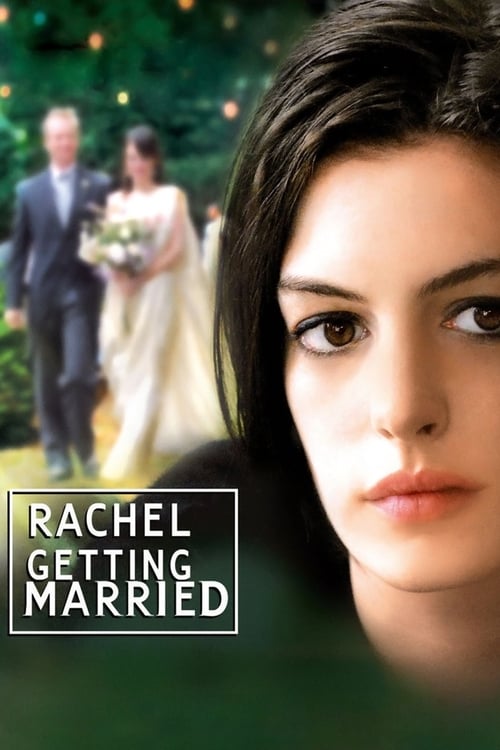
Rachel Getting Married
A young woman who has been in and out from rehab for the past 10 years returns home for the weekend for her sister's wedding.
Working with a modest budget of $12.0M, the film achieved a respectable showing with $16.9M in global revenue (+41% profit margin).
Nominated for 1 Oscar. 32 wins & 65 nominations


Plot Structure
Story beats plotted across runtime


Narrative Arc
Emotional journey through the story's key moments
Story Circle
Blueprint 15-beat structure
Arcplot Score Breakdown
Weighted: Precision (70%) + Arc (15%) + Theme (15%)
Rachel Getting Married (2008) demonstrates strategically placed story structure, characteristic of Jonathan Demme's storytelling approach. This structural analysis examines how the film's 15-point plot structure maps to proven narrative frameworks across 1 hour and 53 minutes. With an Arcplot score of 6.6, the film balances conventional beats with creative variation.
Characters
Cast & narrative archetypes

Kym Buchman
Rachel Buchman
Paul Buchman
Abby
Sidney Williams
Kieran
Main Cast & Characters
Kym Buchman
Played by Anne Hathaway
A recovering addict released from rehab to attend her sister's wedding, struggling with guilt and family trauma.
Rachel Buchman
Played by Rosemarie DeWitt
The bride, a pragmatic and composed woman trying to have her perfect wedding while managing family tensions.
Paul Buchman
Played by Bill Irwin
The father, a conflict-avoidant man who tries to keep peace through warmth and deflection.
Abby
Played by Debra Winger
The mother, a distant and emotionally unavailable woman harboring resentment toward Kym.
Sidney Williams
Played by Tunde Adebimpe
The groom, a musician who is warm, accepting, and supportive of Rachel and her complicated family.
Kieran
Played by Mather Zickel
Kym's sponsor from rehab who attends the wedding and provides grounded support.
Structural Analysis
The Status Quo at 1 minutes (1% through the runtime) establishes Kym is released from rehab on a temporary pass, smoking and clearly damaged. She calls for a ride to her sister Rachel's wedding, establishing her as an outsider returning to a world she's hurt.. Significantly, this early placement immediately immerses viewers in the story world.
The inciting incident occurs at 14 minutes when Kym insists on being Rachel's maid of honor despite Rachel's hesitation. This forces the wedding celebration to orbit around Kym's recovery and past trauma, disrupting Rachel's attempt to have one day not defined by her sister's addiction.. At 12% through the film, this Disruption aligns precisely with traditional story structure. This beat shifts the emotional landscape, launching the protagonist into the central conflict.
The First Threshold at 29 minutes marks the transition into Act II, occurring at 26% of the runtime. This shows the protagonist's commitment to Kym hijacks the rehearsal dinner with a rambling, painfully self-centered toast that makes everything about her recovery rather than Rachel's marriage. This active choice to demand attention at her sister's event fully commits her to confronting the family dynamic., moving from reaction to action.
At 57 minutes, the Midpoint arrives at 50% of the runtime—precisely centered, creating perfect narrative symmetry. Of particular interest, this crucial beat During a dishwasher-loading competition, the playful family moment turns dark when it becomes a passive-aggressive battle between Kym and her father. What seemed like healing reveals the wound is still raw. False victory of reintegration collapses into recognition that forgiveness hasn't actually happened., fundamentally raising what's at risk. The emotional intensity shifts, dividing the narrative into clear before-and-after phases.
The Collapse moment at 85 minutes (75% through) represents the emotional nadir. Here, Kym and Rachel have a devastating confrontation where Rachel screams that she's sick of Kym making everything about her, revealing the years of being the "good daughter" to parents destroyed by grief. Their relationship, the hope of family reconciliation, dies in this moment of brutal honesty., indicates the protagonist at their lowest point. This beat's placement in the final quarter sets up the climactic reversal.
The Second Threshold at 91 minutes initiates the final act resolution at 81% of the runtime. Kym returns to the house battered but alive. Her father Paul finally breaks down and tells her he loves her, acknowledging his own failure to protect both his children. This genuine moment of shared grief and responsibility gives Kym permission to begin forgiving herself., demonstrating the transformation achieved throughout the journey.
Emotional Journey
Rachel Getting Married's emotional architecture traces a deliberate progression across 15 carefully calibrated beats.
Narrative Framework
This structural analysis employs a 15-point narrative structure framework that maps key story moments. By mapping Rachel Getting Married against these established plot points, we can identify how Jonathan Demme utilizes or subverts traditional narrative conventions. The plot point approach reveals not only adherence to structural principles but also creative choices that distinguish Rachel Getting Married within the drama genre.
Jonathan Demme's Structural Approach
Among the 8 Jonathan Demme films analyzed on Arcplot, the average structural score is 6.8, demonstrating varied approaches to story architecture. Rachel Getting Married takes a more unconventional approach compared to the director's typical style. For comparative analysis, explore the complete Jonathan Demme filmography.
Comparative Analysis
Additional drama films include After Thomas, South Pacific and Dirty Dancing: Havana Nights. For more Jonathan Demme analyses, see The Manchurian Candidate, Married to the Mob and Ricki and the Flash.
Plot Points by Act
Act I
SetupStatus Quo
Kym is released from rehab on a temporary pass, smoking and clearly damaged. She calls for a ride to her sister Rachel's wedding, establishing her as an outsider returning to a world she's hurt.
Theme
At the rehearsal dinner, Rachel's friend asks Kym about rehab. The casual mention of "making amends" and family forgiveness introduces the central theme: can families forgive the unforgivable, and can the guilty forgive themselves?
Worldbuilding
Kym arrives home to the chaotic, bohemian wedding preparations. We meet the family: distant father Paul, anxious bride Rachel, eclectic guests. Tension simmers beneath the celebration as Kym's presence brings unspoken guilt about her brother Ethan's death.
Disruption
Kym insists on being Rachel's maid of honor despite Rachel's hesitation. This forces the wedding celebration to orbit around Kym's recovery and past trauma, disrupting Rachel's attempt to have one day not defined by her sister's addiction.
Resistance
Kym attends AA meetings, giving speeches about her past. She connects with groomsman Kieran. The family debates how to handle Kym's presence. Rachel struggles between supporting her sister and resenting that her wedding is being overshadowed by Kym's drama.
Act II
ConfrontationFirst Threshold
Kym hijacks the rehearsal dinner with a rambling, painfully self-centered toast that makes everything about her recovery rather than Rachel's marriage. This active choice to demand attention at her sister's event fully commits her to confronting the family dynamic.
Mirror World
Kym and Kieran connect intimately after the rehearsal dinner. He sees her as a person, not just an addict or tragedy. This relationship represents the possibility of being loved despite one's past, the thematic answer Kym needs but doesn't believe she deserves.
Premise
The wedding weekend unfolds with music, dancing, and celebration. Kym navigates family dynamics, her budding relationship with Kieran, and moments of connection and tension with Rachel. The promise: can Kym reintegrate into her family and find redemption?
Midpoint
During a dishwasher-loading competition, the playful family moment turns dark when it becomes a passive-aggressive battle between Kym and her father. What seemed like healing reveals the wound is still raw. False victory of reintegration collapses into recognition that forgiveness hasn't actually happened.
Opposition
The wedding day arrives. Tensions escalate between Kym and Rachel as old resentments surface. Kym visits her mother Abby, who has remarried and emotionally distanced herself. The pressure of maintaining appearances while carrying unbearable guilt intensifies for everyone.
Collapse
Kym and Rachel have a devastating confrontation where Rachel screams that she's sick of Kym making everything about her, revealing the years of being the "good daughter" to parents destroyed by grief. Their relationship, the hope of family reconciliation, dies in this moment of brutal honesty.
Crisis
Kym spirals after the fight. She gets in the car—a callback to the accident that killed Ethan—and drives recklessly, crashing into a fence. In the wreckage, she sits with her self-destructive impulses and the question of whether she even deserves to survive.
Act III
ResolutionSecond Threshold
Kym returns to the house battered but alive. Her father Paul finally breaks down and tells her he loves her, acknowledging his own failure to protect both his children. This genuine moment of shared grief and responsibility gives Kym permission to begin forgiving herself.
Synthesis
The morning after the wedding, the family shares a quiet breakfast. Kym and Rachel make wordless peace—not forgiveness exactly, but acknowledgment. Kym prepares to return to rehab, understanding that healing is ongoing, not a destination. She must do the work for herself, not for absolution.
Transformation
Rachel helps Kym get ready to leave, brushing her hair in an intimate, sisterly gesture. The mirror image of Kym's isolated arrival: she leaves still broken but connected, loved not despite her damage but including it. She smiles genuinely for the first time.