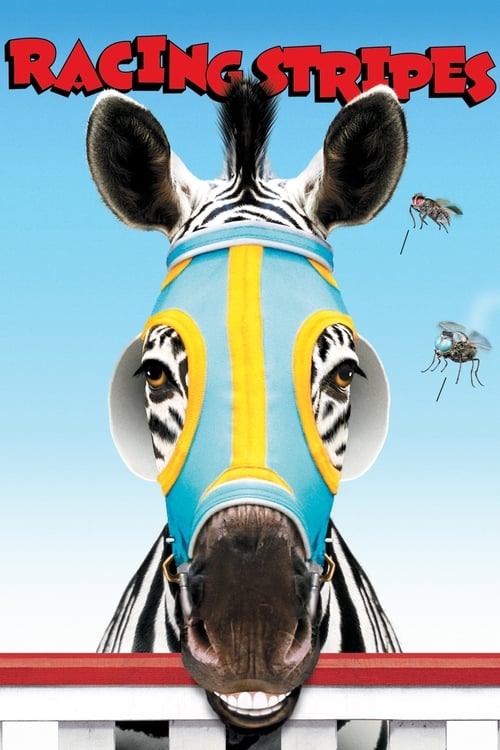
Racing Stripes
Shattered illusions are hard to repair -- especially for a good-hearted zebra named Stripes who's spent his life on a Kentucky farm amidst the sorely mistaken notion that he's a debonair thoroughbred. Once he faces the fact that his stark stripes mark him as different, he decides he'll race anyway. And with help from the young girl who raised him, he just might end up in the winner's circle.
Despite a mid-range budget of $30.0M, Racing Stripes became a financial success, earning $90.8M worldwide—a 203% return.


Plot Structure
Story beats plotted across runtime


Narrative Arc
Emotional journey through the story's key moments
Story Circle
Blueprint 15-beat structure
Arcplot Score Breakdown
Weighted: Precision (70%) + Arc (15%) + Theme (15%)
Racing Stripes (2005) reveals deliberately positioned narrative design, characteristic of Frederik Du Chau's storytelling approach. This structural analysis examines how the film's 15-point plot structure maps to proven narrative frameworks across 1 hour and 42 minutes. With an Arcplot score of 7.3, the film balances conventional beats with creative variation.
Characters
Cast & narrative archetypes

Stripes
Channing Walsh
Sandy
Tucker
Franny
Sir Trenton
Goose
Buzz
Main Cast & Characters
Stripes
Played by Frankie Muniz
A young zebra raised on a farm who dreams of becoming a racehorse despite being told he can't race because of what he is.
Channing Walsh
Played by Bruce Greenwood
A kind-hearted horse trainer and Stripes' adoptive owner who helps him pursue his racing dreams.
Sandy
Played by Hayden Panettiere
A strong-willed teenage girl who bonds with Stripes and becomes his jockey, fighting to prove herself in racing.
Tucker
Played by Dustin Hoffman
A wise old Shetland pony who serves as Stripes' mentor and voice of reason on the farm.
Franny
Played by Whoopi Goldberg
A maternal goat who cares for Stripes and provides emotional support and encouragement.
Sir Trenton
Played by Joshua Jackson
The arrogant champion racehorse who looks down on Stripes and represents the establishment that rejects him.
Goose
Played by Joe Pantoliano
A spirited pelican who becomes Stripes' friend and cheerleader, providing comic relief.
Buzz
Played by Steve Harvey
A horsefly who befriends Stripes and offers loyal, if sometimes misguided, support.
Structural Analysis
The Status Quo at 1 minutes (1% through the runtime) establishes A baby zebra falls from a circus truck during a storm, establishing the world of racing and showing Stripes' accidental arrival in Kentucky horse country.. Of particular interest, this early placement immediately immerses viewers in the story world.
The inciting incident occurs at 12 minutes when Stripes sees the racehorses training at the neighboring Dalrymple estate and becomes captivated by the filly Sandy, sparking his dream to become a racehorse and win the Kentucky Open.. At 12% through the film, this Disruption aligns precisely with traditional story structure. This beat shifts the emotional landscape, launching the protagonist into the central conflict.
The First Threshold at 26 minutes marks the transition into Act II, occurring at 26% of the runtime. This shows the protagonist's commitment to Stripes convinces Channing to train him officially for the Kentucky Open. She agrees to be his jockey, and they commit to entering the race together despite everyone's doubts., moving from reaction to action.
At 51 minutes, the Midpoint arrives at 50% of the runtime—precisely centered, creating perfect narrative symmetry. Structural examination shows that this crucial beat Stripes wins the qualifying race to enter the Kentucky Open, proving he can compete. It's a false victory - he's accepted into the race, but the real challenges and opposition intensify., fundamentally raising what's at risk. The emotional intensity shifts, dividing the narrative into clear before-and-after phases.
The Collapse moment at 75 minutes (73% through) represents the emotional nadir. Here, Stripes is humiliated at the pre-race parade when Trenton's Pride and other horses publicly mock him. He overhears harsh truths about being a zebra in a horse's world. His spirit breaks and he gives up on his dream, retreating to the farm in defeat., demonstrates the protagonist at their lowest point. This beat's placement in the final quarter sets up the climactic reversal.
The Second Threshold at 81 minutes initiates the final act resolution at 80% of the runtime. Stripes realizes he doesn't need to be a horse to be a champion - he needs to be himself. Channing defies her father to race. They reconcile their understanding: it's not about what others think, it's about heart and determination., demonstrating the transformation achieved throughout the journey.
Emotional Journey
Racing Stripes's emotional architecture traces a deliberate progression across 15 carefully calibrated beats.
Narrative Framework
This structural analysis employs systematic plot point analysis that identifies crucial turning points. By mapping Racing Stripes against these established plot points, we can identify how Frederik Du Chau utilizes or subverts traditional narrative conventions. The plot point approach reveals not only adherence to structural principles but also creative choices that distinguish Racing Stripes within the comedy genre.
Frederik Du Chau's Structural Approach
Among the 3 Frederik Du Chau films analyzed on Arcplot, the average structural score is 7.4, reflecting strong command of classical structure. Racing Stripes takes a more unconventional approach compared to the director's typical style. For comparative analysis, explore the complete Frederik Du Chau filmography.
Comparative Analysis
Additional comedy films include The Bad Guys, Ella Enchanted and The Evening Star. For more Frederik Du Chau analyses, see Quest for Camelot, Underdog.
Plot Points by Act
Act I
SetupStatus Quo
A baby zebra falls from a circus truck during a storm, establishing the world of racing and showing Stripes' accidental arrival in Kentucky horse country.
Theme
Tucker the Shetland pony tells Stripes that "it doesn't matter what you look like on the outside, it's what's inside that counts" - the film's core theme about identity and belonging.
Worldbuilding
Stripes is rescued by Nolan Walsh and his daughter Channing. We meet the farm animals who become his friends, learn about the Walsh farm's racing history, and see Stripes grow up believing he's a racehorse despite being a zebra.
Disruption
Stripes sees the racehorses training at the neighboring Dalrymple estate and becomes captivated by the filly Sandy, sparking his dream to become a racehorse and win the Kentucky Open.
Resistance
Stripes trains himself in secret, faces mockery from Trenton's Pride and the thoroughbreds who tell him zebras can't race. Tucker debates whether to help him, knowing the harsh realities of the racing world and the prejudice Stripes will face.
Act II
ConfrontationFirst Threshold
Stripes convinces Channing to train him officially for the Kentucky Open. She agrees to be his jockey, and they commit to entering the race together despite everyone's doubts.
Mirror World
Stripes' relationship with Sandy the filly deepens. She represents acceptance and sees him for who he truly is, not just a zebra trying to be something else.
Premise
The fun of training montages: Stripes learns to race with Channing, the farm animals help with creative training methods, and Stripes pursues his dream despite the ridicule. He bonds with his makeshift team and grows closer to Sandy.
Midpoint
Stripes wins the qualifying race to enter the Kentucky Open, proving he can compete. It's a false victory - he's accepted into the race, but the real challenges and opposition intensify.
Opposition
Clara Dalrymple and her champion horse Trenton's Pride escalate their sabotage efforts. The racing establishment mocks Stripes publicly. Nolan forbids Channing from racing due to safety concerns, creating family conflict. Stripes faces increasing self-doubt about his identity.
Collapse
Stripes is humiliated at the pre-race parade when Trenton's Pride and other horses publicly mock him. He overhears harsh truths about being a zebra in a horse's world. His spirit breaks and he gives up on his dream, retreating to the farm in defeat.
Crisis
Stripes wallows in despair, believing he can never belong. The farm animals rally around him. Tucker and the others remind him why he started racing - not to prove he's a horse, but to prove what he can do.
Act III
ResolutionSecond Threshold
Stripes realizes he doesn't need to be a horse to be a champion - he needs to be himself. Channing defies her father to race. They reconcile their understanding: it's not about what others think, it's about heart and determination.
Synthesis
The Kentucky Open race: Stripes competes as himself, using his unique zebra abilities. He overcomes sabotage from Trenton's Pride, races with heart, and crosses the finish line. Whether he wins or places becomes less important than proving his worth.
Transformation
Stripes stands proudly with his farm family and Channing, accepted by Sandy and respected even by former rivals. He's no longer trying to be a horse - he's a zebra who raced, and that's exactly who he was meant to be.