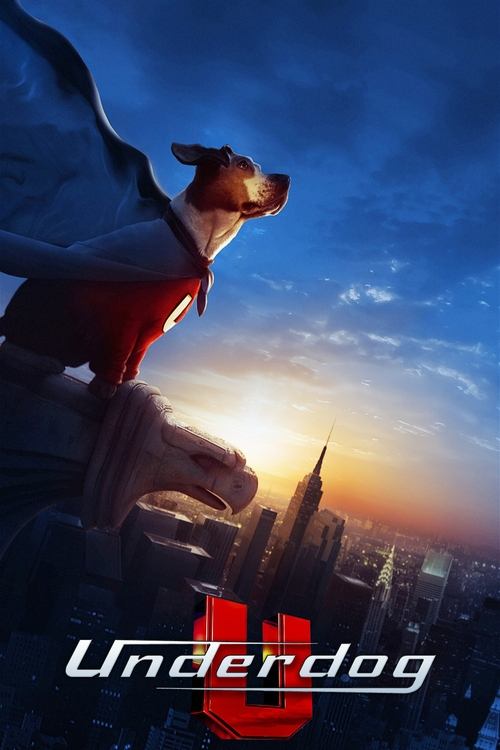
Underdog
A lab accident gives a beagle named Shoeshine some serious superpowers -- a secret that the dog eventually shares with the young boy who becomes his owner and friend.
Despite a moderate budget of $25.0M, Underdog became a solid performer, earning $65.3M worldwide—a 161% return.


Plot Structure
Story beats plotted across runtime


Narrative Arc
Emotional journey through the story's key moments
Story Circle
Blueprint 15-beat structure
Arcplot Score Breakdown
Weighted: Precision (70%) + Arc (15%) + Theme (15%)
Underdog (2007) exhibits carefully calibrated narrative design, characteristic of Frederik Du Chau's storytelling approach. This structural analysis examines how the film's 15-point plot structure maps to proven narrative frameworks across 1 hour and 22 minutes. With an Arcplot score of 7.7, the film showcases strong structural fundamentals.
Characters
Cast & narrative archetypes

Shoeshine/Underdog
Polly Purebred
Jack Unger
Dr. Simon Barsinister
Cad Lackey
Dan Unger
Main Cast & Characters
Shoeshine/Underdog
Played by Jason Lee
A beagle who gains superpowers after a lab accident and becomes the city's superhero protector
Polly Purebred
Played by Amy Adams
A beautiful Cavalier King Charles Spaniel who becomes Underdog's love interest and moral support
Jack Unger
Played by Alex Neuberger
A teenage security guard who befriends Shoeshine and helps him navigate his new powers
Dr. Simon Barsinister
Played by Peter Dinklage
A mad scientist obsessed with creating super-powered creatures to take over the city
Cad Lackey
Played by Patrick Warburton
Dr. Barsinister's bumbling henchman who assists in his villainous schemes
Dan Unger
Played by James Belushi
Jack's father, a police officer who is initially skeptical but comes to appreciate the hero
Structural Analysis
The Status Quo at 1 minutes (1% through the runtime) establishes A nameless beagle is shown as a test subject in a research lab, living a mundane existence as "Subject 13" in a cage, establishing his ordinary world of captivity and powerlessness.. Significantly, this early placement immediately immerses viewers in the story world.
The inciting incident occurs at 10 minutes when During a break-in to stop Barsinister's evil plans, the beagle is accidentally exposed to experimental serum in a lab explosion, transforming him and forcing him to flee the lab with newfound powers he doesn't understand.. At 12% through the film, this Disruption aligns precisely with traditional story structure. This beat shifts the emotional landscape, launching the protagonist into the central conflict.
The First Threshold at 20 minutes marks the transition into Act II, occurring at 24% of the runtime. This reveals the protagonist's commitment to Shoeshine actively chooses to use his powers publicly to save people in danger, adopting the superhero identity "Underdog" and embracing his destiny as a protector rather than hiding his abilities., moving from reaction to action.
At 41 minutes, the Midpoint arrives at 50% of the runtime—precisely centered, creating perfect narrative symmetry. Significantly, this crucial beat Dr. Barsinister captures Underdog and successfully extracts his DNA/powers, revealing that the source of Underdog's strength can be stolen, making him vulnerable and raising the stakes significantly as the villain gains power., fundamentally raising what's at risk. The emotional intensity shifts, dividing the narrative into clear before-and-after phases.
The Collapse moment at 59 minutes (72% through) represents the emotional nadir. Here, Underdog is defeated in a public confrontation with Barsinister's enhanced thugs, his powers nearly gone, and he retreats in shame and failure, losing the city's faith and his own belief in himself as a hero., demonstrates the protagonist at their lowest point. This beat's placement in the final quarter sets up the climactic reversal.
The Second Threshold at 64 minutes initiates the final act resolution at 78% of the runtime. Shoeshine realizes that true heroism comes from heart and courage, not just superpowers, echoing Dan's earlier words; he chooses to face Barsinister anyway, synthesizing his learned values with his inherent bravery., demonstrating the transformation achieved throughout the journey.
Emotional Journey
Underdog's emotional architecture traces a deliberate progression across 15 carefully calibrated beats.
Narrative Framework
This structural analysis employs systematic plot point analysis that identifies crucial turning points. By mapping Underdog against these established plot points, we can identify how Frederik Du Chau utilizes or subverts traditional narrative conventions. The plot point approach reveals not only adherence to structural principles but also creative choices that distinguish Underdog within the family genre.
Frederik Du Chau's Structural Approach
Among the 3 Frederik Du Chau films analyzed on Arcplot, the average structural score is 7.4, reflecting strong command of classical structure. Underdog represents one of the director's most structurally precise works. For comparative analysis, explore the complete Frederik Du Chau filmography.
Comparative Analysis
Additional family films include The Black Stallion, The Bad Guys and Ella Enchanted. For more Frederik Du Chau analyses, see Quest for Camelot, Racing Stripes.
Plot Points by Act
Act I
SetupStatus Quo
A nameless beagle is shown as a test subject in a research lab, living a mundane existence as "Subject 13" in a cage, establishing his ordinary world of captivity and powerlessness.
Theme
Security guard Dan Unger tells his son Jack, "There's no need to be a hero," reflecting his belief in staying safe and ordinary, establishing the film's theme about finding courage and purpose.
Worldbuilding
Introduction to Capitol City, the lab where experiments are conducted, security guard Dan Unger and his relationship with his son Jack, and the villainous Dr. Simon Barsinister who conducts secret genetic experiments.
Disruption
During a break-in to stop Barsinister's evil plans, the beagle is accidentally exposed to experimental serum in a lab explosion, transforming him and forcing him to flee the lab with newfound powers he doesn't understand.
Resistance
The transformed dog is found by Dan and Jack Unger, named Shoeshine, and begins adapting to life as a family pet while discovering his superpowers (strength, speed, flight, speech), uncertain whether to reveal his true nature.
Act II
ConfrontationFirst Threshold
Shoeshine actively chooses to use his powers publicly to save people in danger, adopting the superhero identity "Underdog" and embracing his destiny as a protector rather than hiding his abilities.
Mirror World
Underdog meets and begins developing a relationship with Polly Purebred, a female dog who represents his desire for connection and normalcy, teaching him about balancing heroism with personal relationships.
Premise
Underdog becomes Capitol City's beloved superhero, performing daring rescues, enjoying fame and admiration, while developing his relationship with Polly and bonding with Jack, delivering the fun superhero action the audience expects.
Midpoint
Dr. Barsinister captures Underdog and successfully extracts his DNA/powers, revealing that the source of Underdog's strength can be stolen, making him vulnerable and raising the stakes significantly as the villain gains power.
Opposition
Underdog struggles with diminishing powers while Barsinister grows stronger and begins implementing his evil plan to control the city; the hero's confidence wavers as he faces increasingly difficult challenges and his limitations.
Collapse
Underdog is defeated in a public confrontation with Barsinister's enhanced thugs, his powers nearly gone, and he retreats in shame and failure, losing the city's faith and his own belief in himself as a hero.
Crisis
Shoeshine wallows in despair, believing he is nothing without his powers; Jack and Polly are captured by Barsinister, forcing Shoeshine to confront whether he has the courage to act even in his weakened state.
Act III
ResolutionSecond Threshold
Shoeshine realizes that true heroism comes from heart and courage, not just superpowers, echoing Dan's earlier words; he chooses to face Barsinister anyway, synthesizing his learned values with his inherent bravery.
Synthesis
Underdog confronts Barsinister in a final battle, using wit, heart, and teamwork alongside Dan and Jack; he defeats the villain, saves the city, and proves that being a hero is about character, not just power.
Transformation
Shoeshine is shown living happily with the Unger family as both pet and hero, fully integrated into both worlds, with Polly by his side, demonstrating his transformation from powerless lab subject to confident hero who understands true courage.