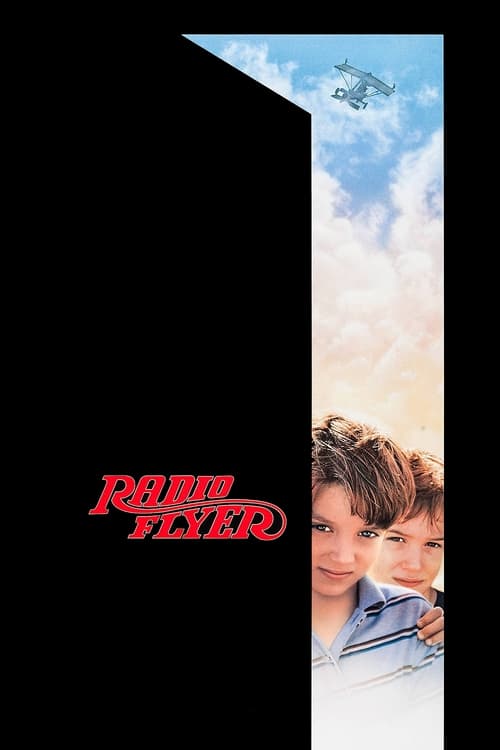
Radio Flyer
A father reminisces about his childhood when he and his younger brother moved to a new town with their mother, her new husband and their dog, Shane. When the younger brother is subjected to physical abuse at the hands of their brutal stepfather, Mike decides to convert their toy trolley, the "Radio Flyer", into a plane to fly him to safety.
The film commercial failure against its respectable budget of $35.0M, earning $4.7M globally (-87% loss). While initial box office returns were modest, the film has gained appreciation for its innovative storytelling within the drama genre.


Plot Structure
Story beats plotted across runtime


Narrative Arc
Emotional journey through the story's key moments
Story Circle
Blueprint 15-beat structure
Arcplot Score Breakdown
Weighted: Precision (70%) + Arc (15%) + Theme (15%)
Radio Flyer (1992) demonstrates precise dramatic framework, characteristic of Richard Donner's storytelling approach. This structural analysis examines how the film's 15-point plot structure maps to proven narrative frameworks across 1 hour and 54 minutes. With an Arcplot score of 7.3, the film balances conventional beats with creative variation.
Characters
Cast & narrative archetypes

Mike
Bobby
The King
Mary
Older Mike
Main Cast & Characters
Mike
Played by Elijah Wood
The older brother who becomes narrator, protective and imaginative, creates escape plan for Bobby
Bobby
Played by Joseph Mazzello
The younger brother who suffers abuse, innocent and hopeful, believes in the possibility of flying away
The King
Played by Adam Baldwin
The abusive alcoholic stepfather who terrorizes the boys, particularly Bobby
Mary
Played by Lorraine Bracco
The boys' mother who struggles between protecting her children and her relationship with The King
Older Mike
Played by Tom Hanks
Adult Mike serving as narrator, reflecting on childhood trauma and his brother's fate
Structural Analysis
The Status Quo at 2 minutes (2% through the runtime) establishes Adult Mike narrates his childhood story, establishing the nostalgic frame. We see young Mike and Bobby as innocent boys with their mother, living a simple life before "The King" arrives.. Significantly, this early placement immediately immerses viewers in the story world.
The inciting incident occurs at 13 minutes when The mother marries "The King," who moves in and begins to reveal his true abusive nature toward Bobby. The boys' safe world is shattered as Bobby becomes the target of physical abuse.. At 11% through the film, this Disruption aligns precisely with traditional story structure. This beat shifts the emotional landscape, launching the protagonist into the central conflict.
The First Threshold at 30 minutes marks the transition into Act II, occurring at 26% of the runtime. This indicates the protagonist's commitment to Mike and Bobby make the active decision to transform the Radio Flyer wagon into a flying machine. They choose to believe in the impossible as their only means of escape, committing to the fantasy that will save Bobby., moving from reaction to action.
At 57 minutes, the Midpoint arrives at 50% of the runtime—precisely centered, creating perfect narrative symmetry. The analysis reveals that this crucial beat Bobby suffers a particularly severe beating from The King. The stakes are raised dramatically—it's clear Bobby may not survive if he stays. The urgency intensifies; the flying machine must work or Bobby will die., fundamentally raising what's at risk. The emotional intensity shifts, dividing the narrative into clear before-and-after phases.
The Collapse moment at 84 minutes (74% through) represents the emotional nadir. Here, Bobby is beaten so badly he can barely move. The "whiff of death" is literal—Bobby faces potential death if he remains. The darkest moment: childhood innocence is dying, and conventional rescue has failed completely., demonstrates the protagonist at their lowest point. This beat's placement in the final quarter sets up the climactic reversal.
The Second Threshold at 91 minutes initiates the final act resolution at 80% of the runtime. Bobby and Mike complete the Radio Flyer flying machine. The synthesis: combining their practical efforts with pure belief. Bobby will attempt the flight—choosing the fantasy of escape over the reality of death., demonstrating the transformation achieved throughout the journey.
Emotional Journey
Radio Flyer's emotional architecture traces a deliberate progression across 15 carefully calibrated beats.
Narrative Framework
This structural analysis employs a 15-point narrative structure framework that maps key story moments. By mapping Radio Flyer against these established plot points, we can identify how Richard Donner utilizes or subverts traditional narrative conventions. The plot point approach reveals not only adherence to structural principles but also creative choices that distinguish Radio Flyer within the drama genre.
Richard Donner's Structural Approach
Among the 16 Richard Donner films analyzed on Arcplot, the average structural score is 6.9, demonstrating varied approaches to story architecture. Radio Flyer represents one of the director's most structurally precise works. For comparative analysis, explore the complete Richard Donner filmography.
Comparative Analysis
Additional drama films include After Thomas, South Pacific and Dirty Dancing: Havana Nights. For more Richard Donner analyses, see Assassins, Superman and Lethal Weapon 2.
Plot Points by Act
Act I
SetupStatus Quo
Adult Mike narrates his childhood story, establishing the nostalgic frame. We see young Mike and Bobby as innocent boys with their mother, living a simple life before "The King" arrives.
Theme
Mike's narration states: "There are no legends about ending. Endings are never legendary." The film's central question about escape, belief, and how children survive trauma through imagination.
Worldbuilding
Introduction to the family: Mike (narrator), younger brother Bobby, their mother Mary, and the arrival of her new boyfriend. The boys' world of adventure, imagination, and the old wagon "Radio Flyer." Establishing the innocence of childhood.
Disruption
The mother marries "The King," who moves in and begins to reveal his true abusive nature toward Bobby. The boys' safe world is shattered as Bobby becomes the target of physical abuse.
Resistance
The boys attempt to navigate life with The King. Bobby endures increasing abuse while Mike tries to protect him. They debate telling adults, but fear and shame prevent them. The Radio Flyer wagon becomes a symbol of potential escape.
Act II
ConfrontationFirst Threshold
Mike and Bobby make the active decision to transform the Radio Flyer wagon into a flying machine. They choose to believe in the impossible as their only means of escape, committing to the fantasy that will save Bobby.
Mirror World
Fisher, the friendly older neighbor/veteran, represents belief and imagination. He encourages the boys' dreams and serves as the surrogate father figure who believes anything is possible, embodying the theme of faith over harsh reality.
Premise
The boys work on building their flying machine. Scenes of childhood wonder mixed with the dark reality of Bobby's worsening abuse. The promise of the premise: can imagination and belief literally save a child from hell?
Midpoint
Bobby suffers a particularly severe beating from The King. The stakes are raised dramatically—it's clear Bobby may not survive if he stays. The urgency intensifies; the flying machine must work or Bobby will die.
Opposition
The King's violence escalates. The boys work frantically to complete the Radio Flyer. Adult interference proves useless or absent. Time is running out, and the opposition (reality, The King, adult failure) closes in on the desperate plan.
Collapse
Bobby is beaten so badly he can barely move. The "whiff of death" is literal—Bobby faces potential death if he remains. The darkest moment: childhood innocence is dying, and conventional rescue has failed completely.
Crisis
Mike and Bobby face the terrible truth: the only escape is the impossible one. They must choose between certain death (staying) and impossible hope (flying). The emotional weight of what they're about to attempt.
Act III
ResolutionSecond Threshold
Bobby and Mike complete the Radio Flyer flying machine. The synthesis: combining their practical efforts with pure belief. Bobby will attempt the flight—choosing the fantasy of escape over the reality of death.
Synthesis
Bobby takes the Radio Flyer down the hill for his flight to freedom. The finale unfolds ambiguously—did Bobby fly away or die? Mike helps him escape, and Bobby disappears forever. The King is arrested. The mystery remains.
Transformation
Adult Mike reveals he still receives postcards from Bobby "from all over the world." The closing image mirrors the opening but transformed: Mike has chosen to believe in the legend, in the impossible escape, because some truths are too painful for reality.