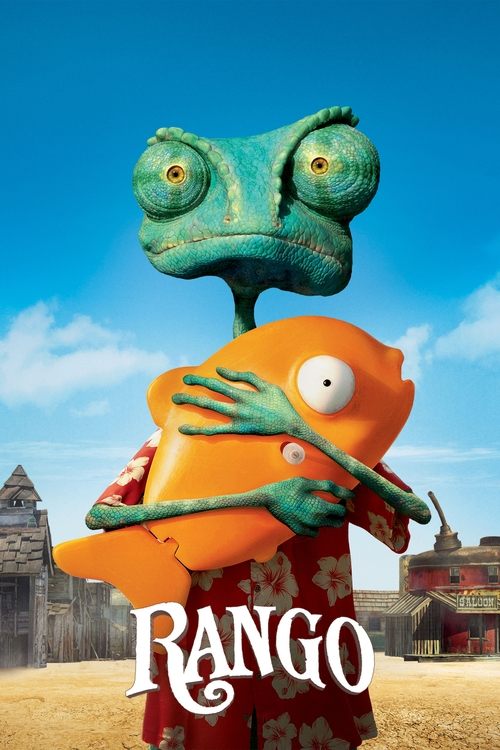
Rango
When Rango, a lost family pet, accidentally winds up in the gritty, gun-slinging town of Dirt, the less-than-courageous lizard suddenly finds he stands out. Welcomed as the last hope the town has been waiting for, new Sheriff Rango is forced to play his new role to the hilt.
Working with a considerable budget of $135.0M, the film achieved a modest success with $245.7M in global revenue (+82% profit margin).
1 Oscar. 46 wins & 25 nominations


Plot Structure
Story beats plotted across runtime


Narrative Arc
Emotional journey through the story's key moments
Story Circle
Blueprint 15-beat structure
Arcplot Score Breakdown
Weighted: Precision (70%) + Arc (15%) + Theme (15%)
Rango (2011) demonstrates meticulously timed dramatic framework, characteristic of Gore Verbinski's storytelling approach. This structural analysis examines how the film's 15-point plot structure maps to proven narrative frameworks across 1 hour and 52 minutes. With an Arcplot score of 6.1, the film takes an unconventional approach to traditional narrative frameworks.
Characters
Cast & narrative archetypes

Rango
Beans
Jake
Mayor
Roadkill
Bad Bill
Priscilla
Main Cast & Characters
Rango
Played by Johnny Depp
A theatrical pet chameleon who becomes the unlikely sheriff of a Western town called Dirt, searching for identity and purpose.
Beans
Played by Isla Fisher
A spirited desert iguana rancher fighting to save her land and water rights in Dirt.
Jake
Played by Bill Nighy
A menacing rattlesnake gunslinger with a Gatling gun for a tail, serving as Rango's ultimate nemesis.
Mayor
Played by Ned Beatty
The elderly tortoise who rules Dirt with a seemingly benevolent but secretly corrupt grip on the town's water supply.
Roadkill
Played by Alfred Molina
A wise armadillo who serves as a mystical guide, introducing Rango to the concept of being a hero.
Bad Bill
Played by Ray Winstone
A menacing Gila monster outlaw and one of the town's dangerous criminals.
Priscilla
Played by Abigail Breslin
A brave young desert mouse with a sharp mind who becomes one of Rango's loyal allies.
Structural Analysis
The Status Quo at 1 minutes (1% through the runtime) establishes Rango, a pet chameleon living in a terrarium, acts out dramatic scenarios alone with his inanimate toys, revealing his loneliness and desire for purpose and identity.. Significantly, this early placement immediately immerses viewers in the story world.
The inciting incident occurs at 14 minutes when Rango arrives in Dirt, a lawless frontier town suffering from a severe water shortage. The townsfolk are desperate, fearful, and on the brink of collapse.. At 12% through the film, this Disruption aligns precisely with traditional story structure. This beat shifts the emotional landscape, launching the protagonist into the central conflict.
The First Threshold at 28 minutes marks the transition into Act II, occurring at 25% of the runtime. This illustrates the protagonist's commitment to The townspeople make Rango their new sheriff. He accepts the badge and the responsibility, choosing to embrace his fabricated identity and commit to protecting the town., moving from reaction to action.
At 57 minutes, the Midpoint arrives at 51% of the runtime—precisely centered, creating perfect narrative symmetry. Of particular interest, this crucial beat Rango and his posse find the water supply valve shut off. He turns it back on, restoring water to Dirt. He is celebrated as a hero, and the town throws a festival in his honor. False victory: he doesn't realize he's being manipulated., fundamentally raising what's at risk. The emotional intensity shifts, dividing the narrative into clear before-and-after phases.
The Collapse moment at 85 minutes (76% through) represents the emotional nadir. Here, Rango is revealed as a fraud and a liar. The town rejects him, calling him a fake. He walks into the desert alone, stripped of his identity, his badge, and his purpose. His invented persona dies., indicates the protagonist at their lowest point. This beat's placement in the final quarter sets up the climactic reversal.
The Second Threshold at 91 minutes initiates the final act resolution at 81% of the runtime. Rango realizes he may be a fake, but his actions were real. He chooses to return to Dirt not as a fabricated hero, but as himself—someone who will fight for others. He embraces authentic heroism., demonstrating the transformation achieved throughout the journey.
Emotional Journey
Rango's emotional architecture traces a deliberate progression across 15 carefully calibrated beats.
Narrative Framework
This structural analysis employs proven narrative structure principles that track dramatic progression. By mapping Rango against these established plot points, we can identify how Gore Verbinski utilizes or subverts traditional narrative conventions. The plot point approach reveals not only adherence to structural principles but also creative choices that distinguish Rango within the animation genre.
Gore Verbinski's Structural Approach
Among the 9 Gore Verbinski films analyzed on Arcplot, the average structural score is 7.1, reflecting strong command of classical structure. Rango takes a more unconventional approach compared to the director's typical style. For comparative analysis, explore the complete Gore Verbinski filmography.
Comparative Analysis
Additional animation films include The Bad Guys, Puss in Boots and Violet Evergarden: Eternity and the Auto Memory Doll. For more Gore Verbinski analyses, see MouseHunt, Pirates of the Caribbean: The Curse of the Black Pearl and A Cure for Wellness.
Plot Points by Act
Act I
SetupStatus Quo
Rango, a pet chameleon living in a terrarium, acts out dramatic scenarios alone with his inanimate toys, revealing his loneliness and desire for purpose and identity.
Theme
The armadillo tells Rango, "It's not about you, it's about them" and speaks of the Spirit of the West, suggesting that identity comes from serving others, not self-invention.
Worldbuilding
Rango is accidentally thrown from a car on a desert highway, encounters desert creatures, and learns about the harsh realities of the Mojave. He meets the armadillo philosopher and the mysterious Beans, who takes him to the town of Dirt.
Disruption
Rango arrives in Dirt, a lawless frontier town suffering from a severe water shortage. The townsfolk are desperate, fearful, and on the brink of collapse.
Resistance
Rango fabricates a false identity as a tough gunslinger to gain acceptance. He debates whether to stay or flee, especially after meeting the hawk that nearly kills him. He accidentally kills the hawk and becomes an instant hero.
Act II
ConfrontationFirst Threshold
The townspeople make Rango their new sheriff. He accepts the badge and the responsibility, choosing to embrace his fabricated identity and commit to protecting the town.
Mirror World
Rango deepens his connection with Beans, who represents authenticity and purpose. She challenges him to actually do something meaningful as sheriff, becoming his thematic mirror and potential romantic interest.
Premise
Rango plays sheriff, investigating the water crisis with his posse. He tracks the missing water supply, encounters bandits, survives a bat cave, and navigates treacherous situations while maintaining his false persona. The adventure he always wanted.
Midpoint
Rango and his posse find the water supply valve shut off. He turns it back on, restoring water to Dirt. He is celebrated as a hero, and the town throws a festival in his honor. False victory: he doesn't realize he's being manipulated.
Opposition
Rango discovers the conspiracy: the mayor has been hoarding water to buy up land for a future Las Vegas project. Jake the rattlesnake returns. Rango is challenged to a duel, and his lies are exposed in front of the entire town.
Collapse
Rango is revealed as a fraud and a liar. The town rejects him, calling him a fake. He walks into the desert alone, stripped of his identity, his badge, and his purpose. His invented persona dies.
Crisis
Rango wanders the desert in despair, questioning who he really is. He encounters the Spirit of the West (Clint Eastwood), who tells him that no man can walk out on his own story and that it's not about him, but about the people of Dirt.
Act III
ResolutionSecond Threshold
Rango realizes he may be a fake, but his actions were real. He chooses to return to Dirt not as a fabricated hero, but as himself—someone who will fight for others. He embraces authentic heroism.
Synthesis
Rango returns to Dirt, rallies the townspeople, confronts the mayor and Jake, orchestrates a plan to reclaim the water, and defeats the corrupt forces. He integrates his theatrical creativity with genuine courage to save the town.
Transformation
Rango rides off with Beans and the townspeople, no longer needing to pretend. He has become the hero he pretended to be—not through lies, but through authentic action and sacrifice. He found his true identity by serving others.