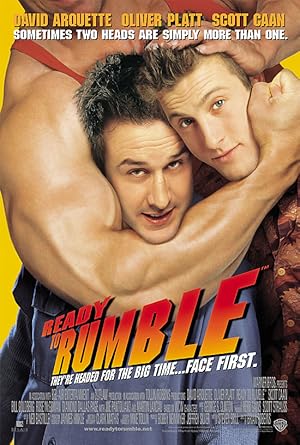
Ready to Rumble
Two dimwit sewage workers watch their hero, WCW wrestler Jimmy King, get screwed out of the World title by wrestler Diamond Dallas Page and evil WCW owner Titus Sinclair. They embark on a quest to help their hero win his title - and honor - back. Features cameos by lots of WCW wrestlers.
The film struggled financially against its mid-range budget of $24.0M, earning $12.4M globally (-48% loss). While initial box office returns were modest, the film has gained appreciation for its unconventional structure within the comedy genre.


Plot Structure
Story beats plotted across runtime


Narrative Arc
Emotional journey through the story's key moments
Story Circle
Blueprint 15-beat structure
Arcplot Score Breakdown
Weighted: Precision (70%) + Arc (15%) + Theme (15%)
Ready to Rumble (2000) showcases meticulously timed dramatic framework, characteristic of Brian Robbins's storytelling approach. This structural analysis examines how the film's 15-point plot structure maps to proven narrative frameworks across 1 hour and 47 minutes. With an Arcplot score of 7.3, the film balances conventional beats with creative variation.
Characters
Cast & narrative archetypes

Gordie Boggs
Sean Dawkins
Jimmy King
Diamond Dallas Page
Sasha
Sal Bandini
Main Cast & Characters
Gordie Boggs
Played by David Arquette
An enthusiastic wrestling superfan who works at a sewage plant and dreams of meeting his hero Jimmy King.
Sean Dawkins
Played by Scott Caan
Gordie's best friend and fellow wrestling fanatic who joins him on a quest to help their fallen hero.
Jimmy King
Played by Oliver Platt
A washed-up professional wrestling champion who loses his title through betrayal and must rediscover his fighting spirit.
Diamond Dallas Page
Played by Diamond Dallas Page
A ruthless wrestling villain who orchestrates Jimmy King's downfall and takes his championship title.
Sasha
Played by Rose McGowan
A supportive woman who becomes romantically involved with Gordie while helping the group on their mission.
Sal Bandini
Played by Joe Pantoliano
Jimmy King's sleazy and manipulative promoter who betrays him for profit and power.
Structural Analysis
The Status Quo at 1 minutes (1% through the runtime) establishes Gordie and Sean are working-class sewage truck workers who are passionate wrestling fans, living mundane lives but finding joy in their fandom of champion wrestler Jimmy King.. The analysis reveals that this early placement immediately immerses viewers in the story world.
The inciting incident occurs at 14 minutes when At the live wrestling event, Gordie and Sean witness their hero Jimmy King lose his championship in a rigged match orchestrated by corrupt promoter Titus Sinclair, who then humiliates and fires King.. At 13% through the film, this Disruption is delayed, allowing extended setup of the story world. This beat shifts the emotional landscape, launching the protagonist into the central conflict.
The First Threshold at 27 minutes marks the transition into Act II, occurring at 25% of the runtime. This demonstrates the protagonist's commitment to Gordie and Sean make the active decision to help Jimmy King reclaim his title, embarking on a road trip to get King back in shape and back in the ring, leaving their ordinary lives behind., moving from reaction to action.
At 54 minutes, the Midpoint arrives at 51% of the runtime—precisely centered, creating perfect narrative symmetry. Structural examination shows that this crucial beat False victory: Jimmy King successfully returns to wrestling in smaller venues and starts winning matches. The guys believe they're on track to get him back to championship level, and their plan seems to be working., fundamentally raising what's at risk. The emotional intensity shifts, dividing the narrative into clear before-and-after phases.
The Collapse moment at 80 minutes (75% through) represents the emotional nadir. Here, Everything falls apart: Jimmy King betrays Gordie and Sean, choosing to align with Titus Sinclair for fame and money. The guys' dream dies, their hero has abandoned them, and their friendship is shattered., reveals the protagonist at their lowest point. This beat's placement in the final quarter sets up the climactic reversal.
The Second Threshold at 85 minutes initiates the final act resolution at 79% of the runtime. Gordie and Sean realize that THEY need to get in the ring themselves. They synthesize what they've learned about wrestling with their authentic belief in doing the right thing, deciding to challenge the corrupt system directly., demonstrating the transformation achieved throughout the journey.
Emotional Journey
Ready to Rumble's emotional architecture traces a deliberate progression across 15 carefully calibrated beats.
Narrative Framework
This structural analysis employs proven narrative structure principles that track dramatic progression. By mapping Ready to Rumble against these established plot points, we can identify how Brian Robbins utilizes or subverts traditional narrative conventions. The plot point approach reveals not only adherence to structural principles but also creative choices that distinguish Ready to Rumble within the comedy genre.
Brian Robbins's Structural Approach
Among the 8 Brian Robbins films analyzed on Arcplot, the average structural score is 7.2, reflecting strong command of classical structure. Ready to Rumble represents one of the director's most structurally precise works. For comparative analysis, explore the complete Brian Robbins filmography.
Comparative Analysis
Additional comedy films include The Bad Guys, Ella Enchanted and The Evening Star. For more Brian Robbins analyses, see Meet Dave, Hardball and A Thousand Words.
Plot Points by Act
Act I
SetupStatus Quo
Gordie and Sean are working-class sewage truck workers who are passionate wrestling fans, living mundane lives but finding joy in their fandom of champion wrestler Jimmy King.
Theme
The theme of believing in your heroes and never giving up is established through the protagonists' unwavering devotion to wrestling and Jimmy King despite others mocking them.
Worldbuilding
We see Gordie and Sean's daily lives as sanitation workers, their friendship, their obsession with WCW wrestling, and the upcoming match where their hero Jimmy King will defend his title against Diamond Dallas Page.
Disruption
At the live wrestling event, Gordie and Sean witness their hero Jimmy King lose his championship in a rigged match orchestrated by corrupt promoter Titus Sinclair, who then humiliates and fires King.
Resistance
Gordie and Sean debate whether to get involved. They find Jimmy King has become a broken, alcoholic has-been. They argue about whether they should try to help him or just go back to their normal lives.
Act II
ConfrontationFirst Threshold
Gordie and Sean make the active decision to help Jimmy King reclaim his title, embarking on a road trip to get King back in shape and back in the ring, leaving their ordinary lives behind.
Mirror World
The trio meets wrestling legend Sal Bandini (played by Martin Landau), a mentor figure who represents the old-school honor and authenticity of wrestling, contrasting with the corporate corruption they're fighting.
Premise
The fun and games of training Jimmy King - montages of workouts, learning wrestling moves, comedic bonding moments, and the guys experiencing the wrestling world from the inside while helping their hero recover his confidence.
Midpoint
False victory: Jimmy King successfully returns to wrestling in smaller venues and starts winning matches. The guys believe they're on track to get him back to championship level, and their plan seems to be working.
Opposition
Titus Sinclair actively works against them, creating obstacles. Jimmy King's ego returns and he becomes difficult. Tensions rise between Gordie and Sean as the stakes get higher and their friendship is tested by the pressure.
Collapse
Everything falls apart: Jimmy King betrays Gordie and Sean, choosing to align with Titus Sinclair for fame and money. The guys' dream dies, their hero has abandoned them, and their friendship is shattered.
Crisis
Gordie and Sean hit rock bottom, dealing with the betrayal and questioning whether their belief in heroes was foolish. They must decide if they should give up or find another way to fight for what's right.
Act III
ResolutionSecond Threshold
Gordie and Sean realize that THEY need to get in the ring themselves. They synthesize what they've learned about wrestling with their authentic belief in doing the right thing, deciding to challenge the corrupt system directly.
Synthesis
The finale: Gordie and Sean enter the wrestling match, face off against the villains, expose the corruption, reunite with a redeemed Jimmy King, and fight for the championship in a climactic wrestling showdown.
Transformation
Final image shows Gordie and Sean back at their regular jobs, but transformed - they proved that ordinary people can be heroes, their friendship is stronger, and they learned that believing in yourself matters more than idolizing others.