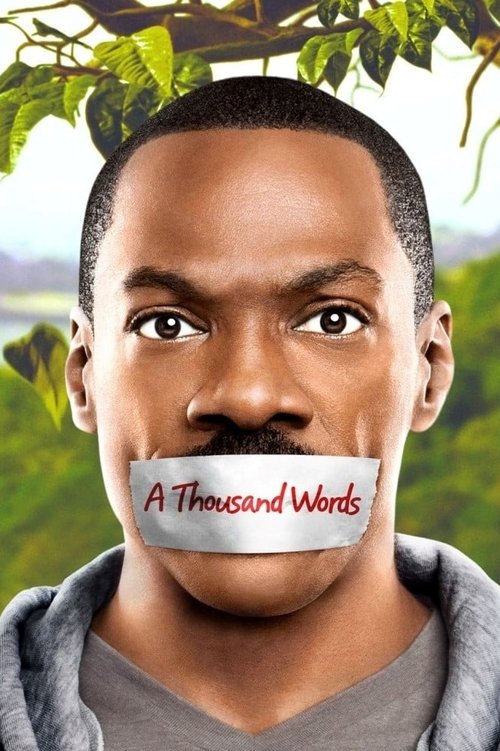
A Thousand Words
Jack McCall is a fast-talking literary agent, who can close any deal, any time, any way. He has set his sights on New Age guru Dr. Sinja for his own selfish purposes. But Dr. Sinja is on to him, and Jack’s life comes unglued after a magical Bodhi tree mysteriously appears in his backyard. With every word Jack speaks, a leaf falls from the tree and he realizes that when the last leaf falls, both he and the tree are toast. Words have never failed Jack McCall, but now he’s got to stop talking and conjure up some outrageous ways to communicate or he’s a goner.
The film disappointed at the box office against its respectable budget of $40.0M, earning $22.0M globally (-45% loss). While initial box office returns were modest, the film has gained appreciation for its fresh perspective within the drama genre.


Plot Structure
Story beats plotted across runtime


Narrative Arc
Emotional journey through the story's key moments
Story Circle
Blueprint 15-beat structure
Arcplot Score Breakdown
Weighted: Precision (70%) + Arc (15%) + Theme (15%)
A Thousand Words (2012) reveals carefully calibrated dramatic framework, characteristic of Brian Robbins's storytelling approach. This structural analysis examines how the film's 15-point plot structure maps to proven narrative frameworks across 1 hour and 31 minutes. With an Arcplot score of 7.5, the film showcases strong structural fundamentals.
Characters
Cast & narrative archetypes

Jack McCall
Caroline McCall
Dr. Sinja
Aaron Wiseberger
Annie McCall
Main Cast & Characters
Jack McCall
Played by Eddie Murphy
A fast-talking literary agent who discovers he has only a thousand words left to speak before he dies, linked to a magical bodhi tree.
Caroline McCall
Played by Kerry Washington
Jack's loving wife who is pregnant and struggles to understand her husband's sudden silence and erratic behavior.
Dr. Sinja
Played by Cliff Curtis
A spiritual guru who Jack tries to sign as a client, and who becomes a guide in understanding the tree's message.
Aaron Wiseberger
Played by Clark Duke
Jack's enthusiastic but bumbling assistant who attempts to help Jack navigate his voiceless predicament.
Annie McCall
Played by Ruby Dee
Jack's estranged mother who he hasn't spoken to in years due to unresolved childhood trauma.
Structural Analysis
The Status Quo at 1 minutes (1% through the runtime) establishes Jack McCall, a fast-talking literary agent, manipulates clients and colleagues with empty promises and smooth talk, shown pitching deals while caring only about money and success.. Structural examination shows that this early placement immediately immerses viewers in the story world.
The inciting incident occurs at 11 minutes when A mysterious Bodhi tree appears in Jack's backyard after he tries to con spiritual guru Dr. Sinja, and Jack discovers each word he speaks causes a leaf to fall from the tree.. At 12% through the film, this Disruption aligns precisely with traditional story structure. This beat shifts the emotional landscape, launching the protagonist into the central conflict.
The First Threshold at 23 minutes marks the transition into Act II, occurring at 25% of the runtime. This indicates the protagonist's commitment to Jack commits to silence and attempts to continue his life without speaking, entering a world where he must communicate through actions, gestures, and written notes rather than his usual verbal manipulation., moving from reaction to action.
At 46 minutes, the Midpoint arrives at 50% of the runtime—precisely centered, creating perfect narrative symmetry. Structural examination shows that this crucial beat Jack's marriage crumbles as Caroline, exhausted by his silence and apparent distance, asks him to leave. The tree has far fewer leaves remaining, raising the stakes from inconvenience to mortality and lost connection., fundamentally raising what's at risk. The emotional intensity shifts, dividing the narrative into clear before-and-after phases.
The Collapse moment at 68 minutes (75% through) represents the emotional nadir. Here, The tree is nearly bare and Jack collapses, dying, having lost everything—his career, his wife, and now his life. He faces death having never truly connected or communicated with those he loves., demonstrates the protagonist at their lowest point. This beat's placement in the final quarter sets up the climactic reversal.
The Second Threshold at 73 minutes initiates the final act resolution at 80% of the runtime. Jack realizes he must use his final words not to save himself but to truly communicate love and reconciliation. He chooses to speak authentically to his mother, healing their relationship with genuine words., demonstrating the transformation achieved throughout the journey.
Emotional Journey
A Thousand Words's emotional architecture traces a deliberate progression across 15 carefully calibrated beats.
Narrative Framework
This structural analysis employs systematic plot point analysis that identifies crucial turning points. By mapping A Thousand Words against these established plot points, we can identify how Brian Robbins utilizes or subverts traditional narrative conventions. The plot point approach reveals not only adherence to structural principles but also creative choices that distinguish A Thousand Words within the drama genre.
Brian Robbins's Structural Approach
Among the 8 Brian Robbins films analyzed on Arcplot, the average structural score is 7.2, reflecting strong command of classical structure. A Thousand Words represents one of the director's most structurally precise works. For comparative analysis, explore the complete Brian Robbins filmography.
Comparative Analysis
Additional drama films include After Thomas, South Pacific and Dirty Dancing: Havana Nights. For more Brian Robbins analyses, see Meet Dave, Hardball and The Perfect Score.
Plot Points by Act
Act I
SetupStatus Quo
Jack McCall, a fast-talking literary agent, manipulates clients and colleagues with empty promises and smooth talk, shown pitching deals while caring only about money and success.
Theme
Dr. Sinja tells Jack, "It's not what you say, it's what you do," establishing the theme that actions speak louder than words and authentic connection requires more than clever talking.
Worldbuilding
Jack's world of superficial relationships is established: his neglected wife Caroline, their baby on the way, his assistant Aaron, and his reliance on talking his way through every situation without genuine emotional investment.
Disruption
A mysterious Bodhi tree appears in Jack's backyard after he tries to con spiritual guru Dr. Sinja, and Jack discovers each word he speaks causes a leaf to fall from the tree.
Resistance
Jack resists the tree's reality, trying various ways to remove it and seeking Dr. Sinja's help, learning the tree will die when it runs out of leaves, and so will he. He debates how to navigate life without speaking.
Act II
ConfrontationFirst Threshold
Jack commits to silence and attempts to continue his life without speaking, entering a world where he must communicate through actions, gestures, and written notes rather than his usual verbal manipulation.
Mirror World
Aaron, Jack's loyal assistant, becomes the voice Jack cannot be, while Caroline represents the authentic relationship Jack has neglected, both reflecting what genuine connection without manipulation looks like.
Premise
Jack navigates his professional and personal life in silence, leading to comedic and revealing situations where his inability to talk forces him to act differently, exposing the emptiness of his previous lifestyle.
Midpoint
Jack's marriage crumbles as Caroline, exhausted by his silence and apparent distance, asks him to leave. The tree has far fewer leaves remaining, raising the stakes from inconvenience to mortality and lost connection.
Opposition
Jack's life falls apart: his career collapses, his wife pulls away, and the tree's leaves dwindle dangerously. His attempts to save himself through clever workarounds fail, forcing him toward genuine self-examination.
Collapse
The tree is nearly bare and Jack collapses, dying, having lost everything—his career, his wife, and now his life. He faces death having never truly connected or communicated with those he loves.
Crisis
In his dying state, Jack experiences a spiritual reckoning, reflecting on his wasted words and broken relationships, particularly his estrangement from his mother and his failure to be present for his family.
Act III
ResolutionSecond Threshold
Jack realizes he must use his final words not to save himself but to truly communicate love and reconciliation. He chooses to speak authentically to his mother, healing their relationship with genuine words.
Synthesis
Jack uses his remaining words to reconcile with his mother and express true love to Caroline, prioritizing authentic connection over self-preservation. The tree releases him when he finally acts with genuine intention.
Transformation
Jack, now healed and alive, speaks sparingly and meaningfully, present with his wife and newborn child, living the truth that words have power only when backed by authentic action and love.