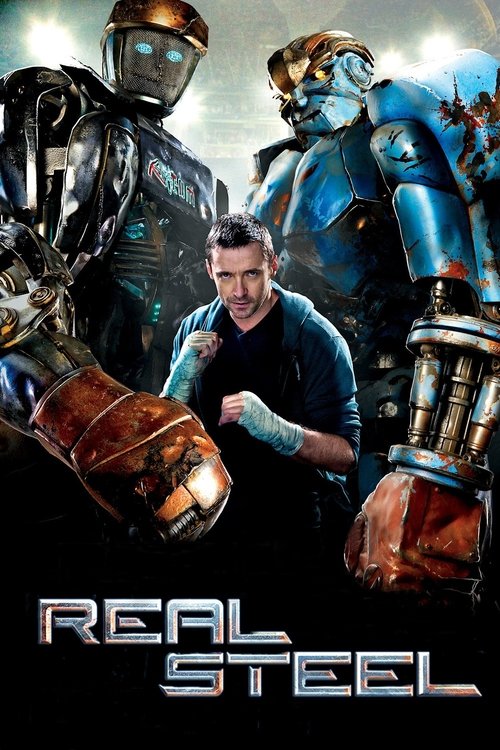
Real Steel
Charlie Kenton is a washed-up fighter who retired from the ring when robots took over the sport. After his robot is trashed, he reluctantly teams up with his estranged son to rebuild and train an unlikely contender.
Despite a considerable budget of $110.0M, Real Steel became a commercial success, earning $299.3M worldwide—a 172% return.
Nominated for 1 Oscar. 2 wins & 6 nominations


Plot Structure
Story beats plotted across runtime


Narrative Arc
Emotional journey through the story's key moments
Story Circle
Blueprint 15-beat structure
Arcplot Score Breakdown
Weighted: Precision (70%) + Arc (15%) + Theme (15%)
Real Steel (2011) exhibits deliberately positioned story structure, characteristic of Shawn Levy's storytelling approach. This structural analysis examines how the film's 15-point plot structure maps to proven narrative frameworks across 2 hours and 7 minutes. With an Arcplot score of 7.1, the film balances conventional beats with creative variation.
Characters
Cast & narrative archetypes

Charlie Kenton
Max Kenton
Bailey Tallet
Ricky
Tak Mashido
Farra Lemkova
Main Cast & Characters
Charlie Kenton
Played by Hugh Jackman
A washed-up former boxer turned robot fight promoter who reconnects with his estranged son while training an unlikely underdog robot named Atom.
Max Kenton
Played by Dakota Goyo
Charlie's 11-year-old son who discovers Atom in a junkyard and believes the robot can become a champion despite the odds.
Bailey Tallet
Played by Evangeline Lilly
Charlie's ex-girlfriend and gym owner who reluctantly helps him despite his history of letting people down.
Ricky
Played by Kevin Durand
A sleazy promoter and loan shark who exploits Charlie and represents the corrupt side of the robot boxing world.
Tak Mashido
Played by Karl Yune
The designer and handler of Zeus, the undefeated champion robot, representing the corporate establishment of robot boxing.
Farra Lemkova
Played by Olga Fonda
The ruthless Russian promoter who owns Zeus and controls the World Robot Boxing league with an iron fist.
Structural Analysis
The Status Quo at 2 minutes (1% through the runtime) establishes Charlie Kenton, a washed-up former boxer, now promotes low-grade fighting robots at county fairs. He's broke, running from debts, and living a directionless life in 2020 where human boxing has been replaced by robot boxing.. Structural examination shows that this early placement immediately immerses viewers in the story world.
The inciting incident occurs at 16 minutes when Charlie learns his ex-girlfriend has died, leaving behind Max, an 11-year-old son he didn't raise. Max's aunt wants custody, and her wealthy husband offers Charlie $100,000 to sign away his parental rights—$50,000 now if he takes Max for the summer.. At 12% through the film, this Disruption aligns precisely with traditional story structure. This beat shifts the emotional landscape, launching the protagonist into the central conflict.
The First Threshold at 32 minutes marks the transition into Act II, occurring at 25% of the runtime. This shows the protagonist's commitment to Charlie agrees to let Max train Atom and enter him in fights. This is Charlie's choice to engage with his son and the possibility of rebuilding his life, rather than just taking the money and running. They become a team., moving from reaction to action.
At 64 minutes, the Midpoint arrives at 50% of the runtime—precisely centered, creating perfect narrative symmetry. Notably, this crucial beat Atom wins a major fight and goes viral. Max challenges the champion Zeus to a fight, and shockingly, the challenge is accepted for an undercard exhibition. False victory: they're in the big leagues, but they're outmatched and the stakes just became real., fundamentally raising what's at risk. The emotional intensity shifts, dividing the narrative into clear before-and-after phases.
The Collapse moment at 95 minutes (75% through) represents the emotional nadir. Here, Charlie takes the second $50,000 payment and agrees to give up Max immediately, breaking his promise to Max that they'd finish the fight together. Max is devastated by his father's abandonment. Charlie has chosen money over his son—the ultimate betrayal and his lowest point., illustrates the protagonist at their lowest point. This beat's placement in the final quarter sets up the climactic reversal.
The Second Threshold at 101 minutes initiates the final act resolution at 80% of the runtime. Charlie goes to Max and apologizes, admitting he's been a terrible father. He asks for one more chance to fight together, not for money or glory, but because Max believed in him. Max forgives him. Charlie chooses connection over escape—true transformation begins., demonstrating the transformation achieved throughout the journey.
Emotional Journey
Real Steel's emotional architecture traces a deliberate progression across 15 carefully calibrated beats.
Narrative Framework
This structural analysis employs proven narrative structure principles that track dramatic progression. By mapping Real Steel against these established plot points, we can identify how Shawn Levy utilizes or subverts traditional narrative conventions. The plot point approach reveals not only adherence to structural principles but also creative choices that distinguish Real Steel within the action genre.
Shawn Levy's Structural Approach
Among the 14 Shawn Levy films analyzed on Arcplot, the average structural score is 7.1, reflecting strong command of classical structure. Real Steel takes a more unconventional approach compared to the director's typical style. For comparative analysis, explore the complete Shawn Levy filmography.
Comparative Analysis
Additional action films include The Bad Guys, Puss in Boots and Venom: The Last Dance. For more Shawn Levy analyses, see Night at the Museum: Secret of the Tomb, This Is Where I Leave You and Free Guy.
Plot Points by Act
Act I
SetupStatus Quo
Charlie Kenton, a washed-up former boxer, now promotes low-grade fighting robots at county fairs. He's broke, running from debts, and living a directionless life in 2020 where human boxing has been replaced by robot boxing.
Theme
Bailey Tallet tells Charlie, "You always think the next fight will save you." The theme: redemption comes not from the next win, but from facing what you've been running from—connection and responsibility.
Worldbuilding
Charlie's world is established: robot boxing arenas, his debts to various promoters, his relationship with Bailey who still believes in him, and the underground fighting circuit. His robot Ambush gets destroyed at a county fair, leaving him with nothing.
Disruption
Charlie learns his ex-girlfriend has died, leaving behind Max, an 11-year-old son he didn't raise. Max's aunt wants custody, and her wealthy husband offers Charlie $100,000 to sign away his parental rights—$50,000 now if he takes Max for the summer.
Resistance
Charlie reluctantly takes Max for the summer to get the money. The two clash immediately—Charlie is selfish and irresponsible, Max is angry and grieving. They go to a robot junkyard where Max finds and insists on keeping Atom, an obsolete sparring robot.
Act II
ConfrontationFirst Threshold
Charlie agrees to let Max train Atom and enter him in fights. This is Charlie's choice to engage with his son and the possibility of rebuilding his life, rather than just taking the money and running. They become a team.
Mirror World
Max and Charlie begin bonding over Atom. Max teaches Charlie about believing in second chances (both for Atom and for Charlie himself). Their father-son relationship becomes the emotional core that will transform Charlie.
Premise
The "promise of the premise"—underdog robot boxing. Atom, against all odds, starts winning fights. Charlie uses his boxing knowledge to train through Atom's shadow function. Max's optimism and Charlie's skill combine. They move up the ranks, bonding as a team.
Midpoint
Atom wins a major fight and goes viral. Max challenges the champion Zeus to a fight, and shockingly, the challenge is accepted for an undercard exhibition. False victory: they're in the big leagues, but they're outmatched and the stakes just became real.
Opposition
Pressure mounts as they prepare for Zeus. Charlie's past catches up—his debts, his failures, his inability to commit. Max's aunt and uncle return to claim custody. Charlie faces the reality that he's becoming a father just as he might lose his son.
Collapse
Charlie takes the second $50,000 payment and agrees to give up Max immediately, breaking his promise to Max that they'd finish the fight together. Max is devastated by his father's abandonment. Charlie has chosen money over his son—the ultimate betrayal and his lowest point.
Crisis
Charlie, alone with his guilt and the money that now means nothing, realizes what he's lost. He sits in darkness, confronting that he's repeated the same pattern—running away—that has defined his failed life. The money can't fill the void.
Act III
ResolutionSecond Threshold
Charlie goes to Max and apologizes, admitting he's been a terrible father. He asks for one more chance to fight together, not for money or glory, but because Max believed in him. Max forgives him. Charlie chooses connection over escape—true transformation begins.
Synthesis
The Zeus fight. Atom is brutally outmatched, but Charlie fights with heart for the first time, not running. Using shadow mode, Charlie box through Atom, combining his old boxing skills with his new purpose—fighting for his son. Atom survives all five rounds. They lose the decision but win morally, proving heart matters.
Transformation
Charlie lifts Max onto his shoulders in the ring as the crowd chants for Atom. Charlie has transformed from a selfish runaway into a present father. Max has found his dad. They didn't win the fight, but they won what matters—each other.