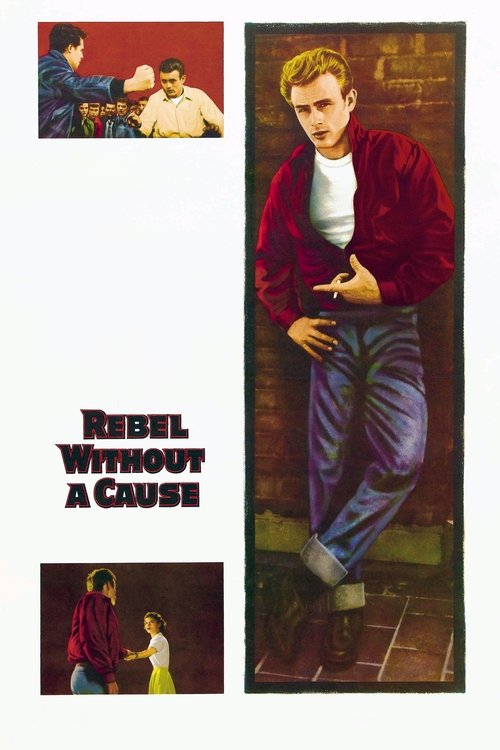
Rebel Without a Cause
After moving to a new town, troublemaking teen Jim Stark is supposed to have a clean slate, although being the new kid in town brings its own problems. While searching for some stability, Stark forms a bond with a disturbed classmate, Plato, and falls for local girl Judy. However, Judy is the girlfriend of neighborhood tough, Buzz. When Buzz violently confronts Jim and challenges him to a drag race, the new kid's real troubles begin.
Despite its small-scale budget of $1.5M, Rebel Without a Cause became a solid performer, earning $4.5M worldwide—a 200% return. The film's innovative storytelling connected with viewers, confirming that strong storytelling can transcend budget limitations.
Nominated for 3 Oscars. 4 wins & 8 nominations


Plot Structure
Story beats plotted across runtime


Narrative Arc
Emotional journey through the story's key moments
Story Circle
Blueprint 15-beat structure
Arcplot Score Breakdown
Weighted: Precision (70%) + Arc (15%) + Theme (15%)
Rebel Without a Cause (1955) exemplifies carefully calibrated narrative design, characteristic of Nicholas Ray's storytelling approach. This structural analysis examines how the film's 12-point plot structure maps to proven narrative frameworks across 1 hour and 51 minutes. With an Arcplot score of 6.8, the film balances conventional beats with creative variation.
Characters
Cast & narrative archetypes

Jim Stark
Judy
John 'Plato' Crawford
Frank Stark
Mrs. Carol Stark
Buzz Gunderson
Main Cast & Characters
Jim Stark
Played by James Dean
A troubled teenager struggling with alienation and parental dysfunction who seeks authenticity and connection in a conformist 1950s world.
Judy
Played by Natalie Wood
A neglected teenager seeking affection and validation, caught between childhood innocence and adult relationships.
John 'Plato' Crawford
Played by Sal Mineo
A lonely, emotionally fragile boy who desperately seeks a father figure and family connection.
Frank Stark
Played by Jim Backus
Jim's weak-willed father who fails to provide masculine guidance, dominated by his wife.
Mrs. Carol Stark
Played by Ann Doran
Jim's overbearing, domineering mother who emasculates her husband and dismisses her son's emotional needs.
Buzz Gunderson
Played by Corey Allen
The tough gang leader who challenges Jim but reveals his own vulnerability before the tragic chickie run.
Structural Analysis
The Status Quo at 1 minutes (1% through the runtime) establishes Jim Stark lies drunk on a nighttime street, playing with a toy monkey, before being picked up by police. This opening establishes his isolation, self-destruction, and desperate need for connection and meaning.. The analysis reveals that this early placement immediately immerses viewers in the story world.
The inciting incident occurs at 13 minutes when Jim arrives at his new school and immediately encounters Buzz and his gang, who slash his tires. This act of aggression disrupts Jim's hope for a fresh start and sets up the inevitable confrontation that will define his journey.. At 12% through the film, this Disruption aligns precisely with traditional story structure. This beat shifts the emotional landscape, launching the protagonist into the central conflict.
The First Threshold at 28 minutes marks the transition into Act II, occurring at 25% of the runtime. This indicates the protagonist's commitment to Jim actively chooses to accept Buzz's challenge to the chickie run at the cliff. Despite his father's weakness and mother's disapproval, Jim decides he must face the challenge to prove he's not chicken—an irreversible commitment that launches him into Act 2., moving from reaction to action.
The Collapse moment at 83 minutes (75% through) represents the emotional nadir. Here, Plato, mentally unraveling and armed with a gun, shoots one of Buzz's gang members and flees to the planetarium. The surrogate family Jim tried to create is collapsing—Plato's violence represents the ultimate failure of the adult world to protect its children, and Jim faces losing the one person who truly looked up to him., demonstrates the protagonist at their lowest point. This beat's placement in the final quarter sets up the climactic reversal.
The Synthesis at 89 minutes initiates the final act resolution at 80% of the runtime. Jim talks Plato down inside the planetarium, giving him his red jacket as a symbol of protection and love. He removes the bullets from Plato's gun, trying to ensure a peaceful surrender. Jim becomes the steady, courageous presence he always needed from his own father., demonstrating the transformation achieved throughout the journey.
Emotional Journey
Rebel Without a Cause's emotional architecture traces a deliberate progression across 12 carefully calibrated beats.
Narrative Framework
This structural analysis employs proven narrative structure principles that track dramatic progression. By mapping Rebel Without a Cause against these established plot points, we can identify how Nicholas Ray utilizes or subverts traditional narrative conventions. The plot point approach reveals not only adherence to structural principles but also creative choices that distinguish Rebel Without a Cause within the drama genre.
Nicholas Ray's Structural Approach
Among the 3 Nicholas Ray films analyzed on Arcplot, the average structural score is 6.8, demonstrating varied approaches to story architecture. Rebel Without a Cause exemplifies the director's characteristic narrative technique. For comparative analysis, explore the complete Nicholas Ray filmography.
Comparative Analysis
Additional drama films include After Thomas, South Pacific and Dirty Dancing: Havana Nights. For more Nicholas Ray analyses, see 55 Days at Peking, King of Kings.
Plot Points by Act
Act I
SetupStatus Quo
Jim Stark lies drunk on a nighttime street, playing with a toy monkey, before being picked up by police. This opening establishes his isolation, self-destruction, and desperate need for connection and meaning.
Theme
At the police station, the juvenile officer Ray asks Jim what he's looking for. Jim's anguished response about wanting answers and his father's inability to stand up articulates the film's theme: the desperate search for authentic identity and masculine role models in a world of weak fathers and conformist adults.
Worldbuilding
The setup introduces Jim's dysfunctional family dynamic—his domineering mother, emasculated father, and meddling grandmother. We meet Plato, a troubled boy abandoned by his parents, and Judy, caught between needing her father's affection and his cold rejection. Each teen represents a different manifestation of parental failure.
Disruption
Jim arrives at his new school and immediately encounters Buzz and his gang, who slash his tires. This act of aggression disrupts Jim's hope for a fresh start and sets up the inevitable confrontation that will define his journey.
Resistance
Jim struggles between his instinct to fight back and his parents' advice to avoid trouble. At the planetarium, he witnesses a lecture about humanity's insignificance that mirrors his existential crisis. Buzz challenges him, and Jim debates whether to accept the dangerous chickie run—torn between proving himself and walking away.
Act II
ConfrontationFirst Threshold
Jim actively chooses to accept Buzz's challenge to the chickie run at the cliff. Despite his father's weakness and mother's disapproval, Jim decides he must face the challenge to prove he's not chicken—an irreversible commitment that launches him into Act 2.
Premise
The promise of the premise unfolds as Jim, Judy, and Plato form their own family unit. They explore an abandoned mansion, playing house with Jim and Judy as parents and Plato as their child. This fantasy sequence delivers on the film's exploration of teens creating meaning when adults fail them.
Opposition
Reality intrudes as Buzz's gang seeks revenge, Jim's parents continue to fail him, and the police investigate Buzz's death. Jim attempts to do the right thing by going to the police, but his father's cowardice undermines him. Plato's mental instability escalates as his fear of abandonment intensifies.
Collapse
Plato, mentally unraveling and armed with a gun, shoots one of Buzz's gang members and flees to the planetarium. The surrogate family Jim tried to create is collapsing—Plato's violence represents the ultimate failure of the adult world to protect its children, and Jim faces losing the one person who truly looked up to him.
Crisis
Jim and Judy desperately search for Plato as police surround the planetarium. Jim processes his failure to save Plato and confronts the reality that love alone cannot fix broken people. He must find a way to reach Plato before tragedy strikes.
Act III
ResolutionSynthesis
Jim talks Plato down inside the planetarium, giving him his red jacket as a symbol of protection and love. He removes the bullets from Plato's gun, trying to ensure a peaceful surrender. Jim becomes the steady, courageous presence he always needed from his own father.
Transformation
Plato runs outside and is shot dead by police despite Jim's efforts. In the aftermath, Jim's father finally embraces him and promises to be stronger. Jim introduces Judy to his parents—he has found authentic connection, but at tragic cost. The transformation is bittersweet: Jim has become the man he needed, but couldn't save everyone.