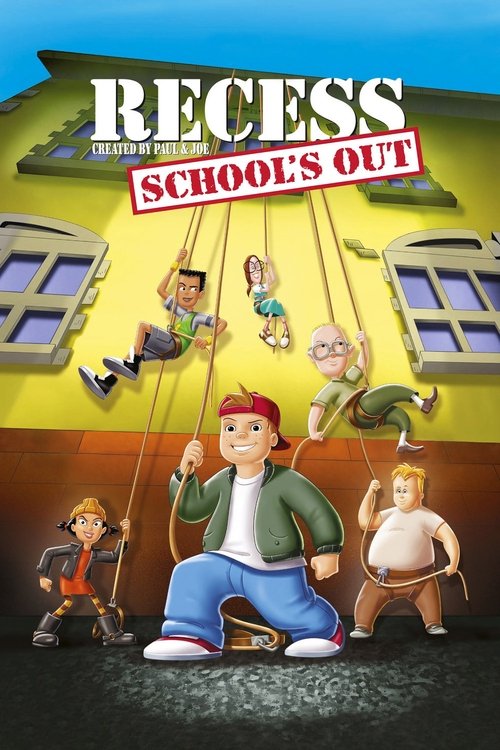
Recess: School's Out
The school year is finally ending, and T.J. Detweiler is looking forward to summer. But boredom quickly sets in when his friends leave for camp — until T.J. uncovers an evil plot to do away with summer vacation! A crazy former principal, Dr. Benedict, is planning to use a laser beam to alter the weather and create permanent winter. Faced with the dire threat of year-round school, T.J. rounds up the RECESS gang and bands together with some unexpected allies — Miss Finster and Principal Prickly — in a nonstop adventure to save everyone's summer break. As the kids discover the heroes inside themselves, a platoon of wacky characters, far-out music, and sci-fi surprises turn this madcap mission into a major victory for fun!
Despite its limited budget of $10.0M, Recess: School's Out became a financial success, earning $44.5M worldwide—a 345% return. The film's distinctive approach engaged audiences, demonstrating that strong storytelling can transcend budget limitations.


Plot Structure
Story beats plotted across runtime


Narrative Arc
Emotional journey through the story's key moments
Story Circle
Blueprint 15-beat structure
Arcplot Score Breakdown
Weighted: Precision (70%) + Arc (15%) + Theme (15%)
Recess: School's Out (2001) demonstrates strategically placed story structure, characteristic of Chuck Sheetz's storytelling approach. This structural analysis examines how the film's 15-point plot structure maps to proven narrative frameworks across 1 hour and 22 minutes. With an Arcplot score of 7.6, the film showcases strong structural fundamentals.
Characters
Cast & narrative archetypes

T.J. Detweiler
Dr. Phillium Benedict
Vince LaSalle
Ashley Spinelli
Gretchen Grundler
Mikey Blumberg
Gus Griswald
Principal Peter Prickly
Main Cast & Characters
T.J. Detweiler
Played by Andrew Lawrence
Natural leader of the recess gang who uncovers a plot to eliminate summer vacation.
Dr. Phillium Benedict
Played by James Woods
Former principal turned villain who plans to use a tractor beam to eliminate recess and summer vacation.
Vince LaSalle
Played by Rickey D'Shon Collins
Athletic and cool member of the recess gang, T.J.'s best friend and voice of reason.
Ashley Spinelli
Played by Pamela Adlon
Tough tomboy of the group who hides her first name and has a sensitive side beneath her rough exterior.
Gretchen Grundler
Played by Ashley Johnson
The brilliant scientist and problem-solver of the gang who provides technical expertise.
Mikey Blumberg
Played by Jason Davis
Gentle giant with a poet's soul who loves art and culture despite his imposing size.
Gus Griswald
Played by Courtland Mead
The nervous newcomer and military kid who struggles with courage but proves himself when it counts.
Principal Peter Prickly
Played by Dabney Coleman
Current principal of Third Street School who was Benedict's former friend, now must stop his evil plan.
Structural Analysis
The Status Quo at 1 minutes (1% through the runtime) establishes The last day of school: TJ and the gang celebrate the beginning of summer vacation on the playground, establishing their world of childhood freedom and friendship at Third Street School.. Significantly, this early placement immediately immerses viewers in the story world.
The inciting incident occurs at 10 minutes when TJ witnesses Principal Prickly being kidnapped from the school by mysterious figures. A sinister plot is clearly underway, but no one believes TJ when he reports it.. At 12% through the film, this Disruption aligns precisely with traditional story structure. This beat shifts the emotional landscape, launching the protagonist into the central conflict.
The First Threshold at 21 minutes marks the transition into Act II, occurring at 25% of the runtime. This reveals the protagonist's commitment to TJ and his friends actively choose to break into the school to investigate. They commit to the mission of uncovering the conspiracy and rescuing Principal Prickly, entering the "new world" of espionage and danger., moving from reaction to action.
At 41 minutes, the Midpoint arrives at 50% of the runtime—precisely centered, creating perfect narrative symmetry. Significantly, this crucial beat The gang is captured by Benedict's forces. False defeat: their spy mission has failed, they're prisoners, and Benedict reveals his full plan to create permanent winter and eliminate recess forever. The stakes become clear and personal., fundamentally raising what's at risk. The emotional intensity shifts, dividing the narrative into clear before-and-after phases.
The Collapse moment at 59 minutes (72% through) represents the emotional nadir. Here, Benedict activates the tractor beam and begins moving the moon. The plan seems unstoppable, summer vacation and childhood freedom appear doomed. This represents the "death" of recess and carefree childhood., indicates the protagonist at their lowest point. This beat's placement in the final quarter sets up the climactic reversal.
The Second Threshold at 65 minutes initiates the final act resolution at 79% of the runtime. TJ realizes they can use their playground knowledge and teamwork to sabotage the beam. The synthesis: combining their kid skills with what they've learned about Benedict's technology. Adults finally believe them and help., demonstrating the transformation achieved throughout the journey.
Emotional Journey
Recess: School's Out's emotional architecture traces a deliberate progression across 15 carefully calibrated beats.
Narrative Framework
This structural analysis employs proven narrative structure principles that track dramatic progression. By mapping Recess: School's Out against these established plot points, we can identify how Chuck Sheetz utilizes or subverts traditional narrative conventions. The plot point approach reveals not only adherence to structural principles but also creative choices that distinguish Recess: School's Out within the family genre.
Comparative Analysis
Additional family films include The Black Stallion, The Bad Guys and Ella Enchanted.
Plot Points by Act
Act I
SetupStatus Quo
The last day of school: TJ and the gang celebrate the beginning of summer vacation on the playground, establishing their world of childhood freedom and friendship at Third Street School.
Theme
Principal Prickly tells TJ that summer is about having fun and being a kid, foreshadowing the thematic conflict between childhood innocence and adult schemes to eliminate recess.
Worldbuilding
Summer begins and TJ's friends all leave for camp. TJ is left alone and bored. Strange events occur at the school: a mysterious green beam, and TJ discovers something suspicious happening at Third Street School at night.
Disruption
TJ witnesses Principal Prickly being kidnapped from the school by mysterious figures. A sinister plot is clearly underway, but no one believes TJ when he reports it.
Resistance
TJ debates whether to investigate alone or get help. He eventually convinces his friends to return from camp. They debate whether to believe TJ's story, investigate the school, and discover a suspicious operation inside.
Act II
ConfrontationFirst Threshold
TJ and his friends actively choose to break into the school to investigate. They commit to the mission of uncovering the conspiracy and rescuing Principal Prickly, entering the "new world" of espionage and danger.
Mirror World
The gang encounters Becky Detweiler (TJ's older sister) and her friends who initially seem like obstacles but represent the next stage of growing up. Their involvement introduces the theme of cooperation across age groups.
Premise
The "fun and games" of kids playing spy: the gang explores the school, discovers Dr. Benedict's plot to eliminate summer vacation and recess using a tractor beam to move the moon. They use their playground skills in this new adventure context.
Midpoint
The gang is captured by Benedict's forces. False defeat: their spy mission has failed, they're prisoners, and Benedict reveals his full plan to create permanent winter and eliminate recess forever. The stakes become clear and personal.
Opposition
The kids escape but face increasing pressure. Benedict's plan advances, adults don't believe them, and they must work against time. Their attempts to stop Benedict meet with setbacks as his scheme nears completion.
Collapse
Benedict activates the tractor beam and begins moving the moon. The plan seems unstoppable, summer vacation and childhood freedom appear doomed. This represents the "death" of recess and carefree childhood.
Crisis
The dark moment where hope seems lost. TJ and friends process their apparent failure, but find resolve in their friendship and belief in the importance of recess and childhood freedom.
Act III
ResolutionSecond Threshold
TJ realizes they can use their playground knowledge and teamwork to sabotage the beam. The synthesis: combining their kid skills with what they've learned about Benedict's technology. Adults finally believe them and help.
Synthesis
The finale: the kids execute their plan, infiltrate the beam facility, rescue Principal Prickly, and work together to stop Benedict. A climactic confrontation results in Benedict's defeat and the restoration of summer vacation.
Transformation
Back on the playground, TJ and his friends enjoy recess with renewed appreciation. The closing image mirrors the opening but shows growth: they've saved childhood itself and learned the true value of their freedom and friendship.