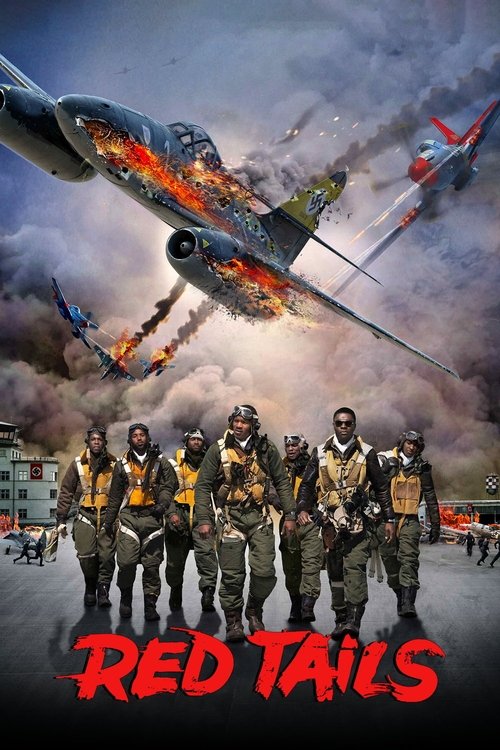
Red Tails
The story of the Tuskegee Airmen, the first African-American pilots to fly in a combat squadron during World War II.
The film disappointed at the box office against its mid-range budget of $58.0M, earning $50.4M globally (-13% loss).
2 wins & 9 nominations


Plot Structure
Story beats plotted across runtime


Narrative Arc
Emotional journey through the story's key moments
Story Circle
Blueprint 15-beat structure
Arcplot Score Breakdown
Weighted: Precision (70%) + Arc (15%) + Theme (15%)
Red Tails (2012) exhibits precise dramatic framework, characteristic of Anthony Hemingway's storytelling approach. This structural analysis examines how the film's 15-point plot structure maps to proven narrative frameworks across 2 hours and 5 minutes. With an Arcplot score of 7.4, the film balances conventional beats with creative variation.
Characters
Cast & narrative archetypes

Joe "Lightning" Little
Marty "Easy" Julian
A.J. Bullard
Ray "Junior" Gannon
Maurice "Bumps" Wilson
Andrew "Smokey" Salem
Samuel "Joker" George
Leon "Nuke" Edwards
Benjamin O. Davis Jr.
Main Cast & Characters
Joe "Lightning" Little
Played by David Oyelowo
Hotshot fighter pilot struggling with recklessness and alcoholism, seeking redemption through proving himself in combat.
Marty "Easy" Julian
Played by Nate Parker
Level-headed squadron leader and best friend to Lightning, balancing duty with loyalty to his wingman.
A.J. Bullard
Played by Terrence Howard
Commanding officer of the Tuskegee Airmen who fights both enemy forces and military racism to get his men real missions.
Ray "Junior" Gannon
Played by Tristan Wilds
Young, eager pilot who idolizes the veteran flyers and proves his courage in battle.
Maurice "Bumps" Wilson
Played by Ne-Yo
Smooth-talking ladies' man and skilled pilot who brings humor and charm to the squadron.
Andrew "Smokey" Salem
Played by Ne-Yo
Religious, principled pilot who serves as the moral compass of the unit.
Samuel "Joker" George
Played by Elijah Kelley
Wisecracking pilot who uses humor to cope with the pressures of combat and discrimination.
Leon "Nuke" Edwards
Played by Marcus T. Paulk
Tough, no-nonsense pilot dedicated to the mission and his fellow airmen.
Benjamin O. Davis Jr.
Played by Cuba Gooding Jr.
Base commander and mentor who advocates for the Tuskegee Airmen at the highest levels of military command.
Structural Analysis
The Status Quo at 2 minutes (2% through the runtime) establishes The Tuskegee Airmen of the 332nd Fighter Group fly routine escort missions in their worn P-40 Warhawks over Italy, 1944. Despite their skills, they are relegated to non-combat assignments, flying "milk runs" while white squadrons get the glory missions.. The analysis reveals that this early placement immediately immerses viewers in the story world.
The inciting incident occurs at 14 minutes when Colonel Bullard secures permission for the 332nd to fly a real combat mission: escorting bombers. This is their chance to prove themselves, but it comes with enormous pressure—one mistake could doom all Negro pilots.. At 12% through the film, this Disruption aligns precisely with traditional story structure. This beat shifts the emotional landscape, launching the protagonist into the central conflict.
The First Threshold at 31 minutes marks the transition into Act II, occurring at 25% of the runtime. This reveals the protagonist's commitment to The 332nd takes off on their first bomber escort mission. They make the active choice to engage German fighters aggressively rather than stay in conservative formation. Easy decides to trust his pilots to break formation and fight—committing fully to proving their combat worthiness., moving from reaction to action.
At 62 minutes, the Midpoint arrives at 50% of the runtime—precisely centered, creating perfect narrative symmetry. Structural examination shows that this crucial beat False victory: The 332nd is awarded the prestigious mission to escort heavy bombers deep into Germany—the ultimate validation. They receive new P-51 Mustangs, superior aircraft. Morale is high; they've proven themselves. But the stakes are now raised—tougher missions, more dangerous enemies, and the pressure to maintain their perfect record., fundamentally raising what's at risk. The emotional intensity shifts, dividing the narrative into clear before-and-after phases.
The Collapse moment at 93 minutes (74% through) represents the emotional nadir. Here, During a fierce dogfight, Lightning is shot down over enemy territory. His best friend and the heart of the squadron appears to be dead or captured. The "whiff of death"—the squadron's undefeated record is shattered, and they've lost one of their own. Easy blames himself for not grounding Lightning earlier., illustrates the protagonist at their lowest point. This beat's placement in the final quarter sets up the climactic reversal.
The Second Threshold at 99 minutes initiates the final act resolution at 79% of the runtime. Easy and the squadron discover Lightning is alive in a POW camp. They receive orders for a critical mission to destroy a German airfield/strategic target. Easy synthesizes his leadership lessons with newfound resolve: they will complete the mission AND rescue Lightning. This is who they are—they leave no man behind., demonstrating the transformation achieved throughout the journey.
Emotional Journey
Red Tails's emotional architecture traces a deliberate progression across 15 carefully calibrated beats.
Narrative Framework
This structural analysis employs structural analysis methodology used to understand storytelling architecture. By mapping Red Tails against these established plot points, we can identify how Anthony Hemingway utilizes or subverts traditional narrative conventions. The plot point approach reveals not only adherence to structural principles but also creative choices that distinguish Red Tails within the drama genre.
Comparative Analysis
Additional drama films include After Thomas, South Pacific and Dirty Dancing: Havana Nights.
Plot Points by Act
Act I
SetupStatus Quo
The Tuskegee Airmen of the 332nd Fighter Group fly routine escort missions in their worn P-40 Warhawks over Italy, 1944. Despite their skills, they are relegated to non-combat assignments, flying "milk runs" while white squadrons get the glory missions.
Theme
Colonel A.J. Bullard in Washington faces a Pentagon board reviewing a racist report claiming Negro pilots lack the intelligence and courage for combat. The unspoken theme: they must prove their worth not just as pilots, but as men deserving equality.
Worldbuilding
Introduction to the squadron dynamics: Easy Julian as the disciplined leader, Lightning as the talented hotshot with a drinking problem, Smokey, Ray Gun, and others. They face discrimination from white officers, inadequate equipment, and the frustration of being sidelined despite their abilities. Base life in Italy establishes camaraderie and tension.
Disruption
Colonel Bullard secures permission for the 332nd to fly a real combat mission: escorting bombers. This is their chance to prove themselves, but it comes with enormous pressure—one mistake could doom all Negro pilots.
Resistance
The squadron prepares for their first real mission. Easy struggles with the responsibility of leadership and keeping Lightning in line. Lightning battles his demons and self-destructive behavior. Major Stance briefs them on tactics. Tension builds as they await their opportunity, knowing the eyes of the entire military—and history—are upon them.
Act II
ConfrontationFirst Threshold
The 332nd takes off on their first bomber escort mission. They make the active choice to engage German fighters aggressively rather than stay in conservative formation. Easy decides to trust his pilots to break formation and fight—committing fully to proving their combat worthiness.
Mirror World
Lightning meets and falls for Sofia, a beautiful Italian woman, beginning a romance subplot. This relationship represents what they're fighting for—a future beyond war, the possibility of being seen as human beings worthy of love and normal life, not just soldiers proving a point.
Premise
The "fun and games" of aerial combat. The Red Tails rack up victories, their distinctive red-painted tails becoming famous among bomber crews. Thrilling dogfights showcase their skill. Lightning's romance with Sofia deepens. The squadron gains respect, bomber crews request them specifically. They experience the promise of what they came to prove.
Midpoint
False victory: The 332nd is awarded the prestigious mission to escort heavy bombers deep into Germany—the ultimate validation. They receive new P-51 Mustangs, superior aircraft. Morale is high; they've proven themselves. But the stakes are now raised—tougher missions, more dangerous enemies, and the pressure to maintain their perfect record.
Opposition
Missions grow deadlier. The Luftwaffe's elite pilots target them. Lightning's recklessness escalates, putting others at risk. Internal tensions rise between Lightning and Easy. Racism persists despite their success. The Germans deploy the advanced ME-262 jet fighter. Close calls and near-losses mount. The cost of war becomes personal.
Collapse
During a fierce dogfight, Lightning is shot down over enemy territory. His best friend and the heart of the squadron appears to be dead or captured. The "whiff of death"—the squadron's undefeated record is shattered, and they've lost one of their own. Easy blames himself for not grounding Lightning earlier.
Crisis
The dark night of the soul. The squadron mourns, questioning whether the cost is worth it. Easy confronts his failure as a leader. The pilots process grief and fear. Lightning, actually alive as a POW, faces his own crisis behind enemy lines, confronting his mortality and what truly matters.
Act III
ResolutionSecond Threshold
Easy and the squadron discover Lightning is alive in a POW camp. They receive orders for a critical mission to destroy a German airfield/strategic target. Easy synthesizes his leadership lessons with newfound resolve: they will complete the mission AND rescue Lightning. This is who they are—they leave no man behind.
Synthesis
The finale mission: a daring assault combining their objective with Lightning's rescue. Intense aerial combat against overwhelming odds, including ME-262 jets. The squadron executes with precision, combining individual skill with teamwork. They destroy the target and extract Lightning. Easy leads with confidence, the squadron fights as one. They prove their excellence definitively.
Transformation
The Red Tails return to base victorious. Lightning is saved, the squadron intact. Text reveals the historical impact: the Tuskegee Airmen's exemplary record helped integrate the U.S. military. The final image shows the pilots together—no longer fighting to prove themselves, but standing as the heroes they always were. They changed history.