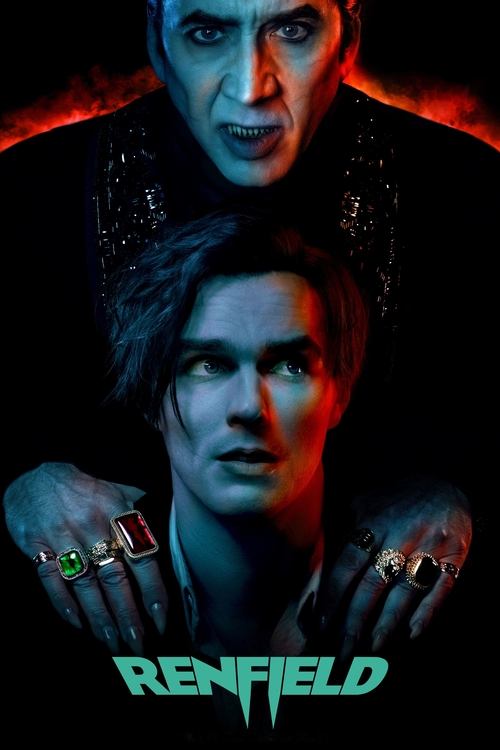
Renfield
Having grown sick and tired of his centuries as Dracula's lackey, Renfield finds a new lease on life — and maybe even redemption — when he falls for feisty, perennially angry traffic cop Rebecca Quincy.
The film commercial failure against its mid-range budget of $65.0M, earning $26.9M globally (-59% loss). While initial box office returns were modest, the film has gained appreciation for its fresh perspective within the comedy genre.
2 wins & 13 nominations


Plot Structure
Story beats plotted across runtime


Narrative Arc
Emotional journey through the story's key moments
Story Circle
Blueprint 15-beat structure
Arcplot Score Breakdown
Weighted: Precision (70%) + Arc (15%) + Theme (15%)
Renfield (2023) showcases strategically placed narrative design, characteristic of Chris McKay's storytelling approach. This structural analysis examines how the film's 15-point plot structure maps to proven narrative frameworks across 1 hour and 33 minutes. With an Arcplot score of 7.3, the film balances conventional beats with creative variation.
Characters
Cast & narrative archetypes

Robert Montague Renfield
Count Dracula
Rebecca Quincy
Teddy Lobo
Bellafrancesca Lobo
Main Cast & Characters
Robert Montague Renfield
Played by Nicholas Hoult
Dracula's familiar for 90 years, seeking to break free from toxic codependency and reclaim his life.
Count Dracula
Played by Nicolas Cage
Ancient vampire who exploits Renfield as his servant, representing narcissistic manipulation and control.
Rebecca Quincy
Played by Awkwafina
Idealistic traffic cop fighting corruption within the New Orleans police department and organized crime.
Teddy Lobo
Played by Ben Schwartz
Sadistic son of crime boss Bellafrancesca, seeking to prove himself and expand the family empire.
Bellafrancesca Lobo
Played by Shohreh Aghdashloo
Ruthless crime matriarch running New Orleans criminal operations with her son Teddy.
Structural Analysis
The Status Quo at 1 minutes (1% through the runtime) establishes Renfield serves Dracula in their decrepit hideout, a familiar enslaved by centuries of toxic codependency and abuse.. Significantly, this early placement immediately immerses viewers in the story world.
The inciting incident occurs at 11 minutes when Dracula demands Renfield bring him innocent victims to feed on and regain strength, forcing Renfield to confront his moral boundaries.. At 12% through the film, this Disruption aligns precisely with traditional story structure. This beat shifts the emotional landscape, launching the protagonist into the central conflict.
The First Threshold at 23 minutes marks the transition into Act II, occurring at 24% of the runtime. This indicates the protagonist's commitment to Renfield actively chooses to defy Dracula by rescuing Rebecca from mobsters and killing criminals instead of innocents, marking his first real act of rebellion., moving from reaction to action.
At 46 minutes, the Midpoint arrives at 49% of the runtime—precisely centered, creating perfect narrative symmetry. Significantly, this crucial beat Dracula discovers Renfield's betrayal and allies with the Lobo crime family. The stakes raise dramatically as Dracula regains power and targets those Renfield cares about. False victory collapses., fundamentally raising what's at risk. The emotional intensity shifts, dividing the narrative into clear before-and-after phases.
The Collapse moment at 69 minutes (75% through) represents the emotional nadir. Here, Dracula captures Renfield and Rebecca. Renfield submits to save Rebecca's life, seemingly returning to his enslaved state. His dream of freedom appears dead., illustrates the protagonist at their lowest point. This beat's placement in the final quarter sets up the climactic reversal.
The Second Threshold at 74 minutes initiates the final act resolution at 79% of the runtime. Rebecca's words and the support group's lessons crystallize: Renfield realizes he has the power to choose himself. He synthesizes his supernatural abilities with newfound self-worth to make a final stand., demonstrating the transformation achieved throughout the journey.
Emotional Journey
Renfield's emotional architecture traces a deliberate progression across 15 carefully calibrated beats.
Narrative Framework
This structural analysis employs systematic plot point analysis that identifies crucial turning points. By mapping Renfield against these established plot points, we can identify how Chris McKay utilizes or subverts traditional narrative conventions. The plot point approach reveals not only adherence to structural principles but also creative choices that distinguish Renfield within the comedy genre.
Chris McKay's Structural Approach
Among the 3 Chris McKay films analyzed on Arcplot, the average structural score is 7.2, reflecting strong command of classical structure. Renfield represents one of the director's most structurally precise works. For comparative analysis, explore the complete Chris McKay filmography.
Comparative Analysis
Additional comedy films include The Bad Guys, Ella Enchanted and The Evening Star. For more Chris McKay analyses, see The Lego Batman Movie, The Tomorrow War.
Plot Points by Act
Act I
SetupStatus Quo
Renfield serves Dracula in their decrepit hideout, a familiar enslaved by centuries of toxic codependency and abuse.
Theme
At a support group, members discuss toxic relationships and setting boundaries: "You deserve to be happy." The theme of breaking free from abusive dynamics is stated.
Worldbuilding
Establish Renfield's servitude to Dracula, his supernatural powers from eating bugs, his attendance at codependency support groups, and Dracula's weakened state after a mob attack.
Disruption
Dracula demands Renfield bring him innocent victims to feed on and regain strength, forcing Renfield to confront his moral boundaries.
Resistance
Renfield debates his loyalty versus his conscience. He attends support groups seeking courage while attempting to only target "bad people" as victims, and meets traffic cop Rebecca Quincy.
Act II
ConfrontationFirst Threshold
Renfield actively chooses to defy Dracula by rescuing Rebecca from mobsters and killing criminals instead of innocents, marking his first real act of rebellion.
Mirror World
Rebecca represents the empowered, independent life Renfield wants. Their developing partnership shows him what healthy relationships look like, contrasting with his servitude to Dracula.
Premise
Renfield embraces his new identity as a hero, using his powers to fight criminals while bonding with Rebecca. The fun of watching a vampire's familiar become a superhero vigilante.
Midpoint
Dracula discovers Renfield's betrayal and allies with the Lobo crime family. The stakes raise dramatically as Dracula regains power and targets those Renfield cares about. False victory collapses.
Opposition
Dracula and the Lobos hunt Renfield and Rebecca. The support group is attacked. Renfield's attempts to protect others fail as Dracula's manipulation and power intensify. Everyone is in danger.
Collapse
Dracula captures Renfield and Rebecca. Renfield submits to save Rebecca's life, seemingly returning to his enslaved state. His dream of freedom appears dead.
Crisis
Renfield processes his failure and Dracula's emotional abuse. He faces the dark truth that he may never escape, wallowing in despair before finding inner resolve.
Act III
ResolutionSecond Threshold
Rebecca's words and the support group's lessons crystallize: Renfield realizes he has the power to choose himself. He synthesizes his supernatural abilities with newfound self-worth to make a final stand.
Synthesis
Renfield and Rebecca storm Dracula's lair. Final confrontation where Renfield uses his powers not in servitude but in self-determination, ultimately destroying Dracula and the Lobo family.
Transformation
Renfield stands free in sunlight, no longer in Dracula's shadow. He's found friendship, purpose, and autonomy—transformed from servile familiar to empowered individual living his own life.