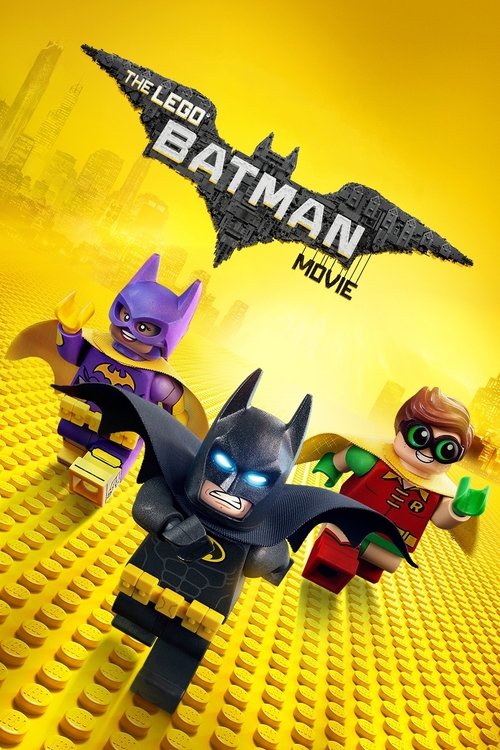
The Lego Batman Movie
A cooler-than-ever Bruce Wayne must deal with the usual suspects as they plan to rule Gotham City, while discovering that he has accidentally adopted a teenage orphan who wishes to become his sidekick.
Despite a substantial budget of $80.0M, The Lego Batman Movie became a financial success, earning $312.0M worldwide—a 290% return.
13 wins & 68 nominations


Plot Structure
Story beats plotted across runtime


Narrative Arc
Emotional journey through the story's key moments
Story Circle
Blueprint 15-beat structure
Arcplot Score Breakdown
Weighted: Precision (70%) + Arc (15%) + Theme (15%)
The Lego Batman Movie (2017) demonstrates meticulously timed plot construction, characteristic of Chris McKay's storytelling approach. This structural analysis examines how the film's 15-point plot structure maps to proven narrative frameworks across 1 hour and 44 minutes. With an Arcplot score of 7.5, the film showcases strong structural fundamentals.
Structural Analysis
The Status Quo at 1 minutes (1% through the runtime) establishes Batman narrates over the Warner Bros logo, establishing his lone-wolf persona: "I only work alone. You mean like the opposite of together?" Shows his isolated, self-sufficient status quo.. Of particular interest, this early placement immediately immerses viewers in the story world.
The inciting incident occurs at 12 minutes when At the gala, Bruce Wayne accidentally adopts Dick Grayson while distracted flirting with Barbara Gordon. This unwanted responsibility disrupts his carefully maintained solitary existence.. At 11% through the film, this Disruption aligns precisely with traditional story structure. This beat shifts the emotional landscape, launching the protagonist into the central conflict.
The First Threshold at 25 minutes marks the transition into Act II, occurring at 24% of the runtime. This shows the protagonist's commitment to Batman makes the active choice to steal the Phantom Zone Projector from the Fortress of Solitude and banish Joker to the Phantom Zone. This decision to act alone (despite Superman's warning) launches Act 2 and sets the plot in motion., moving from reaction to action.
At 52 minutes, the Midpoint arrives at 50% of the runtime—precisely centered, creating perfect narrative symmetry. Of particular interest, this crucial beat Joker returns from the Phantom Zone with an army of villains and they successfully take over Gotham City, capturing Barbara Gordon. The stakes raise dramatically - this is a false defeat. Batman realizes his solo plan backfired catastrophically., fundamentally raising what's at risk. The emotional intensity shifts, dividing the narrative into clear before-and-after phases.
The Collapse moment at 76 minutes (73% through) represents the emotional nadir. Here, Batman is banished to the Phantom Zone, completely alone in literal isolation - the physical manifestation of his emotional state. He loses everything: his city, his family, his identity. Whiff of death as he faces the infinite void and his greatest fear., demonstrates the protagonist at their lowest point. This beat's placement in the final quarter sets up the climactic reversal.
The Second Threshold at 83 minutes initiates the final act resolution at 80% of the runtime. Batman admits "I don't do anything alone" and asks the Phantom Zone villains for help. This breakthrough - asking for help, admitting he needs others - synthesizes the lesson from his Mirror World relationships with his crime-fighting mission. He chooses connection over isolation., demonstrating the transformation achieved throughout the journey.
Emotional Journey
The Lego Batman Movie's emotional architecture traces a deliberate progression across 15 carefully calibrated beats.
Narrative Framework
This structural analysis employs structural analysis methodology used to understand storytelling architecture. By mapping The Lego Batman Movie against these established plot points, we can identify how Chris McKay utilizes or subverts traditional narrative conventions. The plot point approach reveals not only adherence to structural principles but also creative choices that distinguish The Lego Batman Movie within the animation genre.
Chris McKay's Structural Approach
Among the 3 Chris McKay films analyzed on Arcplot, the average structural score is 7.2, reflecting strong command of classical structure. The Lego Batman Movie represents one of the director's most structurally precise works. For comparative analysis, explore the complete Chris McKay filmography.
Comparative Analysis
Additional animation films include The Bad Guys, Puss in Boots and Violet Evergarden: Eternity and the Auto Memory Doll. For more Chris McKay analyses, see Renfield, The Tomorrow War.
Plot Points by Act
Act I
SetupStatus Quo
Batman narrates over the Warner Bros logo, establishing his lone-wolf persona: "I only work alone. You mean like the opposite of together?" Shows his isolated, self-sufficient status quo.
Theme
Alfred tells Bruce: "You're greatest fear is being part of a family again." The theme of connection vs. isolation is stated explicitly by the mentor figure, foreshadowing Batman's emotional journey.
Worldbuilding
Extended opening action sequence at the energy plant where Batman single-handedly defeats the Joker and all Gotham villains. Establishes Batman's competence, his refusal to acknowledge relationships (tells Joker "you mean nothing to me"), and his return to solitary life in Wayne Manor. Shows his complete world: crime-fighting, isolation, microwave lobster dinners alone.
Disruption
At the gala, Bruce Wayne accidentally adopts Dick Grayson while distracted flirting with Barbara Gordon. This unwanted responsibility disrupts his carefully maintained solitary existence.
Resistance
Batman resists the changes in his life: new Commissioner Barbara Gordon wants Batman to work with police (threatening his independence), Dick Grayson arrives at Wayne Manor seeking a father figure (threatening his isolation), and Joker surrenders mysteriously. Batman debates how to handle these disruptions while maintaining his loner status. Alfred pushes him toward connection.
Act II
ConfrontationFirst Threshold
Batman makes the active choice to steal the Phantom Zone Projector from the Fortress of Solitude and banish Joker to the Phantom Zone. This decision to act alone (despite Superman's warning) launches Act 2 and sets the plot in motion.
Mirror World
Batman reluctantly allows Dick to become Robin and they share their first moment of genuine connection during the "camera" exchange. Dick represents the family/partnership that Batman needs, serving as the emotional B-story that will teach him about collaboration.
Premise
The fun and games of Batman and Robin as partners: training montage, breaking into Arkham together, the "parent-child" bonding moments. Batman experiences partnership while still maintaining emotional distance. Robin, Alfred, and Barbara work as a team while Batman pretends he's still alone. Joker's plan unfolds in the Phantom Zone.
Midpoint
Joker returns from the Phantom Zone with an army of villains and they successfully take over Gotham City, capturing Barbara Gordon. The stakes raise dramatically - this is a false defeat. Batman realizes his solo plan backfired catastrophically.
Opposition
Batman tries to fix everything alone and fails. He pushes Robin, Alfred, and Barbara away. Joker and the villains gain control of the city completely. The Joker reveals his real plan: to make Batman admit he needs him (needs anyone). Batman's emotional isolation becomes his greatest liability as the bad guys close in.
Collapse
Batman is banished to the Phantom Zone, completely alone in literal isolation - the physical manifestation of his emotional state. He loses everything: his city, his family, his identity. Whiff of death as he faces the infinite void and his greatest fear.
Crisis
In the Phantom Zone, Batman confronts his dark night of the soul. He watches a vision of his past, remembers his parents' death, and realizes his fear of losing family again has prevented him from having one. Emotional processing of his deepest wound.
Act III
ResolutionSecond Threshold
Batman admits "I don't do anything alone" and asks the Phantom Zone villains for help. This breakthrough - asking for help, admitting he needs others - synthesizes the lesson from his Mirror World relationships with his crime-fighting mission. He chooses connection over isolation.
Synthesis
The finale battle where Batman, Robin, Alfred, Barbara, and even the Gotham villains work together as a massive family to save the city from the Phantom Zone breach. Batman repeatedly affirms his relationships, tells Joker "I like to fight around," and ultimately holds hands in a chain with everyone (literally connecting). The power of collaboration defeats the threat.
Transformation
Final image mirrors the opening: Batman overlooks Gotham, but now he's surrounded by his family - Robin, Alfred, Barbara. He embraces them in a group photo. The lone wolf has become part of a pack, transformed from isolated to connected.