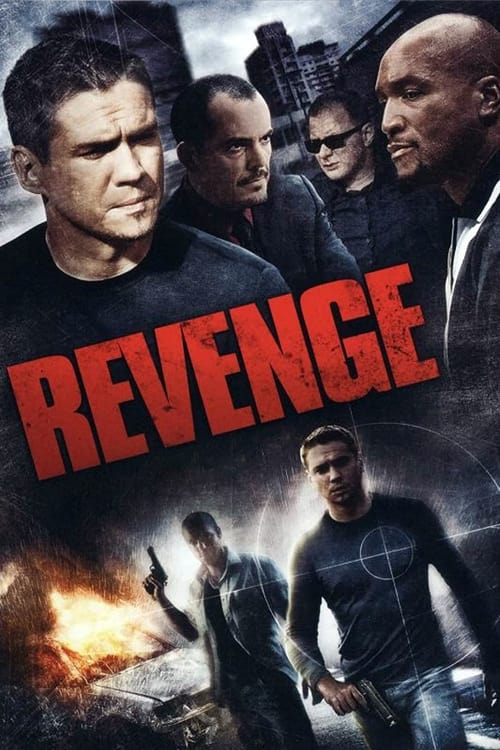
Revenge
When Artem Kolchin, Denis Nikiforov, arrives in the U.S. to fight for the championship, he soon finds himself fighting for his life after he sends a young, aggressive boxer, who provokes him into sparring, into a coma and ultimately killing him. That is when Artem finds out that the young boxer was none other than the only son of Felix Mendez, the powerful Mexican mafia kingpin, played masterfully by Victor Herminio Lopez, and when the real fight begins.
Working with a small-scale budget of $6.0M, the film achieved a steady performer with $11.2M in global revenue (+86% profit margin).

Plot Structure
Story beats plotted across runtime


Narrative Arc
Emotional journey through the story's key moments
Story Circle
Blueprint 15-beat structure
Arcplot Score Breakdown
Weighted: Precision (70%) + Arc (15%) + Theme (15%)
Revenge (2007) exemplifies carefully calibrated narrative architecture, characteristic of Anton Megerdichev's storytelling approach. This structural analysis examines how the film's 15-point plot structure maps to proven narrative frameworks across 2 hours and 15 minutes. With an Arcplot score of 7.1, the film balances conventional beats with creative variation.
Structural Analysis
The Status Quo at 1 minutes (1% through the runtime) establishes Jay Cochran, a decorated Navy pilot, retires from military service. He appears restless and unfulfilled despite his achievements, seeking something more meaningful in life.. The analysis reveals that this early placement immediately immerses viewers in the story world.
The inciting incident occurs at 16 minutes when Jay and Miryea share their first intimate moment alone, their eyes meeting with undeniable chemistry. The forbidden attraction is ignited, disrupting Jay's peaceful visit.. At 12% through the film, this Disruption aligns precisely with traditional story structure. This beat shifts the emotional landscape, launching the protagonist into the central conflict.
The First Threshold at 34 minutes marks the transition into Act II, occurring at 25% of the runtime. This shows the protagonist's commitment to Jay and Miryea consummate their affair, crossing the point of no return. They choose passion over safety, knowingly betraying Tiburon and entering a dangerous new world., moving from reaction to action.
At 68 minutes, the Midpoint arrives at 50% of the runtime—precisely centered, creating perfect narrative symmetry. The analysis reveals that this crucial beat Tiburon discovers the affair. His men ambush Jay and Miryea - Jay is savagely beaten and left for dead, while Miryea is taken away. False victory transforms to devastating defeat., fundamentally raising what's at risk. The emotional intensity shifts, dividing the narrative into clear before-and-after phases.
The Collapse moment at 101 minutes (75% through) represents the emotional nadir. Here, Jay finally finds Miryea in a squalid brothel, her face scarred and spirit broken. She is dying from her injuries and mistreatment. The woman he loved is slipping away forever., shows the protagonist at their lowest point. This beat's placement in the final quarter sets up the climactic reversal.
The Second Threshold at 108 minutes initiates the final act resolution at 80% of the runtime. With nothing left to lose, Jay commits fully to vengeance. He arms himself and sets out to kill Tiburon, embracing violence as his only remaining purpose., demonstrating the transformation achieved throughout the journey.
Emotional Journey
Revenge's emotional architecture traces a deliberate progression across 15 carefully calibrated beats.
Narrative Framework
This structural analysis employs proven narrative structure principles that track dramatic progression. By mapping Revenge against these established plot points, we can identify how Anton Megerdichev utilizes or subverts traditional narrative conventions. The plot point approach reveals not only adherence to structural principles but also creative choices that distinguish Revenge within the action genre.
Anton Megerdichev's Structural Approach
Among the 4 Anton Megerdichev films analyzed on Arcplot, the average structural score is 7.0, reflecting strong command of classical structure. Revenge represents one of the director's most structurally precise works. For comparative analysis, explore the complete Anton Megerdichev filmography.
Comparative Analysis
Additional action films include The Bad Guys, Puss in Boots and Venom: The Last Dance. For more Anton Megerdichev analyses, see Dark World, Three Seconds and Metro.
Plot Points by Act
Act I
SetupStatus Quo
Jay Cochran, a decorated Navy pilot, retires from military service. He appears restless and unfulfilled despite his achievements, seeking something more meaningful in life.
Theme
Tiburon warns Jay about the dangers of Mexico and his world: "In my country, betrayal has consequences." This foreshadows the brutal price of forbidden passion.
Worldbuilding
Jay visits his old friend Tiburon Mendez, a powerful Mexican crime lord, at his lavish estate. Jay meets Tiburon's beautiful young wife Miryea and an immediate attraction sparks between them.
Disruption
Jay and Miryea share their first intimate moment alone, their eyes meeting with undeniable chemistry. The forbidden attraction is ignited, disrupting Jay's peaceful visit.
Resistance
Jay struggles with his growing desire for Miryea while maintaining loyalty to his friend. Miryea reveals her unhappy marriage, and both wrestle with the consequences of pursuing their attraction.
Act II
ConfrontationFirst Threshold
Jay and Miryea consummate their affair, crossing the point of no return. They choose passion over safety, knowingly betraying Tiburon and entering a dangerous new world.
Mirror World
Jay and Miryea escape together, experiencing pure romantic bliss in hidden locations. Their love represents everything missing from their lives - freedom, passion, and genuine connection.
Premise
The lovers steal moments together, evading Tiburon's watchful eyes. Jay experiences the intoxicating promise of their forbidden romance while danger lurks closer with each rendezvous.
Midpoint
Tiburon discovers the affair. His men ambush Jay and Miryea - Jay is savagely beaten and left for dead, while Miryea is taken away. False victory transforms to devastating defeat.
Opposition
Jay barely survives, nursed back to health by a kind villager. He learns Miryea has been brutally disfigured and sold into prostitution. Consumed by guilt and rage, Jay begins his quest for revenge.
Collapse
Jay finally finds Miryea in a squalid brothel, her face scarred and spirit broken. She is dying from her injuries and mistreatment. The woman he loved is slipping away forever.
Crisis
Jay holds Miryea as she dies in his arms, her last moments spent with the man who loved her. His grief transforms into cold determination - he will have his revenge.
Act III
ResolutionSecond Threshold
With nothing left to lose, Jay commits fully to vengeance. He arms himself and sets out to kill Tiburon, embracing violence as his only remaining purpose.
Synthesis
Jay systematically hunts down Tiburon's men before confronting the crime lord himself. The final violent showdown resolves the cycle of betrayal and retribution.
Transformation
Jay stands over Tiburon's body, his revenge complete but hollow. He is forever changed - the idealistic pilot is gone, replaced by a man defined by loss and violence.