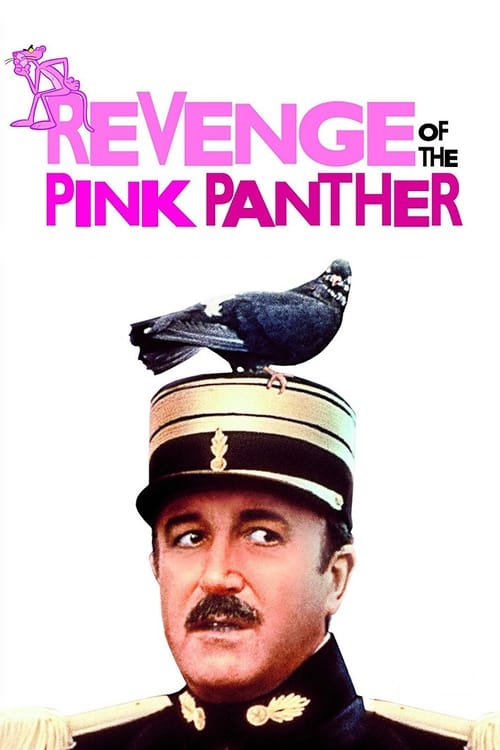
Revenge of the Pink Panther
Chief Inspector Jacques Clouseau is dead. At least that is what the world—and Charles Dreyfus—believe when a dead body is discovered in Clouseau's car after being shot off the road. Naturally, Clouseau knows differently and, taking advantage of not being alive, sets out to discover why an attempt was made on his life.
Despite its modest budget of $12.0M, Revenge of the Pink Panther became a commercial success, earning $49.6M worldwide—a 313% return. The film's unique voice connected with viewers, illustrating how strong storytelling can transcend budget limitations.
1 win & 1 nomination


Plot Structure
Story beats plotted across runtime


Narrative Arc
Emotional journey through the story's key moments
Story Circle
Blueprint 15-beat structure
Arcplot Score Breakdown
Weighted: Precision (70%) + Arc (15%) + Theme (15%)
Revenge of the Pink Panther (1978) reveals meticulously timed narrative design, characteristic of Blake Edwards's storytelling approach. This structural analysis examines how the film's 15-point plot structure maps to proven narrative frameworks across 1 hour and 39 minutes. With an Arcplot score of 7.4, the film balances conventional beats with creative variation.
Characters
Cast & narrative archetypes

Inspector Jacques Clouseau
Chief Inspector Charles Dreyfus
Cato Fang
Philippe Douvier
Simone Legree
Auguste Balls
Main Cast & Characters
Inspector Jacques Clouseau
Played by Peter Sellers
Bumbling French detective who survives an assassination attempt and goes undercover to expose the conspiracy against him.
Chief Inspector Charles Dreyfus
Played by Herbert Lom
Clouseau's neurotic superior who has been driven to madness by years of working with the incompetent inspector.
Cato Fang
Played by Burt Kwouk
Clouseau's loyal manservant and martial arts expert who regularly attacks his master to keep him alert.
Philippe Douvier
Played by Robert Webber
French crime boss and drug kingpin who orders Clouseau's assassination to protect his criminal empire.
Simone Legree
Played by Dyan Cannon
Douvier's secretary and mistress who becomes romantically entangled with the disguised Clouseau.
Auguste Balls
Played by Robert Loggia
Douvier's partner in the drug trade who participates in the plot to eliminate Clouseau.
Structural Analysis
The Status Quo at 1 minutes (1% through the runtime) establishes Inspector Clouseau is shown as France's most celebrated detective, bumbling yet successful, living his ordinary life of chaos and international fame.. Structural examination shows that this early placement immediately immerses viewers in the story world.
The inciting incident occurs at 11 minutes when Douvier orders a hit on Clouseau to prove his power to the American mob. A bomb explodes in Clouseau's car, and the world believes Inspector Clouseau is dead.. At 11% through the film, this Disruption aligns precisely with traditional story structure. This beat shifts the emotional landscape, launching the protagonist into the central conflict.
The First Threshold at 24 minutes marks the transition into Act II, occurring at 24% of the runtime. This illustrates the protagonist's commitment to Clouseau actively chooses to remain "dead" and go undercover in disguise to investigate his own assassination attempt, entering a world where he doesn't exist., moving from reaction to action.
At 49 minutes, the Midpoint arrives at 49% of the runtime—precisely centered, creating perfect narrative symmetry. Notably, this crucial beat Clouseau discovers Douvier ordered his assassination and gains apparent advantage - he knows who his enemy is while remaining "dead." False victory: he believes he's in control., fundamentally raising what's at risk. The emotional intensity shifts, dividing the narrative into clear before-and-after phases.
The Collapse moment at 73 minutes (74% through) represents the emotional nadir. Here, Clouseau is captured by Douvier's men. His secret identity exposed, his advantage lost, and facing execution. The dream of solving his own murder while "dead" dies., demonstrates the protagonist at their lowest point. This beat's placement in the final quarter sets up the climactic reversal.
The Second Threshold at 79 minutes initiates the final act resolution at 80% of the runtime. Clouseau realizes he doesn't need disguises or deception - his true bumbling nature is his greatest weapon. Combines his "death" advantage with authentic incompetent brilliance., demonstrating the transformation achieved throughout the journey.
Emotional Journey
Revenge of the Pink Panther's emotional architecture traces a deliberate progression across 15 carefully calibrated beats.
Narrative Framework
This structural analysis employs systematic plot point analysis that identifies crucial turning points. By mapping Revenge of the Pink Panther against these established plot points, we can identify how Blake Edwards utilizes or subverts traditional narrative conventions. The plot point approach reveals not only adherence to structural principles but also creative choices that distinguish Revenge of the Pink Panther within the comedy genre.
Blake Edwards's Structural Approach
Among the 15 Blake Edwards films analyzed on Arcplot, the average structural score is 7.1, reflecting strong command of classical structure. Revenge of the Pink Panther represents one of the director's most structurally precise works. For comparative analysis, explore the complete Blake Edwards filmography.
Comparative Analysis
Additional comedy films include The Bad Guys, Ella Enchanted and The Evening Star. For more Blake Edwards analyses, see Curse of the Pink Panther, 10 and The Pink Panther Strikes Again.
Plot Points by Act
Act I
SetupStatus Quo
Inspector Clouseau is shown as France's most celebrated detective, bumbling yet successful, living his ordinary life of chaos and international fame.
Theme
Philippe Douvier discusses the importance of reputation and appearances in the criminal underworld, establishing the theme that identity and perception define reality.
Worldbuilding
Establishment of Clouseau's bumbling detective work, his relationship with Cato and Dreyfus, and the French criminal underworld led by Philippe Douvier who faces pressure from American mobsters.
Disruption
Douvier orders a hit on Clouseau to prove his power to the American mob. A bomb explodes in Clouseau's car, and the world believes Inspector Clouseau is dead.
Resistance
Clouseau survives and realizes he can use his "death" as an advantage. He debates whether to reveal himself or investigate who tried to kill him while remaining "dead."
Act II
ConfrontationFirst Threshold
Clouseau actively chooses to remain "dead" and go undercover in disguise to investigate his own assassination attempt, entering a world where he doesn't exist.
Mirror World
Clouseau meets Simone Legree, his former lover and secretary to Douvier, who becomes his thematic mirror - someone who must also hide their true identity and loyalties.
Premise
The fun of Clouseau undercover - multiple disguises, comic misunderstandings, investigating the criminal underworld while "dead," evading both criminals and his own police force.
Midpoint
Clouseau discovers Douvier ordered his assassination and gains apparent advantage - he knows who his enemy is while remaining "dead." False victory: he believes he's in control.
Opposition
Douvier realizes Clouseau is alive and intensifies efforts to kill him. Clouseau's disguises begin failing, allies are threatened, and the mob closes in from all sides.
Collapse
Clouseau is captured by Douvier's men. His secret identity exposed, his advantage lost, and facing execution. The dream of solving his own murder while "dead" dies.
Crisis
Clouseau faces his apparent end, processing that his cleverness wasn't enough. Dark moment of reckoning with his own mortality and the limits of his abilities.
Act III
ResolutionSecond Threshold
Clouseau realizes he doesn't need disguises or deception - his true bumbling nature is his greatest weapon. Combines his "death" advantage with authentic incompetent brilliance.
Synthesis
Final confrontation at Douvier's headquarters. Through spectacular incompetence and chaos, Clouseau defeats the criminals, exposes Douvier, and "returns from the dead" triumphantly.
Transformation
Clouseau is celebrated publicly once more, but now he understands that his bumbling nature - not despite it but because of it - makes him who he is. He embraces his true self.