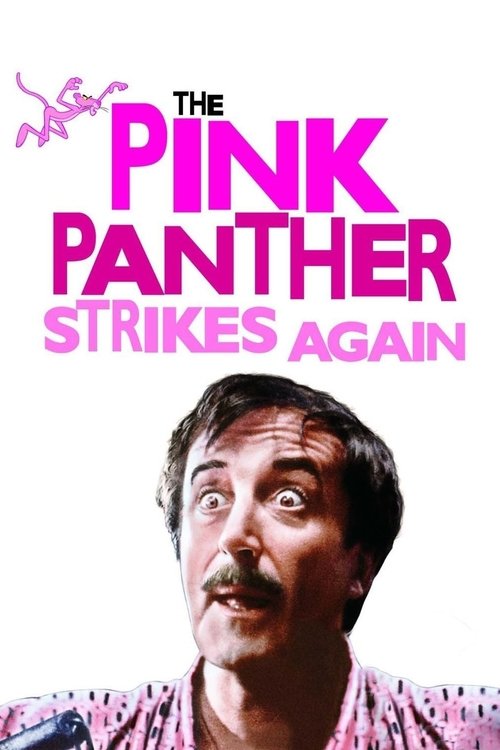
The Pink Panther Strikes Again
Charles Dreyfus, who has finally cracked over inspector Clouseau's antics, escapes from a mental institution and launches an elaborate plan to get rid of Clouseau once and for all.
Despite its small-scale budget of $6.0M, The Pink Panther Strikes Again became a financial success, earning $33.8M worldwide—a 464% return. The film's bold vision connected with viewers, illustrating how strong storytelling can transcend budget limitations.
Nominated for 1 Oscar. 2 wins & 3 nominations


Plot Structure
Story beats plotted across runtime


Narrative Arc
Emotional journey through the story's key moments
Story Circle
Blueprint 15-beat structure
Arcplot Score Breakdown
Weighted: Precision (70%) + Arc (15%) + Theme (15%)
The Pink Panther Strikes Again (1976) exhibits carefully calibrated plot construction, characteristic of Blake Edwards's storytelling approach. This structural analysis examines how the film's 15-point plot structure maps to proven narrative frameworks across 1 hour and 43 minutes. With an Arcplot score of 7.0, the film balances conventional beats with creative variation.
Structural Analysis
The Status Quo at 1 minutes (1% through the runtime) establishes Former Chief Inspector Dreyfus appears calm and recovered in the mental asylum, tending the gardens peacefully. The doctors believe he is cured of his obsession with Clouseau.. Structural examination shows that this early placement immediately immerses viewers in the story world.
The inciting incident occurs at 12 minutes when Dreyfus attempts to kill Clouseau during the asylum visit, his eye twitching uncontrollably. He is restrained but his sanity is completely shattered. He escapes the asylum, setting in motion his plan for revenge.. At 12% through the film, this Disruption aligns precisely with traditional story structure. This beat shifts the emotional landscape, launching the protagonist into the central conflict.
The First Threshold at 26 minutes marks the transition into Act II, occurring at 25% of the runtime. This illustrates the protagonist's commitment to Dreyfus kidnaps Professor Fassbender and his daughter, forcing the scientist to build a doomsday device. Dreyfus broadcasts his ultimatum to world governments: assassinate Inspector Clouseau or he will destroy entire cities., moving from reaction to action.
At 52 minutes, the Midpoint arrives at 50% of the runtime—precisely centered, creating perfect narrative symmetry. Of particular interest, this crucial beat Dreyfus demonstrates his doomsday ray by disintegrating the United Nations building in New York. The stakes escalate dramatically as world powers realize the threat is real, intensifying their efforts to eliminate Clouseau., fundamentally raising what's at risk. The emotional intensity shifts, dividing the narrative into clear before-and-after phases.
The Collapse moment at 77 minutes (75% through) represents the emotional nadir. Here, Clouseau is captured by Dreyfus's forces and brought to the castle. For the first time, Clouseau faces the full scope of the conspiracy against him. Dreyfus gleefully prepares to execute him personally with the doomsday device., shows the protagonist at their lowest point. This beat's placement in the final quarter sets up the climactic reversal.
The Second Threshold at 82 minutes initiates the final act resolution at 80% of the runtime. Clouseau's bumbling accidentally causes chaos in the castle, disrupting Dreyfus's control of the doomsday device. His incompetence becomes his weapon as his random destruction interferes with the carefully calibrated machinery., demonstrating the transformation achieved throughout the journey.
Emotional Journey
The Pink Panther Strikes Again's emotional architecture traces a deliberate progression across 15 carefully calibrated beats.
Narrative Framework
This structural analysis employs proven narrative structure principles that track dramatic progression. By mapping The Pink Panther Strikes Again against these established plot points, we can identify how Blake Edwards utilizes or subverts traditional narrative conventions. The plot point approach reveals not only adherence to structural principles but also creative choices that distinguish The Pink Panther Strikes Again within the comedy genre.
Blake Edwards's Structural Approach
Among the 15 Blake Edwards films analyzed on Arcplot, the average structural score is 7.1, reflecting strong command of classical structure. The Pink Panther Strikes Again takes a more unconventional approach compared to the director's typical style. For comparative analysis, explore the complete Blake Edwards filmography.
Comparative Analysis
Additional comedy films include The Bad Guys, Ella Enchanted and The Evening Star. For more Blake Edwards analyses, see Revenge of the Pink Panther, Curse of the Pink Panther and 10.
Plot Points by Act
Act I
SetupStatus Quo
Former Chief Inspector Dreyfus appears calm and recovered in the mental asylum, tending the gardens peacefully. The doctors believe he is cured of his obsession with Clouseau.
Theme
The asylum psychiatrist tells Dreyfus that his recovery proves that even the most extreme cases can be healed with proper treatment - ironic given that Clouseau's mere presence will instantly undo years of therapy.
Worldbuilding
The peaceful asylum setting establishes Dreyfus's supposed recovery. Clouseau arrives for a visit, demonstrating his characteristic incompetence by destroying property and causing chaos. His bumbling triggers Dreyfus's violent relapse and murderous twitching.
Disruption
Dreyfus attempts to kill Clouseau during the asylum visit, his eye twitching uncontrollably. He is restrained but his sanity is completely shattered. He escapes the asylum, setting in motion his plan for revenge.
Resistance
Dreyfus escapes and begins recruiting help for his master plan. Meanwhile, Clouseau continues his regular detective work, oblivious to the danger. The parallel storylines establish both the threat against Clouseau and his complete unawareness of it.
Act II
ConfrontationFirst Threshold
Dreyfus kidnaps Professor Fassbender and his daughter, forcing the scientist to build a doomsday device. Dreyfus broadcasts his ultimatum to world governments: assassinate Inspector Clouseau or he will destroy entire cities.
Mirror World
Russian agent Olga Bariosova is introduced as one of many international assassins sent to kill Clouseau. Her beauty and eventual attraction to Clouseau provides the romantic subplot that humanizes the absurd premise.
Premise
A parade of international assassins attempts to kill Clouseau through increasingly elaborate methods. Each attempt fails spectacularly due to Clouseau's oblivious luck - he bends over just as shots are fired, walks away moments before explosions, and survives every trap through pure chance.
Midpoint
Dreyfus demonstrates his doomsday ray by disintegrating the United Nations building in New York. The stakes escalate dramatically as world powers realize the threat is real, intensifying their efforts to eliminate Clouseau.
Opposition
The assassination attempts become more coordinated and desperate. Clouseau survives a hotel full of assassins in an extended slapstick sequence. Olga begins falling for Clouseau despite her mission. Dreyfus grows increasingly unhinged as each failure mounts.
Collapse
Clouseau is captured by Dreyfus's forces and brought to the castle. For the first time, Clouseau faces the full scope of the conspiracy against him. Dreyfus gleefully prepares to execute him personally with the doomsday device.
Crisis
Clouseau is a prisoner in Dreyfus's castle, seemingly doomed. The world holds its breath as Dreyfus prepares his final demonstration. Professor Fassbender and his daughter are also held captive with no hope of escape.
Act III
ResolutionSecond Threshold
Clouseau's bumbling accidentally causes chaos in the castle, disrupting Dreyfus's control of the doomsday device. His incompetence becomes his weapon as his random destruction interferes with the carefully calibrated machinery.
Synthesis
The castle descends into chaos as Clouseau stumbles through the finale. Dreyfus attempts to fire the doomsday ray at Clouseau repeatedly but his own incompetence and rage cause the device to malfunction. The ray begins disintegrating parts of the castle itself.
Transformation
The doomsday ray malfunctions catastrophically, disintegrating Dreyfus and the castle. Clouseau survives completely unscathed and oblivious to his own role in saving the world. He walks away with Olga, the accidental hero who never understood the danger he was in.