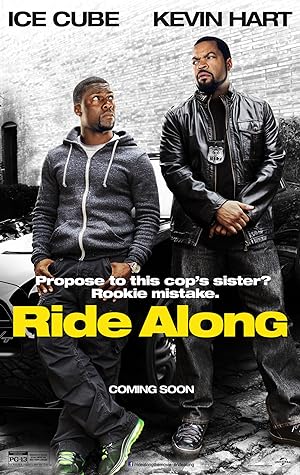
Ride Along
Ben must prove he is good enough to date cop James' sister. By doing this he goes on a "Ride Along" to show that he is not weak and he will do whatever it takes to get James' approval but along the way runs into a few obstacles that he has to overcome in a very funny way.
Despite a respectable budget of $25.0M, Ride Along became a runaway success, earning $154.0M worldwide—a remarkable 516% return.
1 win & 7 nominations


Plot Structure
Story beats plotted across runtime


Narrative Arc
Emotional journey through the story's key moments
Story Circle
Blueprint 15-beat structure
Arcplot Score Breakdown
Weighted: Precision (70%) + Arc (15%) + Theme (15%)
Ride Along (2014) exemplifies strategically placed story structure, characteristic of Tim Story's storytelling approach. This structural analysis examines how the film's 15-point plot structure maps to proven narrative frameworks across 1 hour and 39 minutes. With an Arcplot score of 7.1, the film balances conventional beats with creative variation.
Characters
Cast & narrative archetypes

Ben Barber
James Payton
Angela Payton
Omar
Santiago
Main Cast & Characters
Ben Barber
Played by Kevin Hart
A high school security guard and avid gamer who dreams of becoming a police detective to prove himself worthy of marrying his girlfriend Angela.
James Payton
Played by Ice Cube
A tough, experienced Atlanta detective who reluctantly takes his sister's boyfriend on a ride-along to discourage him from joining the force.
Angela Payton
Played by Tika Sumpter
A nurse and Ben's supportive girlfriend who wants her brother James to accept Ben as her future husband.
Omar
Played by Laurence Fishburne
A Serbian arms dealer and the mysterious crime lord that James has been hunting for years.
Santiago
Played by John Leguizamo
James's police partner and closest ally on the force who helps with the investigation.
Structural Analysis
The Status Quo at 1 minutes (1% through the runtime) establishes Ben Barber playing a violent video game, fantasizing about being a tough cop while working as a high school security guard. His girlfriend Angela wants him to get James' approval before marriage.. Notably, this early placement immediately immerses viewers in the story world.
The inciting incident occurs at 11 minutes when Ben gets accepted into the Atlanta Police Academy. He believes this proves he's worthy of marrying Angela, but James remains unimpressed and skeptical.. At 12% through the film, this Disruption aligns precisely with traditional story structure. This beat shifts the emotional landscape, launching the protagonist into the central conflict.
The First Threshold at 24 minutes marks the transition into Act II, occurring at 24% of the runtime. This demonstrates the protagonist's commitment to Ben gets in James' car for the ride-along, officially entering the world of real police work. He makes the active choice to prove himself, leaving behind his fantasy video game world., moving from reaction to action.
At 50 minutes, the Midpoint arrives at 51% of the runtime—precisely centered, creating perfect narrative symmetry. The analysis reveals that this crucial beat False victory: Ben's accidental discoveries lead to a real break in James' case against Omar. Ben feels validated and thinks he's proven himself. James begins to see Ben might have value, raising the stakes., fundamentally raising what's at risk. The emotional intensity shifts, dividing the narrative into clear before-and-after phases.
The Collapse moment at 73 minutes (74% through) represents the emotional nadir. Here, Ben's recklessness gets James shot and captured by Omar's men. Angela discovers the danger, Ben loses her trust. Everything falls apart—James might die, Angela might leave, Ben's dreams of being a cop seem crushed., demonstrates the protagonist at their lowest point. This beat's placement in the final quarter sets up the climactic reversal.
The Second Threshold at 78 minutes initiates the final act resolution at 79% of the runtime. Ben synthesizes his gaming knowledge with real courage. He formulates a plan to save James, combining his strategic thinking from video games with genuine bravery. He chooses to act like a real cop, not a fantasy hero., demonstrating the transformation achieved throughout the journey.
Emotional Journey
Ride Along's emotional architecture traces a deliberate progression across 15 carefully calibrated beats.
Narrative Framework
This structural analysis employs a 15-point narrative structure framework that maps key story moments. By mapping Ride Along against these established plot points, we can identify how Tim Story utilizes or subverts traditional narrative conventions. The plot point approach reveals not only adherence to structural principles but also creative choices that distinguish Ride Along within the action genre.
Tim Story's Structural Approach
Among the 10 Tim Story films analyzed on Arcplot, the average structural score is 7.2, reflecting strong command of classical structure. Ride Along takes a more unconventional approach compared to the director's typical style. For comparative analysis, explore the complete Tim Story filmography.
Comparative Analysis
Additional action films include The Bad Guys, Puss in Boots and Venom: The Last Dance. For more Tim Story analyses, see Taxi, Think Like a Man Too and Shaft.
Plot Points by Act
Act I
SetupStatus Quo
Ben Barber playing a violent video game, fantasizing about being a tough cop while working as a high school security guard. His girlfriend Angela wants him to get James' approval before marriage.
Theme
James tells Ben, "You can't handle the streets." The theme: proving yourself requires more than bravado—it requires facing real danger and earning respect through actions, not words.
Worldbuilding
Ben's world as a wannabe cop who plays video games and works school security. James is a hardened Atlanta detective who doesn't respect Ben. Angela is caught between them. Ben gets accepted to the police academy.
Disruption
Ben gets accepted into the Atlanta Police Academy. He believes this proves he's worthy of marrying Angela, but James remains unimpressed and skeptical.
Resistance
James proposes taking Ben on a ride-along to "test" him, secretly planning to humiliate him and prove he can't handle police work. Ben eagerly agrees, seeing it as his chance to win James' respect.
Act II
ConfrontationFirst Threshold
Ben gets in James' car for the ride-along, officially entering the world of real police work. He makes the active choice to prove himself, leaving behind his fantasy video game world.
Mirror World
Ben meets Santiago, James' partner who shows a more balanced view of police work. Their partnership demonstrates the mutual respect and trust Ben must earn from James.
Premise
The "fun and games" of the ride-along: James assigns Ben humiliating tasks (cat rescue, impound lot, liquor store). Ben bumbles through but shows unexpected courage and resourcefulness, accidentally stumbling onto real clues about Omar, the criminal James is hunting.
Midpoint
False victory: Ben's accidental discoveries lead to a real break in James' case against Omar. Ben feels validated and thinks he's proven himself. James begins to see Ben might have value, raising the stakes.
Opposition
Omar's crew closes in. James tries to sideline Ben for safety, but Ben insists on helping. The danger escalates from humiliation to real violence. Ben's inexperience causes problems, straining their relationship.
Collapse
Ben's recklessness gets James shot and captured by Omar's men. Angela discovers the danger, Ben loses her trust. Everything falls apart—James might die, Angela might leave, Ben's dreams of being a cop seem crushed.
Crisis
Ben faces his darkest moment, believing he's failed everyone. He processes that being a real cop isn't about ego or games—it's about protecting people you love and making smart decisions under pressure.
Act III
ResolutionSecond Threshold
Ben synthesizes his gaming knowledge with real courage. He formulates a plan to save James, combining his strategic thinking from video games with genuine bravery. He chooses to act like a real cop, not a fantasy hero.
Synthesis
The finale: Ben executes his plan, rescues James, and helps take down Omar. He uses smart tactics instead of reckless bravado. James and Ben work as true partners, mutual respect finally earned.
Transformation
Closing image mirrors the opening: Ben in a vehicle, but now riding with James as an equal. James gives his blessing for Ben to marry Angela. Ben has transformed from a boy playing cop to a man who earned respect through courage and growth.