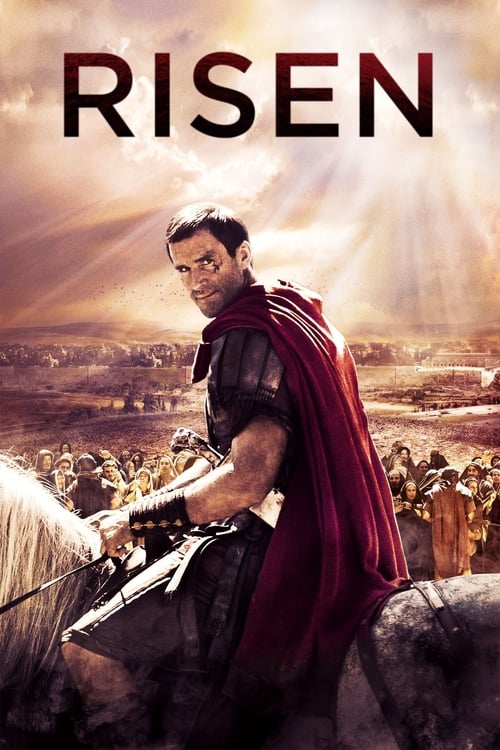
Risen
Clavius, a powerful Roman military tribune, and his aide, Lucius, are tasked with solving the mystery of what happened to Jesus in the weeks following the crucifixion, in order to disprove the rumors of a risen Messiah and prevent an uprising in Jerusalem.
Despite a mid-range budget of $20.0M, Risen became a box office success, earning $46.1M worldwide—a 131% return.


Plot Structure
Story beats plotted across runtime


Narrative Arc
Emotional journey through the story's key moments
Story Circle
Blueprint 15-beat structure
Arcplot Score Breakdown
Weighted: Precision (70%) + Arc (15%) + Theme (15%)
Risen (2016) demonstrates precise plot construction, characteristic of Kevin Reynolds's storytelling approach. This structural analysis examines how the film's 15-point plot structure maps to proven narrative frameworks across 1 hour and 47 minutes. With an Arcplot score of 6.1, the film takes an unconventional approach to traditional narrative frameworks.
Characters
Cast & narrative archetypes

Clavius Aquila
Lucius
Yeshua
Pontius Pilate
Mary Magdalene
Bartholomew
Peter
Main Cast & Characters
Clavius Aquila
Played by Joseph Fiennes
A Roman military tribune tasked with investigating the disappearance of Jesus' body after the crucifixion. His investigation leads him on a journey from skeptic to believer.
Lucius
Played by Tom Felton
Clavius' young aide and loyal companion who assists in the investigation and witnesses his commander's transformation.
Yeshua
Played by Cliff Curtis
Jesus of Nazareth, depicted after his resurrection. His presence challenges Clavius' worldview and transforms his understanding of truth.
Pontius Pilate
Played by Peter Firth
The Roman prefect of Judea who orders Clavius to investigate the missing body to prevent an uprising and maintain Roman control.
Mary Magdalene
Played by María Botto
A devoted follower of Yeshua who aids the disciples and witnesses the resurrection, demonstrating unwavering faith.
Bartholomew
Played by Stephen Hagan
One of Yeshua's disciples, a passionate and outspoken follower who interacts with Clavius during the investigation.
Peter
Played by Stewart Scudamore
A leading disciple of Yeshua, a fisherman who shows both strength and doubt, playing a key role in the post-resurrection appearances.
Structural Analysis
The Status Quo at 1 minutes (1% through the runtime) establishes Tribune Clavius brutally commands Roman forces crushing a Jewish revolt, establishing him as a ruthless, efficient soldier of Rome who seeks peace through violence and dreams only of retirement to a vineyard.. Structural examination shows that this early placement immediately immerses viewers in the story world.
The inciting incident occurs at 13 minutes when Pilate assigns Clavius to oversee Yeshua's crucifixion and prevent the followers from stealing the body to fake a resurrection prophecy. Clavius witnesses the crucifixion and confirms Yeshua's death with a spear thrust.. At 12% through the film, this Disruption aligns precisely with traditional story structure. This beat shifts the emotional landscape, launching the protagonist into the central conflict.
The First Threshold at 26 minutes marks the transition into Act II, occurring at 24% of the runtime. This indicates the protagonist's commitment to Clavius commits fully to the investigation, raiding homes, arresting followers, and interrogating witnesses. He transitions from routine enforcement to active detective pursuing an impossible mystery that challenges Roman authority., moving from reaction to action.
At 53 minutes, the Midpoint arrives at 50% of the runtime—precisely centered, creating perfect narrative symmetry. Significantly, this crucial beat Clavius discovers Yeshua alive in the upper room with the disciples. Face-to-face with the impossible, his entire belief system shatters. This false defeat destroys his certainty but opens the door to truth., fundamentally raising what's at risk. The emotional intensity shifts, dividing the narrative into clear before-and-after phases.
The Collapse moment at 80 minutes (75% through) represents the emotional nadir. Here, Roman soldiers arrive to arrest the disciples. Clavius must choose: maintain his Roman identity and betray those he's come to know, or abandon everything he was. His old self dies as he rejects Rome and helps the disciples escape., reveals the protagonist at their lowest point. This beat's placement in the final quarter sets up the climactic reversal.
The Second Threshold at 85 minutes initiates the final act resolution at 79% of the runtime. Clavius witnesses the Ascension - Yeshua rising into the sky. The impossible made manifest provides the synthesis of evidence and faith. He understands that certainty was never the goal; transformed belief is., demonstrating the transformation achieved throughout the journey.
Emotional Journey
Risen's emotional architecture traces a deliberate progression across 15 carefully calibrated beats.
Narrative Framework
This structural analysis employs structural analysis methodology used to understand storytelling architecture. By mapping Risen against these established plot points, we can identify how Kevin Reynolds utilizes or subverts traditional narrative conventions. The plot point approach reveals not only adherence to structural principles but also creative choices that distinguish Risen within the action genre.
Kevin Reynolds's Structural Approach
Among the 6 Kevin Reynolds films analyzed on Arcplot, the average structural score is 6.9, demonstrating varied approaches to story architecture. Risen takes a more unconventional approach compared to the director's typical style. For comparative analysis, explore the complete Kevin Reynolds filmography.
Comparative Analysis
Additional action films include The Bad Guys, Puss in Boots and Venom: The Last Dance. For more Kevin Reynolds analyses, see Waterworld, The Count of Monte Cristo and Robin Hood: Prince of Thieves.
Plot Points by Act
Act I
SetupStatus Quo
Tribune Clavius brutally commands Roman forces crushing a Jewish revolt, establishing him as a ruthless, efficient soldier of Rome who seeks peace through violence and dreams only of retirement to a vineyard.
Theme
Pilate tells Clavius that certainty in their world is impossible - "A day without death in Jerusalem would be unusual" - foreshadowing the film's exploration of faith versus empirical certainty.
Worldbuilding
Establishing Roman-occupied Jerusalem during Passover: political tensions, religious fervor, crucifixions as standard practice. Clavius reports to Pilate, receives assignments, and observes the execution of Yeshua (Jesus) alongside two thieves.
Disruption
Pilate assigns Clavius to oversee Yeshua's crucifixion and prevent the followers from stealing the body to fake a resurrection prophecy. Clavius witnesses the crucifixion and confirms Yeshua's death with a spear thrust.
Resistance
Clavius secures the tomb with guards and a sealed stone. After the Sabbath, the tomb is found empty. Pilate, fearing uprising, commands Clavius to find the body within three days before the Emperor arrives. Clavius begins interrogating disciples.
Act II
ConfrontationFirst Threshold
Clavius commits fully to the investigation, raiding homes, arresting followers, and interrogating witnesses. He transitions from routine enforcement to active detective pursuing an impossible mystery that challenges Roman authority.
Mirror World
Clavius interrogates Mary Magdalene, who speaks with peaceful conviction about Yeshua. Her unshakeable faith despite torture and threat introduces the thematic counterpoint to Clavius's empirical worldview.
Premise
The investigation deepens: Clavius searches for the body, questions disciples, discovers inconsistencies in guard testimonies, raids the upper room, and experiences increasing cognitive dissonance as evidence contradicts his rational Roman worldview.
Midpoint
Clavius discovers Yeshua alive in the upper room with the disciples. Face-to-face with the impossible, his entire belief system shatters. This false defeat destroys his certainty but opens the door to truth.
Opposition
Clavius conceals his discovery from Rome but cannot reconcile what he's seen. He follows the disciples to Galilee, torn between duty and truth. Pilate sends forces to hunt them. Clavius witnesses miracles and hears Yeshua's teachings while struggling with his identity.
Collapse
Roman soldiers arrive to arrest the disciples. Clavius must choose: maintain his Roman identity and betray those he's come to know, or abandon everything he was. His old self dies as he rejects Rome and helps the disciples escape.
Crisis
Clavius processes the magnitude of his choice during the chaos of the escape. He has become a deserter, enemy of Rome, abandoning career and identity. In the darkness, he grapples with whether faith can replace certainty.
Act III
ResolutionSecond Threshold
Clavius witnesses the Ascension - Yeshua rising into the sky. The impossible made manifest provides the synthesis of evidence and faith. He understands that certainty was never the goal; transformed belief is.
Synthesis
Clavius parts ways with the disciples to begin his own journey. He evades Roman pursuit, removes his military ring, and walks into the desert as a new man - no longer Roman tribune, but seeker of truth beyond empirical evidence.
Transformation
Clavius, bearded and traveling in simple clothes, walks alone through the desert landscape - the violent Roman soldier transformed into a peaceful pilgrim, having traded certainty for faith and violence for purpose.