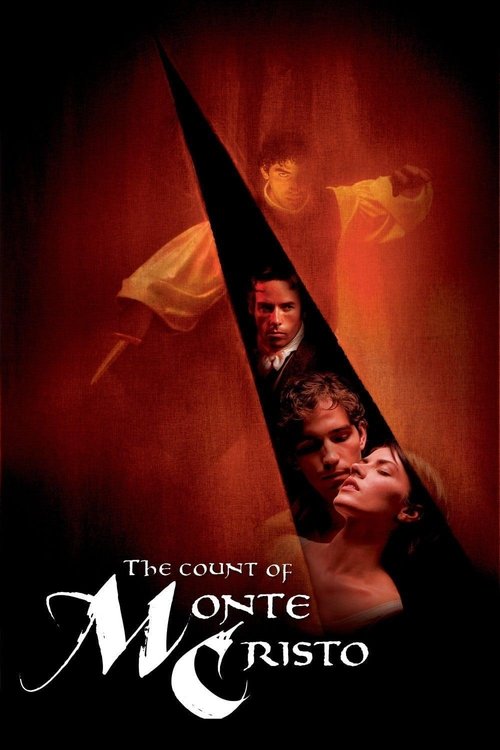
The Count of Monte Cristo
Edmond Dantés's life and plans to marry the beautiful Mercedes are shattered when his best friend, Fernand, deceives him. After spending 13 miserable years in prison, Dantés escapes with the help of a fellow inmate and plots his revenge, cleverly insinuating himself into the French nobility.
Despite a moderate budget of $35.0M, The Count of Monte Cristo became a solid performer, earning $75.4M worldwide—a 115% return.


Plot Structure
Story beats plotted across runtime


Narrative Arc
Emotional journey through the story's key moments
Story Circle
Blueprint 15-beat structure
Arcplot Score Breakdown
Weighted: Precision (70%) + Arc (15%) + Theme (15%)
The Count of Monte Cristo (2002) showcases deliberately positioned dramatic framework, characteristic of Kevin Reynolds's storytelling approach. This structural analysis examines how the film's 15-point plot structure maps to proven narrative frameworks across 2 hours and 11 minutes. With an Arcplot score of 7.3, the film balances conventional beats with creative variation.
Characters
Cast & narrative archetypes

Edmond Dantès
Fernand Mondego
Abbé Faria
Mercédès Iguanada
Jacopo
Villefort
Danglars
Albert Mondego
Main Cast & Characters
Edmond Dantès
Played by Jim Caviezel
A young sailor betrayed and imprisoned, who transforms into the vengeful Count of Monte Cristo seeking justice against those who wronged him.
Fernand Mondego
Played by Guy Pearce
Edmond's aristocratic best friend who betrays him out of jealousy and ambition, becoming Count de Mondego.
Abbé Faria
Played by Richard Harris
An imprisoned priest and mentor who educates Edmond and reveals the location of a great treasure before his death.
Mercédès Iguanada
Played by Dagmara Domińczyk
Edmond's fiancée who believes him dead and reluctantly marries Fernand, later discovering her first love has returned.
Jacopo
Played by Luis Guzmán
A loyal smuggler and former slave who becomes Edmond's devoted friend and first mate after being saved from execution.
Villefort
Played by James Frain
The ambitious prosecutor who imprisons Edmond to hide his own father's treasonous connections.
Danglars
Played by Albie Woodington
The jealous first mate who conspires against Edmond to advance his own position, later becoming a wealthy banker.
Albert Mondego
Played by Henry Cavill
The teenage son of Fernand and Mercédès who befriends the Count, unaware of their shared history.
Structural Analysis
The Status Quo at 2 minutes (2% through the runtime) establishes Edmond Dantès is a young, idealistic sailor arriving in Marseille, beloved by friends and about to marry his sweetheart Mercédès. His life is full of promise and innocent joy.. Notably, this early placement immediately immerses viewers in the story world.
The inciting incident occurs at 14 minutes when Edmond is arrested on his wedding day for treason based on false charges. Prosecutor Villefort, protecting his own father, condemns innocent Edmond to life imprisonment in the Château d'If.. At 11% through the film, this Disruption aligns precisely with traditional story structure. This beat shifts the emotional landscape, launching the protagonist into the central conflict.
The First Threshold at 31 minutes marks the transition into Act II, occurring at 23% of the runtime. This illustrates the protagonist's commitment to Edmond chooses to embrace Faria's education and transforms himself from broken prisoner to learned warrior. He commits to survival and discovering who betrayed him, accepting his new identity as a man preparing for something greater., moving from reaction to action.
At 63 minutes, the Midpoint arrives at 48% of the runtime—precisely centered, creating perfect narrative symmetry. The analysis reveals that this crucial beat False victory: The Count successfully infiltrates Paris high society and begins destroying his enemies. Fernand is now a powerful count married to Mercédès, Danglars is a wealthy banker, and Villefort is chief prosecutor. Edmond's plans are working perfectly., fundamentally raising what's at risk. The emotional intensity shifts, dividing the narrative into clear before-and-after phases.
The Collapse moment at 96 minutes (73% through) represents the emotional nadir. Here, Mercédès confronts Edmond, revealing Albert is his son. Edmond realizes his revenge will destroy his own child and the woman he loved. His entire purpose - vengeance - threatens to kill the last remnants of who he was. Metaphorical death of the vengeful Count persona., reveals the protagonist at their lowest point. This beat's placement in the final quarter sets up the climactic reversal.
The Second Threshold at 102 minutes initiates the final act resolution at 78% of the runtime. Edmond chooses mercy and truth. He reveals himself to Albert, protecting his son while still pursuing justice against Fernand. He synthesizes Faria's wisdom with his own pain, choosing redemption over complete destruction., demonstrating the transformation achieved throughout the journey.
Emotional Journey
The Count of Monte Cristo's emotional architecture traces a deliberate progression across 15 carefully calibrated beats.
Narrative Framework
This structural analysis employs structural analysis methodology used to understand storytelling architecture. By mapping The Count of Monte Cristo against these established plot points, we can identify how Kevin Reynolds utilizes or subverts traditional narrative conventions. The plot point approach reveals not only adherence to structural principles but also creative choices that distinguish The Count of Monte Cristo within the adventure genre.
Kevin Reynolds's Structural Approach
Among the 6 Kevin Reynolds films analyzed on Arcplot, the average structural score is 6.9, demonstrating varied approaches to story architecture. The Count of Monte Cristo represents one of the director's most structurally precise works. For comparative analysis, explore the complete Kevin Reynolds filmography.
Comparative Analysis
Additional adventure films include The Black Stallion, The Bad Guys and Puss in Boots. For more Kevin Reynolds analyses, see Waterworld, Risen and Robin Hood: Prince of Thieves.
Plot Points by Act
Act I
SetupStatus Quo
Edmond Dantès is a young, idealistic sailor arriving in Marseille, beloved by friends and about to marry his sweetheart Mercédès. His life is full of promise and innocent joy.
Theme
Abbé Faria later states: "God will give me justice." The central question is whether justice comes through divine providence or human vengeance, and whether revenge destroys the avenger.
Worldbuilding
Establishment of Edmond's world in 1815 Marseille: his friendship with Fernand Mondego, his love for Mercédès, his promotion to captain, and Fernand's jealousy. Sets up the betrayal through Danglars' scheming and Villefort's ambition.
Disruption
Edmond is arrested on his wedding day for treason based on false charges. Prosecutor Villefort, protecting his own father, condemns innocent Edmond to life imprisonment in the Château d'If.
Resistance
Edmond's brutal imprisonment and initial despair in the Château d'If. He endures torture and isolation. After six years, he meets Abbé Faria, who becomes his mentor and begins teaching him knowledge, languages, and combat.
Act II
ConfrontationFirst Threshold
Edmond chooses to embrace Faria's education and transforms himself from broken prisoner to learned warrior. He commits to survival and discovering who betrayed him, accepting his new identity as a man preparing for something greater.
Mirror World
Faria reveals the conspiracy behind Edmond's imprisonment, naming Fernand, Danglars, and Villefort. He also tells of a hidden treasure on Monte Cristo. Faria dies helping Edmond escape, representing the thematic mentor who advocates for divine justice over revenge.
Premise
Edmond escapes, finds the treasure, and transforms into the Count of Monte Cristo. He returns to Paris society with immense wealth and begins his elaborate revenge scheme, manipulating each betrayer while concealing his true identity.
Midpoint
False victory: The Count successfully infiltrates Paris high society and begins destroying his enemies. Fernand is now a powerful count married to Mercédès, Danglars is a wealthy banker, and Villefort is chief prosecutor. Edmond's plans are working perfectly.
Opposition
As Edmond's revenge deepens, he discovers Mercédès had his son Albert. His manipulation causes suffering to innocents. Fernand grows suspicious. Mercédès begins to recognize Edmond. The moral cost of revenge becomes clear as his humanity erodes.
Collapse
Mercédès confronts Edmond, revealing Albert is his son. Edmond realizes his revenge will destroy his own child and the woman he loved. His entire purpose - vengeance - threatens to kill the last remnants of who he was. Metaphorical death of the vengeful Count persona.
Crisis
Edmond struggles with whether to continue his revenge or spare the innocent. He faces the dark realization that he has become as corrupt as his enemies. He must choose between the hollow satisfaction of vengeance and reclaiming his humanity.
Act III
ResolutionSecond Threshold
Edmond chooses mercy and truth. He reveals himself to Albert, protecting his son while still pursuing justice against Fernand. He synthesizes Faria's wisdom with his own pain, choosing redemption over complete destruction.
Synthesis
Final confrontation with Fernand. Edmond defeats him in a sword fight but chooses not to execute him, instead letting Fernand face public disgrace. Villefort and Danglars face their own justice. Edmond reclaims his identity and reunites with his family.
Transformation
Edmond sails away with Mercédès and Albert, having shed the Count persona. Unlike the opening where he was an innocent sailor, he is now a man who has known darkness but chosen light. He has transformed revenge into justice and regained his humanity.