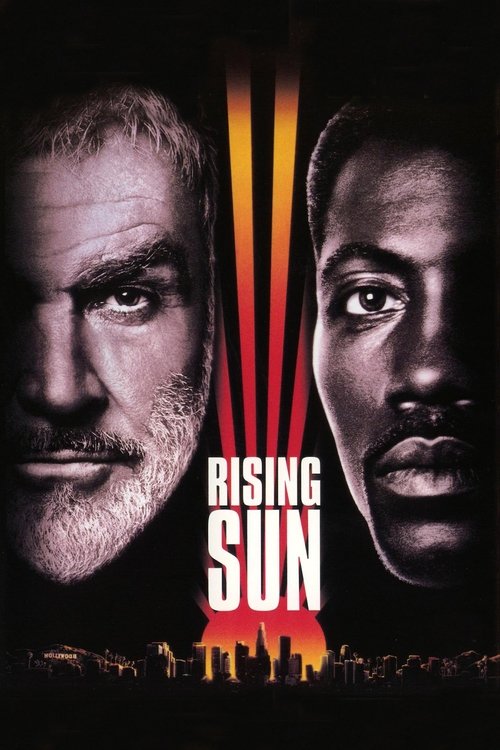
Rising Sun
When a prostitute is found dead in a Los Angeles skyscraper occupied by a large Japanese corporation, detectives John Connor and Web Smith are called in to investigate. Although Connor has previous experience working in Japan, cultural differences make their progress difficult until a security disc showing the murder turns up. Close scrutiny proves the disc has been doctored, and the detectives realize they're dealing with a cover-up as well.
Despite a moderate budget of $40.0M, Rising Sun became a commercial success, earning $107.2M worldwide—a 168% return.
1 win & 1 nomination


Plot Structure
Story beats plotted across runtime


Narrative Arc
Emotional journey through the story's key moments
Story Circle
Blueprint 15-beat structure
Arcplot Score Breakdown
Weighted: Precision (70%) + Arc (15%) + Theme (15%)
Rising Sun (1993) exhibits carefully calibrated story structure, characteristic of Philip Kaufman's storytelling approach. This structural analysis examines how the film's 15-point plot structure maps to proven narrative frameworks across 2 hours and 5 minutes. With an Arcplot score of 6.8, the film balances conventional beats with creative variation.
Characters
Cast & narrative archetypes

Lt. Web Smith
Captain John Connor
Jingo Asakuma
Cheryl Lynn Austin
Eddie Sakamura
Main Cast & Characters
Lt. Web Smith
Played by Wesley Snipes
A detective investigating a murder at a Japanese corporation, learning to navigate cross-cultural tensions and corporate intrigue.
Captain John Connor
Played by Sean Connery
A veteran detective with deep knowledge of Japanese culture who mentors Smith through the complex investigation.
Jingo Asakuma
Played by Cary-Hiroyuki Tagawa
A powerful Japanese businessman and executive at Nakamoto Corporation, suspected of involvement in the murder.
Cheryl Lynn Austin
Played by Tatjana Patitz
The murder victim, a young woman found dead at the Nakamoto Corporation building during a party.
Eddie Sakamura
Played by Cary-Hiroyuki Tagawa
A wealthy Japanese playboy and party regular who becomes a key suspect in the murder investigation.
Structural Analysis
The Status Quo at 2 minutes (1% through the runtime) establishes Web Smith is introduced as an LAPD detective dealing with typical street crime, disconnected from the world of corporate power and international business that will soon consume him.. Structural examination shows that this early placement immediately immerses viewers in the story world.
The inciting incident occurs at 15 minutes when A young woman is found murdered on the 46th floor boardroom table at Nakamoto Corporation during the opening gala. Web is called to the scene and thrust into a complex world of corporate intrigue.. At 12% through the film, this Disruption aligns precisely with traditional story structure. This beat shifts the emotional landscape, launching the protagonist into the central conflict.
The First Threshold at 32 minutes marks the transition into Act II, occurring at 26% of the runtime. This indicates the protagonist's commitment to Web and Connor commit to a full investigation despite political pressure to close the case quickly. They discover the security video has been tampered with, crossing into a dangerous world of corporate cover-ups., moving from reaction to action.
At 63 minutes, the Midpoint arrives at 50% of the runtime—precisely centered, creating perfect narrative symmetry. Of particular interest, this crucial beat The detectives discover the video evidence has been digitally altered at a sophisticated level, revealing a vast conspiracy. What seemed like a simple murder is actually corporate warfare. Stakes escalate as they realize powerful forces are against them., fundamentally raising what's at risk. The emotional intensity shifts, dividing the narrative into clear before-and-after phases.
The Collapse moment at 94 minutes (75% through) represents the emotional nadir. Here, A key witness is killed and the case appears ready to be buried. Web is pulled from the investigation, Connor is pressured to back down, and it seems the corporate powers will succeed in covering up the truth., indicates the protagonist at their lowest point. This beat's placement in the final quarter sets up the climactic reversal.
The Second Threshold at 100 minutes initiates the final act resolution at 80% of the runtime. Connor reveals he has the original, unaltered security footage. Web realizes they have the evidence needed to expose the truth. They synthesize their cultural understanding with hard evidence and choose to move forward., demonstrating the transformation achieved throughout the journey.
Emotional Journey
Rising Sun's emotional architecture traces a deliberate progression across 15 carefully calibrated beats.
Narrative Framework
This structural analysis employs systematic plot point analysis that identifies crucial turning points. By mapping Rising Sun against these established plot points, we can identify how Philip Kaufman utilizes or subverts traditional narrative conventions. The plot point approach reveals not only adherence to structural principles but also creative choices that distinguish Rising Sun within the action genre.
Philip Kaufman's Structural Approach
Among the 8 Philip Kaufman films analyzed on Arcplot, the average structural score is 7.0, demonstrating varied approaches to story architecture. Rising Sun takes a more unconventional approach compared to the director's typical style. For comparative analysis, explore the complete Philip Kaufman filmography.
Comparative Analysis
Additional action films include The Bad Guys, Puss in Boots and Venom: The Last Dance. For more Philip Kaufman analyses, see Quills, The Wanderers and Henry & June.
Plot Points by Act
Act I
SetupStatus Quo
Web Smith is introduced as an LAPD detective dealing with typical street crime, disconnected from the world of corporate power and international business that will soon consume him.
Theme
Connor states the film's theme about perception and reality: "In Japan, when you confront a problem you see what you expect to see." The investigation will challenge Web's assumptions about truth and cultural understanding.
Worldbuilding
Introduction to the world of Japanese corporate power in Los Angeles, the Nakamoto Corporation building opening party, and the cultural tensions between American law enforcement and Japanese business interests.
Disruption
A young woman is found murdered on the 46th floor boardroom table at Nakamoto Corporation during the opening gala. Web is called to the scene and thrust into a complex world of corporate intrigue.
Resistance
Connor mentors Web through the crime scene, teaching him about Japanese business culture, showing him how to navigate the corporate environment, and revealing that nothing is as it appears on the video surveillance.
Act II
ConfrontationFirst Threshold
Web and Connor commit to a full investigation despite political pressure to close the case quickly. They discover the security video has been tampered with, crossing into a dangerous world of corporate cover-ups.
Mirror World
The relationship between Connor and Web deepens as Connor shares his knowledge of Japanese culture. This mentorship represents the thematic journey - Web must learn to see beyond surface appearances.
Premise
The investigation proceeds through the Japanese business world: analyzing surveillance footage, tracking down witnesses, navigating cultural protocols, and uncovering layers of deception involving corporate espionage and political manipulation.
Midpoint
The detectives discover the video evidence has been digitally altered at a sophisticated level, revealing a vast conspiracy. What seemed like a simple murder is actually corporate warfare. Stakes escalate as they realize powerful forces are against them.
Opposition
Political pressure mounts to close the case. The detectives face obstruction from both Japanese executives and American politicians. Web's career is threatened, suspects are murdered, and the conspiracy reaches into the highest levels of power.
Collapse
A key witness is killed and the case appears ready to be buried. Web is pulled from the investigation, Connor is pressured to back down, and it seems the corporate powers will succeed in covering up the truth.
Crisis
Web and Connor must decide whether to abandon the case for their careers or risk everything for justice. They process the weight of the corruption they've uncovered and what it means about power and truth.
Act III
ResolutionSecond Threshold
Connor reveals he has the original, unaltered security footage. Web realizes they have the evidence needed to expose the truth. They synthesize their cultural understanding with hard evidence and choose to move forward.
Synthesis
The detectives confront the true killer and expose the corporate conspiracy. They navigate both American and Japanese power structures, using Connor's cultural expertise and Web's determination to bring justice and reveal the manipulated evidence.
Transformation
Web has transformed from a street detective into someone who understands the complex interplay of culture, power, and perception. He sees the world with new eyes, understanding that truth requires looking beyond surface appearances.