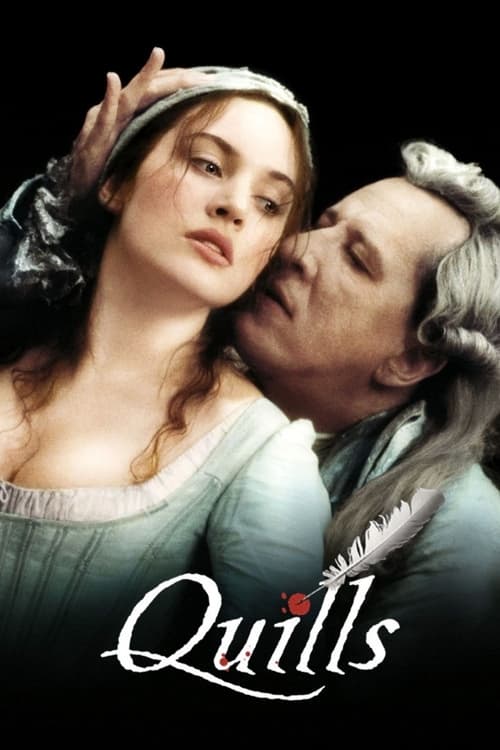
Quills
In early 19th-century France, the Marquis de Sade is confined to an asylum where his forbidden writings continue to circulate beyond its walls. As the authorities tighten control, a clash unfolds between the Marquis’ unyielding imagination, the reformist ideals of the Abbé in charge, and the repressive measures of a doctor sent to silence him. Desire, power, and censorship collide in a battle over freedom of expression.
Working with a limited budget of $13.5M, the film achieved a modest success with $18.0M in global revenue (+33% profit margin).
Nominated for 3 Oscars. 18 wins & 45 nominations


Plot Structure
Story beats plotted across runtime


Narrative Arc
Emotional journey through the story's key moments
Story Circle
Blueprint 15-beat structure
Arcplot Score Breakdown
Weighted: Precision (70%) + Arc (15%) + Theme (15%)
Quills (2000) reveals deliberately positioned plot construction, characteristic of Philip Kaufman's storytelling approach. This structural analysis examines how the film's 15-point plot structure maps to proven narrative frameworks across 2 hours and 4 minutes. With an Arcplot score of 6.8, the film balances conventional beats with creative variation.
Characters
Cast & narrative archetypes

Marquis de Sade
Abbé du Coulmier
Madeleine LeClerc
Dr. Royer-Collard
Simone
Main Cast & Characters
Marquis de Sade
Played by Geoffrey Rush
Imprisoned libertine author who continues writing scandalous works from the asylum
Abbé du Coulmier
Played by Joaquin Phoenix
Progressive priest who runs Charenton asylum and initially tolerates de Sade's writing
Madeleine LeClerc
Played by Kate Winslet
Young laundress at the asylum who smuggles de Sade's manuscripts to publishers
Dr. Royer-Collard
Played by Michael Caine
Brutal physician sent by Napoleon to silence de Sade through harsh treatment
Simone
Played by Amelia Warner
Dr. Royer-Collard's young bride trapped in a loveless marriage
Structural Analysis
The Status Quo at 1 minutes (1% through the runtime) establishes A woman is executed by guillotine in Revolutionary France, establishing the brutal world of censorship and punishment that awaits those who transgress societal norms.. Notably, this early placement immediately immerses viewers in the story world.
The inciting incident occurs at 15 minutes when Napoleon dispatches Dr. Royer-Collard to Charenton with orders to silence the Marquis de Sade permanently, threatening the delicate balance of freedom the asylum has maintained.. At 12% through the film, this Disruption aligns precisely with traditional story structure. This beat shifts the emotional landscape, launching the protagonist into the central conflict.
The First Threshold at 31 minutes marks the transition into Act II, occurring at 25% of the runtime. This shows the protagonist's commitment to The Abbé confiscates the Marquis's quills, ink, and paper on Royer-Collard's orders—the first direct suppression of his writing. Rather than submit, the Marquis declares he will find other means to write, choosing defiance over compliance., moving from reaction to action.
At 62 minutes, the Midpoint arrives at 50% of the runtime—precisely centered, creating perfect narrative symmetry. Notably, this crucial beat The Marquis's latest manuscript reaches the public and causes scandal. Royer-Collard escalates his punishments dramatically, stripping the Marquis's cell bare and removing all possible writing implements—a false defeat that only intensifies the battle., fundamentally raising what's at risk. The emotional intensity shifts, dividing the narrative into clear before-and-after phases.
The Collapse moment at 93 minutes (75% through) represents the emotional nadir. Here, Madeleine is murdered by a patient who was inflamed by the Marquis's stories passed through the asylum. The ultimate consequence of forbidden words—the death of the one person who believed in their power for liberation rather than destruction., illustrates the protagonist at their lowest point. This beat's placement in the final quarter sets up the climactic reversal.
The Second Threshold at 99 minutes initiates the final act resolution at 80% of the runtime. The Marquis has his tongue cut out on Royer-Collard's orders—the final attempt to silence him permanently. Even this mutilation cannot stop him; he swallows the crucifix used to comfort him, choosing death over silence., demonstrating the transformation achieved throughout the journey.
Emotional Journey
Quills's emotional architecture traces a deliberate progression across 15 carefully calibrated beats.
Narrative Framework
This structural analysis employs systematic plot point analysis that identifies crucial turning points. By mapping Quills against these established plot points, we can identify how Philip Kaufman utilizes or subverts traditional narrative conventions. The plot point approach reveals not only adherence to structural principles but also creative choices that distinguish Quills within the drama genre.
Philip Kaufman's Structural Approach
Among the 8 Philip Kaufman films analyzed on Arcplot, the average structural score is 7.0, demonstrating varied approaches to story architecture. Quills takes a more unconventional approach compared to the director's typical style. For comparative analysis, explore the complete Philip Kaufman filmography.
Comparative Analysis
Additional drama films include After Thomas, South Pacific and Dirty Dancing: Havana Nights. For more Philip Kaufman analyses, see The Wanderers, Henry & June and Invasion of the Body Snatchers.
Plot Points by Act
Act I
SetupStatus Quo
A woman is executed by guillotine in Revolutionary France, establishing the brutal world of censorship and punishment that awaits those who transgress societal norms.
Theme
The Abbé du Coulmier defends the Marquis's writing as therapeutic, stating that giving him the means to write keeps him docile—establishing the central debate over whether expression should be suppressed or allowed.
Worldbuilding
The Charenton asylum is established as a place of relative freedom under the Abbé's compassionate rule. The Marquis writes prolifically, Madeleine smuggles his manuscripts to a publisher, and Dr. Royer-Collard is introduced as a powerful hypocrite who preaches morality while purchasing a child bride.
Disruption
Napoleon dispatches Dr. Royer-Collard to Charenton with orders to silence the Marquis de Sade permanently, threatening the delicate balance of freedom the asylum has maintained.
Resistance
Royer-Collard arrives and begins his campaign against the Marquis. The Abbé attempts to negotiate between the doctor's demands and the Marquis's defiance. Madeleine's role as smuggler grows more dangerous as she becomes emotionally invested in the forbidden writings.
Act II
ConfrontationFirst Threshold
The Abbé confiscates the Marquis's quills, ink, and paper on Royer-Collard's orders—the first direct suppression of his writing. Rather than submit, the Marquis declares he will find other means to write, choosing defiance over compliance.
Mirror World
Madeleine's deepening connection with the Marquis is revealed as she reads his work aloud to the other laundresses. She embodies the theme—an ordinary person transformed and liberated by dangerous art, willing to risk everything for expression.
Premise
The Marquis finds increasingly creative ways to continue writing—using wine as ink, bed sheets as paper. The cat-and-mouse game between artistic freedom and authoritarian suppression plays out. Madeleine grows bolder in her smuggling. The Abbé is torn between his duty and his growing sympathy for the Marquis.
Midpoint
The Marquis's latest manuscript reaches the public and causes scandal. Royer-Collard escalates his punishments dramatically, stripping the Marquis's cell bare and removing all possible writing implements—a false defeat that only intensifies the battle.
Opposition
The Marquis resorts to writing with his own blood, then feces. Royer-Collard's cruelty intensifies. The Abbé's faith is tested as he witnesses the destruction of a human being in the name of morality. Madeleine's position becomes increasingly perilous as suspicion falls on her.
Collapse
Madeleine is murdered by a patient who was inflamed by the Marquis's stories passed through the asylum. The ultimate consequence of forbidden words—the death of the one person who believed in their power for liberation rather than destruction.
Crisis
The Marquis is consumed by guilt over Madeleine's death. The Abbé, shattered by the loss of the woman he secretly loved, must confront whether art and freedom are worth such terrible costs. Royer-Collard prepares the ultimate punishment.
Act III
ResolutionSecond Threshold
The Marquis has his tongue cut out on Royer-Collard's orders—the final attempt to silence him permanently. Even this mutilation cannot stop him; he swallows the crucifix used to comfort him, choosing death over silence.
Synthesis
The Marquis dies but his death transforms the Abbé. Royer-Collard's young wife, having read the Marquis's work, escapes her oppressive marriage. The asylum falls under harsher control, but the seeds of rebellion have been planted in unexpected places.
Transformation
The Abbé, once a gentle man of faith, has been corrupted into becoming the new Marquis—writing forbidden tales in the asylum's bowels. The cycle continues: censorship creates the very thing it seeks to destroy. Art cannot be killed.