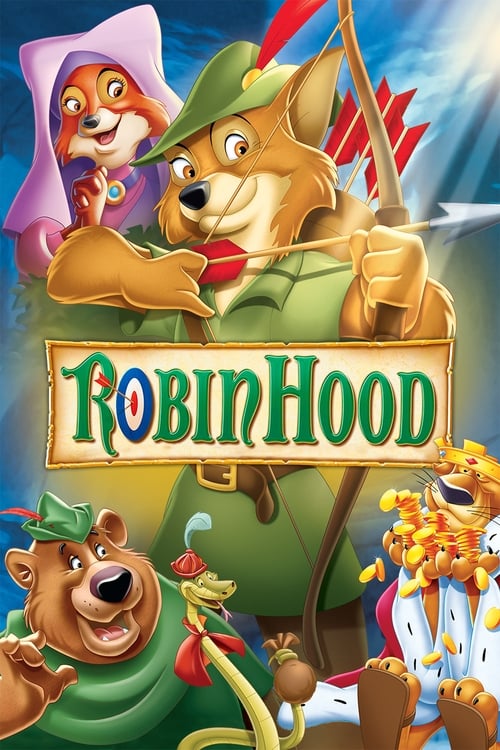
Robin Hood
With King Richard off to the Crusades, Prince John and his slithering minion, Sir Hiss, set about taxing Nottingham's citizens with support from the corrupt sheriff - and staunch opposition by the wily Robin Hood and his band of merry men.
Despite its tight budget of $5.0M, Robin Hood became a runaway success, earning $33.0M worldwide—a remarkable 560% return. The film's distinctive approach engaged audiences, proving that strong storytelling can transcend budget limitations.
Nominated for 1 Oscar. 1 win & 3 nominations


Plot Structure
Story beats plotted across runtime


Narrative Arc
Emotional journey through the story's key moments
Story Circle
Blueprint 15-beat structure
Arcplot Score Breakdown
Weighted: Precision (70%) + Arc (15%) + Theme (15%)
Robin Hood (1973) reveals strategically placed story structure, characteristic of Wolfgang Reitherman's storytelling approach. This structural analysis examines how the film's 15-point plot structure maps to proven narrative frameworks across 1 hour and 23 minutes. With an Arcplot score of 6.6, the film balances conventional beats with creative variation.
Characters
Cast & narrative archetypes

Robin Hood
Little John
Maid Marian
Prince John
Sir Hiss
Sheriff of Nottingham
Friar Tuck
Lady Kluck
Main Cast & Characters
Robin Hood
Played by Brian Bedford
A heroic fox who robs from the rich to give to the poor in Nottingham
Little John
Played by Phil Harris
Robin Hood's loyal bear companion and best friend
Maid Marian
Played by Monica Evans
A beautiful vixen and Robin Hood's childhood sweetheart
Prince John
Played by Peter Ustinov
The greedy, cowardly lion who rules tyrannically in King Richard's absence
Sir Hiss
Played by Terry-Thomas
Prince John's snake advisor and reluctant accomplice
Sheriff of Nottingham
Played by Pat Buttram
A wolf who serves as Prince John's chief enforcer and tax collector
Friar Tuck
Played by Andy Devine
A jovial badger and religious figure who supports Robin Hood
Lady Kluck
Played by Carole Shelley
Maid Marian's lady-in-waiting and protective chicken companion
Structural Analysis
The Status Quo at 1 minutes (1% through the runtime) establishes The rooster Alan-a-Dale introduces Nottingham under Prince John's oppressive rule, where the poor are taxed into poverty. Robin Hood and Little John live as outlaws in Sherwood Forest, robbing from the rich to give to the poor.. The analysis reveals that this early placement immediately immerses viewers in the story world.
The inciting incident occurs at 10 minutes when Prince John announces an archery tournament with a golden arrow and a kiss from Maid Marian as prizes. This is clearly a trap to capture Robin Hood, raising the stakes and creating danger.. At 12% through the film, this Disruption aligns precisely with traditional story structure. This beat shifts the emotional landscape, launching the protagonist into the central conflict.
The First Threshold at 20 minutes marks the transition into Act II, occurring at 25% of the runtime. This reveals the protagonist's commitment to Robin Hood actively chooses to enter the archery tournament in disguise, fully aware it's a trap. This decision commits him to direct confrontation with Prince John and pursuit of Marian, entering the world of Act 2., moving from reaction to action.
At 42 minutes, the Midpoint arrives at 51% of the runtime—precisely centered, creating perfect narrative symmetry. Of particular interest, this crucial beat False victory: After successfully robbing Prince John's castle and humiliating him, Robin and his men celebrate with the townspeople. Robin and Marian declare their love. Everything seems wonderful, but this success enrages Prince John and raises the stakes dramatically., fundamentally raising what's at risk. The emotional intensity shifts, dividing the narrative into clear before-and-after phases.
The Collapse moment at 61 minutes (74% through) represents the emotional nadir. Here, Friar Tuck is sentenced to hang as bait for Robin Hood. The trap is set, and if Robin tries to save him, he will die. If he doesn't, his friend dies and he's a coward. The people have lost all hope. This is Robin's darkest moment—his rebellion has led to a death sentence for his friend., reveals the protagonist at their lowest point. This beat's placement in the final quarter sets up the climactic reversal.
The Second Threshold at 66 minutes initiates the final act resolution at 79% of the runtime. Robin devises a plan to infiltrate the castle during the night of the execution, combining his outlaw skills with Little John's strength and bravery. He chooses to risk everything to save Friar Tuck and free the prisoners, synthesizing courage with strategy., demonstrating the transformation achieved throughout the journey.
Emotional Journey
Robin Hood's emotional architecture traces a deliberate progression across 15 carefully calibrated beats.
Narrative Framework
This structural analysis employs structural analysis methodology used to understand storytelling architecture. By mapping Robin Hood against these established plot points, we can identify how Wolfgang Reitherman utilizes or subverts traditional narrative conventions. The plot point approach reveals not only adherence to structural principles but also creative choices that distinguish Robin Hood within the animation genre.
Wolfgang Reitherman's Structural Approach
Among the 5 Wolfgang Reitherman films analyzed on Arcplot, the average structural score is 6.8, demonstrating varied approaches to story architecture. Robin Hood takes a more unconventional approach compared to the director's typical style. For comparative analysis, explore the complete Wolfgang Reitherman filmography.
Comparative Analysis
Additional animation films include The Bad Guys, Puss in Boots and Violet Evergarden: Eternity and the Auto Memory Doll. For more Wolfgang Reitherman analyses, see The Rescuers, The Aristocats and The Jungle Book.
Plot Points by Act
Act I
SetupStatus Quo
The rooster Alan-a-Dale introduces Nottingham under Prince John's oppressive rule, where the poor are taxed into poverty. Robin Hood and Little John live as outlaws in Sherwood Forest, robbing from the rich to give to the poor.
Theme
Friar Tuck states the theme when discussing Prince John's greed: "Robin Hood and his merry men are the only hope we have." The story explores how generosity and courage triumph over greed and tyranny.
Worldbuilding
Establishment of Nottingham's suffering under Prince John's excessive taxation, introduction of Robin and Little John's partnership, and Prince John's character as a greedy, insecure tyrant who sucks his thumb when anxious. The Sheriff of Nottingham enforces the cruel tax collection.
Disruption
Prince John announces an archery tournament with a golden arrow and a kiss from Maid Marian as prizes. This is clearly a trap to capture Robin Hood, raising the stakes and creating danger.
Resistance
Robin debates whether to enter the tournament despite knowing it's a trap. Little John warns him of the danger. Robin learns Maid Marian still loves him from childhood, motivating his decision. He disguises himself as a stork to attend.
Act II
ConfrontationFirst Threshold
Robin Hood actively chooses to enter the archery tournament in disguise, fully aware it's a trap. This decision commits him to direct confrontation with Prince John and pursuit of Marian, entering the world of Act 2.
Mirror World
Robin reconnects with Maid Marian during the tournament. Their romantic subplot represents the thematic opposite of Prince John's selfishness—true love and selfless devotion. Marian embodies what Robin is fighting for beyond material wealth.
Premise
The "fun and games" of Robin Hood's adventures: winning the archery tournament, being exposed and nearly captured, escaping with Little John's help, romantic scenes with Marian, robbing Prince John in his own castle while he sleeps, and continued outwitting of the authorities.
Midpoint
False victory: After successfully robbing Prince John's castle and humiliating him, Robin and his men celebrate with the townspeople. Robin and Marian declare their love. Everything seems wonderful, but this success enrages Prince John and raises the stakes dramatically.
Opposition
Prince John triples the taxes in revenge, imprisoning those who cannot pay, including Friar Tuck. The Sheriff seizes the single farthing from the church's poor box. Nottingham becomes a prison town. Robin's actions have inadvertently made things worse for the people he's trying to help.
Collapse
Friar Tuck is sentenced to hang as bait for Robin Hood. The trap is set, and if Robin tries to save him, he will die. If he doesn't, his friend dies and he's a coward. The people have lost all hope. This is Robin's darkest moment—his rebellion has led to a death sentence for his friend.
Crisis
Robin processes the impossible situation. The people of Nottingham despair in their prison cells. Little John and Robin must decide whether to attempt a suicide rescue mission. The emotional weight of the consequences of their rebellion settles in.
Act III
ResolutionSecond Threshold
Robin devises a plan to infiltrate the castle during the night of the execution, combining his outlaw skills with Little John's strength and bravery. He chooses to risk everything to save Friar Tuck and free the prisoners, synthesizing courage with strategy.
Synthesis
The finale: Robin and Little John sneak into the castle, free the prisoners, rescue Friar Tuck from the gallows, reclaim the tax money, engage in a climactic chase and battle through the burning castle, and escape. Prince John is defeated and humiliated. King Richard returns to restore justice.
Transformation
King Richard has returned and pardoned Robin Hood. Robin and Marian are married in a joyous ceremony with all their friends. The outlaw has become a hero and husband. Nottingham is free and prosperous again. Love and generosity have triumphed over greed and tyranny.