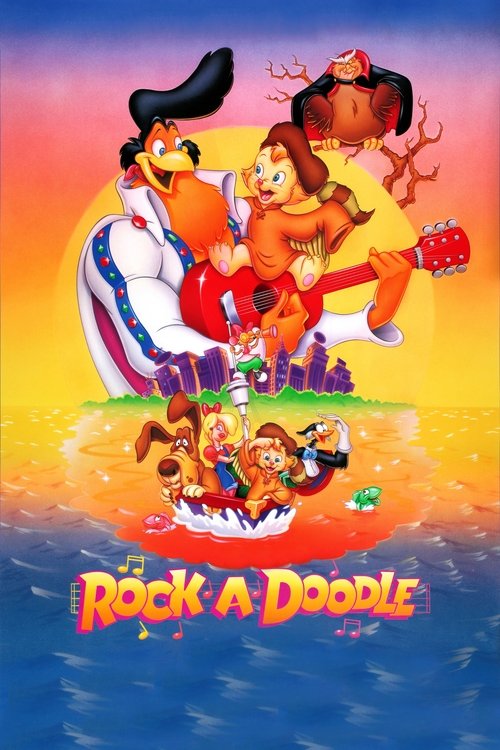
Rock-A-Doodle
Chanticleer is a foolhardy farm rooster who believes his crows can actually make the sun come up and shine. When the sun rises one morning without Chanticleer's crow, he leaves the farm in disgrace and runs off to become a rock 'n' roll singer. But in his absence, a sinister, sunshine-hating owl prepares to take over.
The film disappointed at the box office against its mid-range budget of $18.0M, earning $11.7M globally (-35% loss). While initial box office returns were modest, the film has gained appreciation for its fresh perspective within the comedy genre.


Plot Structure
Story beats plotted across runtime


Narrative Arc
Emotional journey through the story's key moments
Story Circle
Blueprint 15-beat structure
Arcplot Score Breakdown
Weighted: Precision (70%) + Arc (15%) + Theme (15%)
Rock-A-Doodle (1991) reveals precise dramatic framework, characteristic of Don Bluth's storytelling approach. This structural analysis examines how the film's 15-point plot structure maps to proven narrative frameworks across 1 hour and 17 minutes. With an Arcplot score of 7.0, the film balances conventional beats with creative variation.
Characters
Cast & narrative archetypes

Chanticleer
Edmond
The Grand Duke of Owls
Goldie
Patou
Peepers
Snipes
Main Cast & Characters
Chanticleer
Played by Glen Campbell
A rooster who believes his crow makes the sun rise, exiled from the farm and becomes an Elvis-style rock star in the city.
Edmond
Played by Toby Scott Ganger
A young boy transformed into a kitten who leads the mission to bring Chanticleer back to save the farm from perpetual darkness.
The Grand Duke of Owls
Played by Christopher Plummer
The villainous owl who wants to keep the world in darkness so owls can rule, and who exiled Chanticleer from the farm.
Goldie
Played by Ellen Greene
A kind-hearted pheasant showgirl who works in the city and becomes Chanticleer's love interest and ally.
Patou
Played by Phil Harris
A loyal basset hound and narrator of the story who accompanies Edmond on the quest to find Chanticleer.
Peepers
Played by Sandy Duncan
A small, nervous mouse who joins the quest to bring back Chanticleer despite his fearful nature.
Snipes
Played by Eddie Deezen
A comical magpie who provides comic relief and joins the group on their journey to the city.
Structural Analysis
The Status Quo at 1 minutes (1% through the runtime) establishes Edmond, a young boy on a farm, narrates the story of Chanticleer the rooster who believes his crow makes the sun rise each morning. The farm is peaceful and orderly under Chanticleer's daily ritual.. The analysis reveals that this early placement immediately immerses viewers in the story world.
The inciting incident occurs at 9 minutes when Chanticleer leaves the farm in disgrace after the sun rises without his crow, and perpetual darkness and rain begin, proving his crow did matter. The Grand Duke takes control and flooding threatens the farm.. At 12% through the film, this Disruption aligns precisely with traditional story structure. This beat shifts the emotional landscape, launching the protagonist into the central conflict.
The First Threshold at 19 minutes marks the transition into Act II, occurring at 25% of the runtime. This demonstrates the protagonist's commitment to Edmond and his animal friends set off on their journey to the city to find Chanticleer, leaving the flooded farm behind despite the dangers ahead., moving from reaction to action.
At 40 minutes, the Midpoint arrives at 52% of the runtime—precisely centered, creating perfect narrative symmetry. Structural examination shows that this crucial beat Edmond and friends finally reach Chanticleer and reveal the farm is flooding and needs him. Chanticleer begins to remember who he really is, and Goldie switches sides completely, helping them escape from Pinky and the Duke's forces., fundamentally raising what's at risk. The emotional intensity shifts, dividing the narrative into clear before-and-after phases.
The Collapse moment at 57 minutes (74% through) represents the emotional nadir. Here, The Grand Duke captures Edmond and begins to drown him, while Chanticleer is paralyzed by fear and self-doubt. Edmond appears to die (loses consciousness underwater), and Chanticleer hits his lowest point of despair and helplessness., illustrates the protagonist at their lowest point. This beat's placement in the final quarter sets up the climactic reversal.
The Second Threshold at 61 minutes initiates the final act resolution at 79% of the runtime. Chanticleer finds his voice and courage again, realizing his crow does have power when combined with genuine belief. He prepares to crow with conviction, understanding his true purpose., demonstrating the transformation achieved throughout the journey.
Emotional Journey
Rock-A-Doodle's emotional architecture traces a deliberate progression across 15 carefully calibrated beats.
Narrative Framework
This structural analysis employs a 15-point narrative structure framework that maps key story moments. By mapping Rock-A-Doodle against these established plot points, we can identify how Don Bluth utilizes or subverts traditional narrative conventions. The plot point approach reveals not only adherence to structural principles but also creative choices that distinguish Rock-A-Doodle within the comedy genre.
Don Bluth's Structural Approach
Among the 8 Don Bluth films analyzed on Arcplot, the average structural score is 7.1, reflecting strong command of classical structure. Rock-A-Doodle takes a more unconventional approach compared to the director's typical style. For comparative analysis, explore the complete Don Bluth filmography.
Comparative Analysis
Additional comedy films include The Bad Guys, Ella Enchanted and The Evening Star. For more Don Bluth analyses, see The Land Before Time, Thumbelina and The Secret of NIMH.
Plot Points by Act
Act I
SetupStatus Quo
Edmond, a young boy on a farm, narrates the story of Chanticleer the rooster who believes his crow makes the sun rise each morning. The farm is peaceful and orderly under Chanticleer's daily ritual.
Theme
Edmond's mother speaks about the importance of believing in yourself and not letting others make you doubt what you know is true, foreshadowing Chanticleer's journey of lost confidence.
Worldbuilding
Establishment of the farm world where animals depend on Chanticleer's crow. The Grand Duke (owl villain) appears and orchestrates a fight to humiliate Chanticleer. When the sun rises without his crow, Chanticleer is mocked and leaves the farm in shame.
Disruption
Chanticleer leaves the farm in disgrace after the sun rises without his crow, and perpetual darkness and rain begin, proving his crow did matter. The Grand Duke takes control and flooding threatens the farm.
Resistance
Edmond decides someone must bring Chanticleer back. The Grand Duke transforms Edmond into a kitten to stop him. Edmond meets Patou the dog, Snipes the mouse, and Peepers the hen who agree to help find Chanticleer in the city.
Act II
ConfrontationFirst Threshold
Edmond and his animal friends set off on their journey to the city to find Chanticleer, leaving the flooded farm behind despite the dangers ahead.
Mirror World
The group arrives in the city and discovers Chanticleer has become "The King," a famous Elvis-like rock star. They encounter Goldie, a showgirl pheasant who becomes their guide and represents a world of glamour that has seduced Chanticleer away from his true purpose.
Premise
The group navigates the city trying to reach Chanticleer while being hunted by the Duke's nephews. Goldie is initially working for the villain but begins to care for the group. Chanticleer is caught up in fame and controlled by his manipulative manager Pinky.
Midpoint
Edmond and friends finally reach Chanticleer and reveal the farm is flooding and needs him. Chanticleer begins to remember who he really is, and Goldie switches sides completely, helping them escape from Pinky and the Duke's forces.
Opposition
The Grand Duke intensifies his pursuit, capturing the group multiple times. Chanticleer wavers in his belief that he can actually make the sun rise. The farm continues flooding and Edmond's real body (human boy) is shown dying from the flood waters.
Collapse
The Grand Duke captures Edmond and begins to drown him, while Chanticleer is paralyzed by fear and self-doubt. Edmond appears to die (loses consciousness underwater), and Chanticleer hits his lowest point of despair and helplessness.
Crisis
Chanticleer mourns Edmond and processes his failure. Goldie and the others encourage him, helping him realize that belief in himself is what matters, not what others think. Edmond revives slightly, giving Chanticleer renewed determination.
Act III
ResolutionSecond Threshold
Chanticleer finds his voice and courage again, realizing his crow does have power when combined with genuine belief. He prepares to crow with conviction, understanding his true purpose.
Synthesis
Chanticleer crows with all his heart, and the sun breaks through the darkness, destroying the Grand Duke's power. The farm is saved, the floods recede, and Edmond is restored to his human form, healed and safe.
Transformation
Edmond wakes up as a boy in his bed, the storm passed and sun shining. Chanticleer is back on the farm crowing proudly. Edmond has learned the power of belief, and Chanticleer has reclaimed his authentic purpose over hollow fame.