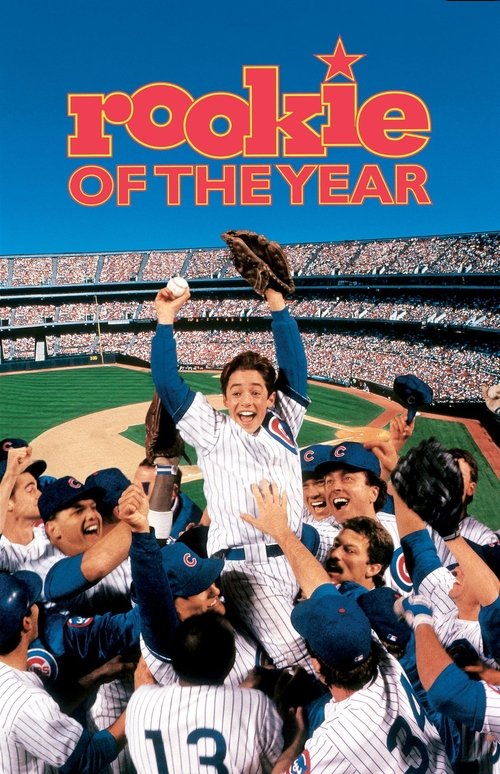
Rookie of the Year
12-year-old Henry Rowengartner, whose late father was a minor league baseball player, grew up dreaming of playing baseball, despite his physical shortcomings. After Henry's arm is broken while trying to catch a baseball at school, the tendon in that arm heals too tightly, allowing Henry to throw pitches that are as fast as 103 mph. Henry is spotted at nearby Wrigley Field by Larry "Fish" Fisher, the general manager of the struggling Chicago Cubs, after Henry throws an opponent's home-run ball all the way from the outfield bleachers back to the catcher, and it seems that Henry may be the pitcher that team owner Bob Carson has been praying for.
Working with a moderate budget of $31.0M, the film achieved a steady performer with $56.5M in global revenue (+82% profit margin).
1 win & 1 nomination


Plot Structure
Story beats plotted across runtime


Narrative Arc
Emotional journey through the story's key moments
Story Circle
Blueprint 15-beat structure
Arcplot Score Breakdown
Weighted: Precision (70%) + Arc (15%) + Theme (15%)
Rookie of the Year (1993) demonstrates deliberately positioned dramatic framework, characteristic of Daniel Stern's storytelling approach. This structural analysis examines how the film's 15-point plot structure maps to proven narrative frameworks across 1 hour and 43 minutes. With an Arcplot score of 7.4, the film balances conventional beats with creative variation.
Characters
Cast & narrative archetypes

Henry Rowengartner
Chet Steadman
Mary Rowengartner
Jack Bradfield
Sal Martinella
Cliff Murdoch
George Fisher
Main Cast & Characters
Henry Rowengartner
Played by Thomas Ian Nicholas
A 12-year-old Little League player who breaks his arm and gains the ability to pitch at incredible speeds after it heals.
Chet Steadman
Played by Gary Busey
The aging Chicago Cubs pitcher who becomes Henry's mentor and friend, struggling with his own decline.
Mary Rowengartner
Played by Amy Morton
Henry's loving single mother who supports her son while navigating her own romantic life.
Jack Bradfield
Played by Bruce Altman
Henry's sleazy stepfather-to-be who tries to exploit Henry's talent for personal gain.
Sal Martinella
Played by Dan Hedaya
The gruff but caring manager of the Chicago Cubs who takes a chance on Henry.
Cliff Murdoch
Played by Robert Gorman
Henry's best friend and fellow Little League player who supports him throughout his journey.
George Fisher
Played by Eddie Bracken
The Cubs pitching coach who works with Henry and provides guidance.
Structural Analysis
The Status Quo at 1 minutes (1% through the runtime) establishes Henry is a clumsy Little League player who can't catch or throw, embarrassing himself in front of his team and his mother. He's a typical kid who loves baseball but has no natural talent.. Significantly, this early placement immediately immerses viewers in the story world.
The inciting incident occurs at 12 minutes when Henry breaks his arm trying to catch a fly ball, sliding into home base in a freak accident. This catastrophic injury seems to end his baseball season and dreams.. At 12% through the film, this Disruption aligns precisely with traditional story structure. This beat shifts the emotional landscape, launching the protagonist into the central conflict.
The First Threshold at 26 minutes marks the transition into Act II, occurring at 25% of the runtime. This reveals the protagonist's commitment to Henry actively chooses to try out for the Chicago Cubs. He throws at the tryout and amazes everyone, getting signed to a major league contract. He crosses from childhood into the adult world of professional baseball., moving from reaction to action.
At 52 minutes, the Midpoint arrives at 51% of the runtime—precisely centered, creating perfect narrative symmetry. The analysis reveals that this crucial beat Henry leads the Cubs into playoff contention with a spectacular save or win. The stakes raise as the team now depends on him. False victory: he's a hero but the pressure intensifies and his arm starts hurting., fundamentally raising what's at risk. The emotional intensity shifts, dividing the narrative into clear before-and-after phases.
The Collapse moment at 78 minutes (76% through) represents the emotional nadir. Here, Henry's arm gives out or he has a catastrophic failure on the mound in a crucial game. His "magic" is dying, his dream is collapsing, and he realizes he may have lost himself in the process. The death of his miracle., indicates the protagonist at their lowest point. This beat's placement in the final quarter sets up the climactic reversal.
The Second Threshold at 83 minutes initiates the final act resolution at 81% of the runtime. Henry has a revelation (possibly through Chet or his mom): he doesn't need to be perfect, he just needs to be himself and give his best. He decides to pitch the final game not as a miracle worker but as a kid who loves baseball., demonstrating the transformation achieved throughout the journey.
Emotional Journey
Rookie of the Year's emotional architecture traces a deliberate progression across 15 carefully calibrated beats.
Narrative Framework
This structural analysis employs structural analysis methodology used to understand storytelling architecture. By mapping Rookie of the Year against these established plot points, we can identify how Daniel Stern utilizes or subverts traditional narrative conventions. The plot point approach reveals not only adherence to structural principles but also creative choices that distinguish Rookie of the Year within the family genre.
Comparative Analysis
Additional family films include The Black Stallion, The Bad Guys and Ella Enchanted.
Plot Points by Act
Act I
SetupStatus Quo
Henry is a clumsy Little League player who can't catch or throw, embarrassing himself in front of his team and his mother. He's a typical kid who loves baseball but has no natural talent.
Theme
Henry's coach or a friend mentions "it's not about being the best, it's about having fun and doing your best" - establishing the theme about authenticity versus performance pressure.
Worldbuilding
We see Henry's ordinary life: his relationship with his single mom, his best friends, his love of the Cubs despite his lack of skill, and his struggles at school and on the field. His stepfather-to-be is introduced.
Disruption
Henry breaks his arm trying to catch a fly ball, sliding into home base in a freak accident. This catastrophic injury seems to end his baseball season and dreams.
Resistance
Henry's arm is in a cast and healing. When the cast comes off, he discovers his tendons healed too tight, giving him a supernatural fastball. He debates what to do with this ability, tests it out, and word spreads.
Act II
ConfrontationFirst Threshold
Henry actively chooses to try out for the Chicago Cubs. He throws at the tryout and amazes everyone, getting signed to a major league contract. He crosses from childhood into the adult world of professional baseball.
Mirror World
Henry meets veteran pitcher Chet "Rocket" Steadman, a cynical has-been who becomes his reluctant mentor. Chet represents what Henry could become if he loses his love of the game - the thematic mirror.
Premise
The "fun and games" of a 12-year-old playing major league baseball. Henry gets his first saves, becomes a media sensation, deals with fame, hangs out with the team, and experiences the excitement of living his dream.
Midpoint
Henry leads the Cubs into playoff contention with a spectacular save or win. The stakes raise as the team now depends on him. False victory: he's a hero but the pressure intensifies and his arm starts hurting.
Opposition
The pressure mounts as the Cubs push toward the playoffs. Henry's arm deteriorates, his sleazy advisor manipulates him, opposing teams target his weakness, and he struggles to balance being a kid with adult responsibilities. He alienates friends and family.
Collapse
Henry's arm gives out or he has a catastrophic failure on the mound in a crucial game. His "magic" is dying, his dream is collapsing, and he realizes he may have lost himself in the process. The death of his miracle.
Crisis
Henry faces the dark reality: his arm is failing, he might be done, and he's become someone he doesn't recognize. He reflects on what matters - the love of the game versus the pressure to perform. Emotional reckoning.
Act III
ResolutionSecond Threshold
Henry has a revelation (possibly through Chet or his mom): he doesn't need to be perfect, he just needs to be himself and give his best. He decides to pitch the final game not as a miracle worker but as a kid who loves baseball.
Synthesis
The championship game finale. Henry pitches with heart despite his failing arm, using strategy and courage instead of just raw power. The team rallies around him. He synthesizes the lessons from Chet, his natural talent, and his authentic love of the game.
Transformation
Henry, back in Little League or throwing with friends, demonstrates he's still the same kid but now with confidence and wisdom. He's learned that being true to yourself matters more than being a star. His transformation is internal, not about the magic arm.