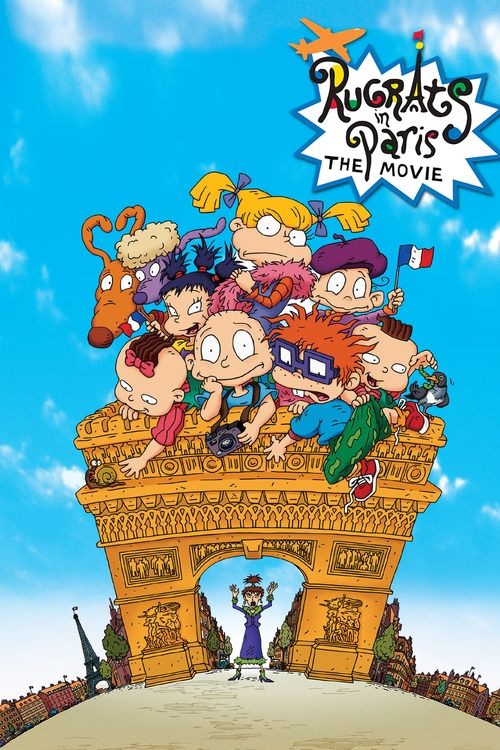
Rugrats in Paris: The Movie
A group of rambunctious toddlers travel a trip to Paris. As they journey from the Eiffel Tower to Notre Dame, they learn new lessons about trust, loyalty and love.
Despite a moderate budget of $30.0M, Rugrats in Paris: The Movie became a commercial success, earning $103.3M worldwide—a 244% return.
3 wins & 7 nominations


Plot Structure
Story beats plotted across runtime


Narrative Arc
Emotional journey through the story's key moments
Story Circle
Blueprint 15-beat structure
Arcplot Score Breakdown
Weighted: Precision (70%) + Arc (15%) + Theme (15%)
Rugrats in Paris: The Movie (2000) exhibits carefully calibrated dramatic framework, characteristic of Stig Bergqvist's storytelling approach. This structural analysis examines how the film's 15-point plot structure maps to proven narrative frameworks across 1 hour and 19 minutes. With an Arcplot score of 7.5, the film showcases strong structural fundamentals.
Characters
Cast & narrative archetypes

Chuckie Finster
Tommy Pickles
Chas Finster
Coco LaBouche
Kira Watanabe
Angelica Pickles
Kimi Watanabe
Phil DeVille
Lil DeVille
Dil Pickles
Main Cast & Characters
Chuckie Finster
Played by Christine Cavanaugh
A nervous, anxious toddler who longs for a mother and must overcome his fears during the Paris adventure
Tommy Pickles
Played by E.G. Daily
The brave leader of the Rugrats who helps his best friend Chuckie find a new mom
Chas Finster
Played by Michael Bell
Chuckie's widowed father who travels to Paris and falls for the wrong woman before finding true love
Coco LaBouche
Played by Susan Sarandon
The manipulative, child-hating head of EuroReptarland who schemes to marry Chas to become president
Kira Watanabe
Played by Julia Kato
Coco's kind assistant and Kimi's mother who ultimately becomes Chas's true love
Angelica Pickles
Played by Cheryl Chase
Tommy's bratty cousin who initially helps Coco but ultimately exposes her villainy
Kimi Watanabe
Played by Dionne Quan
Kira's adventurous daughter who befriends the Rugrats and becomes Chuckie's stepsister
Phil DeVille
Played by Kath Soucie
One of the adventurous twins who accompanies the gang on their Paris adventure
Lil DeVille
Played by Kath Soucie
Phil's twin sister, equally adventurous and mischievous
Dil Pickles
Played by Tara Strong
Tommy's baby brother who tags along on the adventure
Structural Analysis
The Status Quo at 1 minutes (1% through the runtime) establishes The babies watch a Reptar movie at the local theater. Chuckie becomes upset during the "Reptar wedding" scene, highlighting his longing for a mother and Chas's single-parent status.. Notably, this early placement immediately immerses viewers in the story world.
The inciting incident occurs at 10 minutes when Stu receives the call inviting him to Paris to repair the Reptar robot at EuroReptarland. This opportunity disrupts their ordinary world and sets the adventure in motion.. At 12% through the film, this Disruption aligns precisely with traditional story structure. This beat shifts the emotional landscape, launching the protagonist into the central conflict.
The First Threshold at 18 minutes marks the transition into Act II, occurring at 23% of the runtime. This indicates the protagonist's commitment to The families arrive at EuroReptarland and enter the theme park. Chas meets Coco LaBouche for the first time. The babies enter the new world of the French theme park, beginning their adventure in earnest., moving from reaction to action.
At 38 minutes, the Midpoint arrives at 49% of the runtime—precisely centered, creating perfect narrative symmetry. Of particular interest, this crucial beat False defeat: Coco manipulates Chas into believing she loves children and cares about Chuckie. Chas proposes marriage to Coco. Chuckie is devastated because he knows Coco is not genuine, but his father won't listen. Stakes are raised., fundamentally raising what's at risk. The emotional intensity shifts, dividing the narrative into clear before-and-after phases.
The Collapse moment at 58 minutes (73% through) represents the emotional nadir. Here, The wedding begins and Chas is about to marry Coco. Chuckie feels completely helpless and abandoned. The babies' efforts seem to have failed. The metaphorical "death" of Chuckie's hope for a real mother and Chas's chance at true love., reveals the protagonist at their lowest point. This beat's placement in the final quarter sets up the climactic reversal.
The Second Threshold at 63 minutes initiates the final act resolution at 80% of the runtime. Chuckie finds his voice and stops the wedding, declaring that Coco is not nice and doesn't love them. Angelica reveals Coco's true nature by playing a recording of her cruelty. Truth is revealed, giving everyone clarity to act., demonstrating the transformation achieved throughout the journey.
Emotional Journey
Rugrats in Paris: The Movie's emotional architecture traces a deliberate progression across 15 carefully calibrated beats.
Narrative Framework
This structural analysis employs structural analysis methodology used to understand storytelling architecture. By mapping Rugrats in Paris: The Movie against these established plot points, we can identify how Stig Bergqvist utilizes or subverts traditional narrative conventions. The plot point approach reveals not only adherence to structural principles but also creative choices that distinguish Rugrats in Paris: The Movie within the family genre.
Comparative Analysis
Additional family films include The Black Stallion, The Bad Guys and Ella Enchanted.
Plot Points by Act
Act I
SetupStatus Quo
The babies watch a Reptar movie at the local theater. Chuckie becomes upset during the "Reptar wedding" scene, highlighting his longing for a mother and Chas's single-parent status.
Theme
Chuckie expresses his wish for a new mommy. Chas comforts him, establishing the film's central theme: the importance of finding family and love, even when it means taking risks and being vulnerable.
Worldbuilding
Introduction to the characters' daily lives in Southern California. Chas struggles as a single father. Stu is invited to fix a giant Reptar robot at EuroReptarland theme park in Paris. The families' dynamics and relationships are established.
Disruption
Stu receives the call inviting him to Paris to repair the Reptar robot at EuroReptarland. This opportunity disrupts their ordinary world and sets the adventure in motion.
Resistance
The families prepare for and travel to Paris. Chuckie continues to search for a new mother. The babies explore the airplane and arrive in France. Stu prepares to work on the Reptar robot while the families settle in.
Act II
ConfrontationFirst Threshold
The families arrive at EuroReptarland and enter the theme park. Chas meets Coco LaBouche for the first time. The babies enter the new world of the French theme park, beginning their adventure in earnest.
Mirror World
Introduction of Kira, the kind-hearted theme park employee, and her daughter Kimi. Kira represents genuine maternal love and authentic connection, contrasting with the villain Coco. She embodies the true theme of family.
Premise
The babies explore EuroReptarland and have adventures throughout Paris. Chuckie searches for a new mom. Coco LaBouche schemes to marry Chas to become president of the company. The fun and spectacle of Paris and the theme park.
Midpoint
False defeat: Coco manipulates Chas into believing she loves children and cares about Chuckie. Chas proposes marriage to Coco. Chuckie is devastated because he knows Coco is not genuine, but his father won't listen. Stakes are raised.
Opposition
Wedding preparations begin. Coco's true cruel nature becomes increasingly apparent. The babies try to stop the wedding. Kira is torn between keeping her job and doing what's right. Pressure intensifies as the wedding day approaches.
Collapse
The wedding begins and Chas is about to marry Coco. Chuckie feels completely helpless and abandoned. The babies' efforts seem to have failed. The metaphorical "death" of Chuckie's hope for a real mother and Chas's chance at true love.
Crisis
Chuckie must find the courage to speak up. The babies rally together. The darkest moment before the breakthrough where Chuckie realizes he must be brave and tell his father the truth, even though he's scared.
Act III
ResolutionSecond Threshold
Chuckie finds his voice and stops the wedding, declaring that Coco is not nice and doesn't love them. Angelica reveals Coco's true nature by playing a recording of her cruelty. Truth is revealed, giving everyone clarity to act.
Synthesis
Chas calls off the wedding. Coco is exposed and fired. Chas realizes Kira is the one who truly cares for them. Kira and Chas connect authentically. The families celebrate together. Resolution of all plot threads.
Transformation
Final image mirrors the opening: Chuckie now has a mother (Kira) and a sister (Kimi). The family is complete and whole. Chuckie has transformed from a scared child longing for a mother to a brave boy who found his voice and his family.