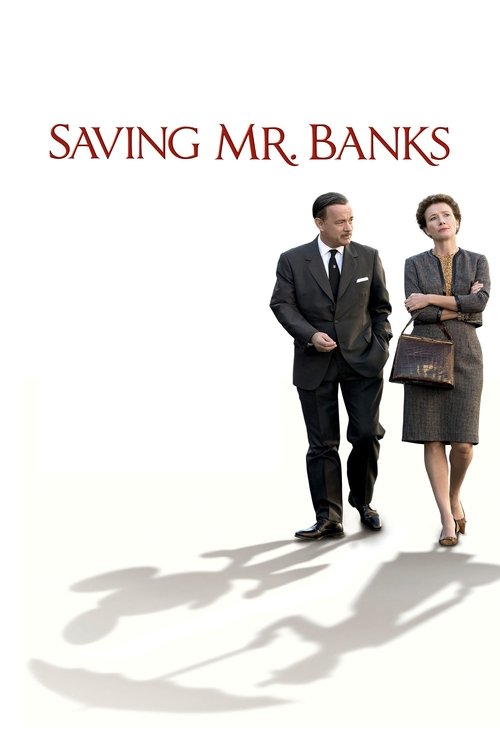
Saving Mr. Banks
Author P.L. Travers looks back on her childhood while reluctantly meeting with Walt Disney, who seeks to adapt her Mary Poppins books for the big screen.
Despite a moderate budget of $35.0M, Saving Mr. Banks became a financial success, earning $112.5M worldwide—a 222% return.
Nominated for 1 Oscar. 13 wins & 74 nominations


Plot Structure
Story beats plotted across runtime


Narrative Arc
Emotional journey through the story's key moments
Story Circle
Blueprint 15-beat structure
Arcplot Score Breakdown
Weighted: Precision (70%) + Arc (15%) + Theme (15%)
Saving Mr. Banks (2013) showcases deliberately positioned story structure, characteristic of John Lee Hancock's storytelling approach. This structural analysis examines how the film's 15-point plot structure maps to proven narrative frameworks across 2 hours and 6 minutes. With an Arcplot score of 6.4, the film takes an unconventional approach to traditional narrative frameworks.
Characters
Cast & narrative archetypes

P.L. Travers
Walt Disney
Travers Goff
Ralph
Don DaGradi
Robert Sherman
Richard Sherman
Margaret Goff
Aunt Ellie
Main Cast & Characters
P.L. Travers
Played by Emma Thompson
The prickly, uncompromising author of Mary Poppins who reluctantly travels to Los Angeles to discuss Disney's film adaptation while protecting her creation and confronting her painful past.
Walt Disney
Played by Tom Hanks
The charming and persistent studio mogul who promised his daughters he would adapt Mary Poppins and refuses to give up despite Travers' resistance.
Travers Goff
Played by Colin Farrell
P.L. Travers' beloved but deeply flawed alcoholic father in 1906 Australia, whose imaginative spirit and tragic decline inspired Mary Poppins.
Ralph
Played by Paul Giamatti
The patient and good-natured Los Angeles chauffeur assigned to drive Travers during her stay, who becomes an unexpected friend.
Don DaGradi
Played by Bradley Whitford
The affable Disney screenwriter tasked with adapting Mary Poppins, who bears the brunt of Travers' critical feedback during story sessions.
Robert Sherman
Played by B.J. Novak
One half of the Sherman Brothers songwriting team, who works to create music for Mary Poppins while navigating Travers' exacting standards.
Richard Sherman
Played by Jason Schwartzman
The other half of the Sherman Brothers, who composes songs for Mary Poppins and helps bridge the creative gap with Travers.
Margaret Goff
Played by Ruth Wilson
P.L. Travers' mother in 1906 Australia, who struggles with depression and her husband's alcoholism, nearly taking her own life.
Aunt Ellie
Played by Rachel Griffiths
The stern, no-nonsense great-aunt who arrives to save the Goff family and becomes the basis for Mary Poppins.
Structural Analysis
The Status Quo at 1 minutes (1% through the runtime) establishes Young Ginty (P.L. Travers) runs through the Australian countryside calling for her father, intercut with adult Travers in London, isolated and rigid. Establishes her deep attachment to her father and her present emotional guardedness.. Significantly, this early placement immediately immerses viewers in the story world.
The inciting incident occurs at 15 minutes when Travers finally agrees to travel to Los Angeles to meet Walt Disney after twenty years of refusing, driven by financial necessity. She makes clear this is not permission to make the film—just a meeting. Her controlled world is about to be invaded.. At 12% through the film, this Disruption aligns precisely with traditional story structure. This beat shifts the emotional landscape, launching the protagonist into the central conflict.
The First Threshold at 32 minutes marks the transition into Act II, occurring at 25% of the runtime. This illustrates the protagonist's commitment to Travers enters the studio conference room and begins working with the Sherman Brothers and screenwriter Don DaGradi. She insists on recording every session. By sitting down to work, she's actively chosen to engage with the process, however reluctantly., moving from reaction to action.
At 63 minutes, the Midpoint arrives at 50% of the runtime—precisely centered, creating perfect narrative symmetry. Of particular interest, this crucial beat Travers finally allows herself to enjoy "Let's Go Fly a Kite," tapping her foot and nearly smiling. It's a false victory—a moment of genuine connection with the creative team—but she hasn't yet confronted why she's really fighting. The walls briefly lower., fundamentally raising what's at risk. The emotional intensity shifts, dividing the narrative into clear before-and-after phases.
The Collapse moment at 95 minutes (75% through) represents the emotional nadir. Here, Travers watches the completed storyboards and sees Mr. Banks' transformation—the father saved, redeemed, flying kites with his children. She breaks down completely, declaring she cannot allow the film to be made, and flees back to London. Her father's death, which she couldn't prevent, floods back., illustrates the protagonist at their lowest point. This beat's placement in the final quarter sets up the climactic reversal.
The Second Threshold at 101 minutes initiates the final act resolution at 80% of the runtime. Walt Disney arrives unannounced at Travers' London home. He shares his own story of his father, Elias Disney—a cold, hard man Walt spent his career trying to please. He reveals that Disneyland's Main Street is his father's town, rebuilt in love. "That's what we storytellers do. We restore order with imagination."., demonstrating the transformation achieved throughout the journey.
Emotional Journey
Saving Mr. Banks's emotional architecture traces a deliberate progression across 15 carefully calibrated beats.
Narrative Framework
This structural analysis employs a 15-point narrative structure framework that maps key story moments. By mapping Saving Mr. Banks against these established plot points, we can identify how John Lee Hancock utilizes or subverts traditional narrative conventions. The plot point approach reveals not only adherence to structural principles but also creative choices that distinguish Saving Mr. Banks within the comedy genre.
John Lee Hancock's Structural Approach
Among the 6 John Lee Hancock films analyzed on Arcplot, the average structural score is 7.0, reflecting strong command of classical structure. Saving Mr. Banks takes a more unconventional approach compared to the director's typical style. For comparative analysis, explore the complete John Lee Hancock filmography.
Comparative Analysis
Additional comedy films include The Bad Guys, Ella Enchanted and The Evening Star. For more John Lee Hancock analyses, see The Little Things, The Alamo and The Founder.
Plot Points by Act
Act I
SetupStatus Quo
Young Ginty (P.L. Travers) runs through the Australian countryside calling for her father, intercut with adult Travers in London, isolated and rigid. Establishes her deep attachment to her father and her present emotional guardedness.
Theme
Travers' agent tells her, "They're only letters on a page, darling. You give them their meaning." This speaks to the film's core theme: stories are how we make sense of our pain, and letting go requires trusting others with what we hold most sacred.
Worldbuilding
Establishes Travers' protected London life, her rigid control over Mary Poppins, and her financial desperation. Flashbacks introduce young Ginty's idyllic relationship with her imaginative, alcoholic father Travers Goff in Australia. The dual timeline shows what she's protecting.
Disruption
Travers finally agrees to travel to Los Angeles to meet Walt Disney after twenty years of refusing, driven by financial necessity. She makes clear this is not permission to make the film—just a meeting. Her controlled world is about to be invaded.
Resistance
Travers arrives in Los Angeles, immediately hostile to everything Disney represents. She meets her driver Ralph, rejects the stuffed Mickey Mouse, and establishes impossible demands. Her resistance to Walt's charm offensive begins. Flashbacks show her father's declining health and drinking.
Act II
ConfrontationFirst Threshold
Travers enters the studio conference room and begins working with the Sherman Brothers and screenwriter Don DaGradi. She insists on recording every session. By sitting down to work, she's actively chosen to engage with the process, however reluctantly.
Mirror World
Ralph the driver shares his own story of being a father to a disabled daughter, speaking with simple warmth about love and acceptance. His uncomplicated goodness begins to crack Travers' armor. He represents the emotional openness she has walled herself against.
Premise
The creative battle unfolds: Travers vetoes animation, rejects songs, demands changes. The Sherman Brothers try "Let's Go Fly a Kite" and other numbers. Walt probes her resistance. Flashbacks reveal Travers Goff's worsening alcoholism and young Ginty's desperate attempts to save him.
Midpoint
Travers finally allows herself to enjoy "Let's Go Fly a Kite," tapping her foot and nearly smiling. It's a false victory—a moment of genuine connection with the creative team—but she hasn't yet confronted why she's really fighting. The walls briefly lower.
Opposition
Progress stalls. Travers grows more erratic as flashbacks intensify: her father's public humiliation, his collapse, Aunt Ellie's arrival. Walt pushes harder to understand her. Travers rejects the animation, the penguins, Mr. Banks' redemption. She's fighting the story because she couldn't save her own father.
Collapse
Travers watches the completed storyboards and sees Mr. Banks' transformation—the father saved, redeemed, flying kites with his children. She breaks down completely, declaring she cannot allow the film to be made, and flees back to London. Her father's death, which she couldn't prevent, floods back.
Crisis
Travers returns to London, shutting the door on the project. She sits alone in her house, surrounded by memories. The flashback timeline reaches its climax: young Ginty watches her father die, unable to save him despite her desperate love. The parallel grief—past and present—converges.
Act III
ResolutionSecond Threshold
Walt Disney arrives unannounced at Travers' London home. He shares his own story of his father, Elias Disney—a cold, hard man Walt spent his career trying to please. He reveals that Disneyland's Main Street is his father's town, rebuilt in love. "That's what we storytellers do. We restore order with imagination."
Synthesis
Travers signs over the rights. She attends the Mary Poppins premiere in Los Angeles, initially resistant but gradually overwhelmed. As "Let's Go Fly a Kite" plays and Mr. Banks is redeemed on screen, she weeps—mourning her father, forgiving herself, and finally letting the story do its healing work.
Transformation
Travers cries openly at the premiere, no longer hiding her grief. In the final flashback, young Ginty imagines Mary Poppins arriving—Aunt Ellie transformed into the magical nanny who came to save, not the children, but their father. Travers finally understands what she created and why: to give Travers Goff the redemption she couldn't.