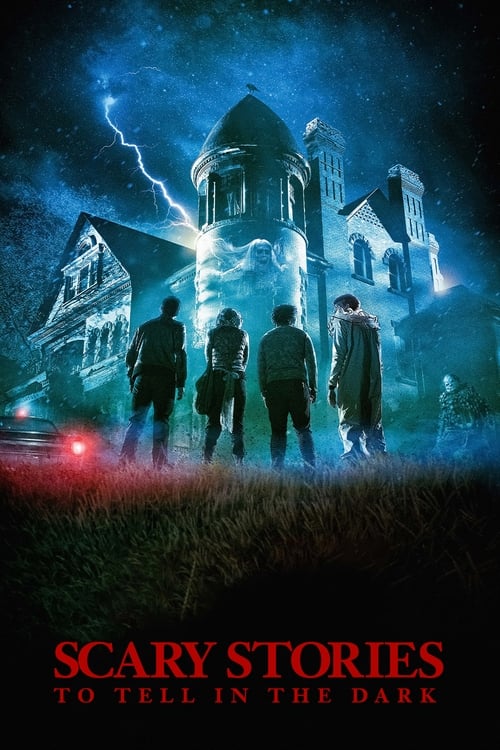
Scary Stories to Tell in the Dark
Mill Valley, Pennsylvania, Halloween night, 1968. After playing a joke on a school bully, Stella and her friends decide to sneak into a supposedly haunted house that once belonged to the powerful Bellows family, unleashing dark forces that they will be unable to control.
Despite a mid-range budget of $25.0M, Scary Stories to Tell in the Dark became a commercial success, earning $104.5M worldwide—a 318% return.
5 wins & 6 nominations


Plot Structure
Story beats plotted across runtime


Narrative Arc
Emotional journey through the story's key moments
Story Circle
Blueprint 15-beat structure
Arcplot Score Breakdown
Weighted: Precision (70%) + Arc (15%) + Theme (15%)
Scary Stories to Tell in the Dark (2019) exemplifies meticulously timed story structure, characteristic of André Øvredal's storytelling approach. This structural analysis examines how the film's 15-point plot structure maps to proven narrative frameworks across 1 hour and 48 minutes. With an Arcplot score of 7.3, the film balances conventional beats with creative variation.
Characters
Cast & narrative archetypes

Stella Nicholls
Auggie Hilderbrandt
Chuck Steinberg
Ramón Morales
Ruth Steinberg
Tommy Milner
Main Cast & Characters
Stella Nicholls
Played by Zoe Colletti
An aspiring horror writer who discovers Sarah Bellows' book and becomes the group's leader in fighting the supernatural threats.
Auggie Hilderbrandt
Played by Gabriel Rush
Stella's loyal best friend who uses humor to cope with fear and supports the group throughout their ordeal.
Chuck Steinberg
Played by Austin Zajur
The third member of the friend group, a more cautious teen who becomes one of the first victims of Sarah's stories.
Ramón Morales
Played by Michael Garza
A mysterious drifter who joins the group and has a personal connection to the Bellows family tragedy.
Ruth Steinberg
Played by Natalie Ganzhorn
Chuck's younger sister who gets pulled into the supernatural nightmare and must face her own terrifying story.
Tommy Milner
Played by Austin Abrams
A jock who bullies the main characters and becomes one of the early victims of Sarah's deadly stories.
Structural Analysis
The Status Quo at 1 minutes (1% through the runtime) establishes Halloween night 1968 in Mill Valley, Pennsylvania. Stella, an aspiring horror writer, prepares for trick-or-treating with her friends Auggie and Chuck, establishing her as a lonely outcast who finds solace in scary stories while living with her emotionally distant father.. Of particular interest, this early placement immediately immerses viewers in the story world.
The inciting incident occurs at 13 minutes when Hiding from Tommy in the Bellows haunted house, Stella discovers Sarah Bellows' hidden room and finds her book of scary stories. Despite warnings carved into the walls, Stella takes the book, awakening Sarah's supernatural curse.. At 12% through the film, this Disruption aligns precisely with traditional story structure. This beat shifts the emotional landscape, launching the protagonist into the central conflict.
The First Threshold at 27 minutes marks the transition into Act II, occurring at 25% of the runtime. This reveals the protagonist's commitment to Tommy is killed by Harold the scarecrow, exactly as the book wrote. Stella realizes the stories are becoming real and targeting people she knows. She chooses to investigate rather than destroy the book, committing to understanding Sarah's mystery to stop the curse., moving from reaction to action.
At 54 minutes, the Midpoint arrives at 50% of the runtime—precisely centered, creating perfect narrative symmetry. Structural examination shows that this crucial beat Auggie is consumed by the Pale Lady and vanishes completely - not killed but erased from existence. The stakes become existential: the book doesn't just kill, it unmakes people entirely. Stella realizes they cannot simply survive; they must actively defeat Sarah or everyone will be erased., fundamentally raising what's at risk. The emotional intensity shifts, dividing the narrative into clear before-and-after phases.
The Collapse moment at 81 minutes (75% through) represents the emotional nadir. Here, Ramón is captured by the Toe Monster story. Stella has lost everyone - Auggie, Chuck, and now Ramón are all gone. She's completely alone, her father is still emotionally absent, and the book has a new story with her name appearing on the page. She faces erasure from existence., indicates the protagonist at their lowest point. This beat's placement in the final quarter sets up the climactic reversal.
The Second Threshold at 86 minutes initiates the final act resolution at 80% of the runtime. Stella realizes the key: Sarah was silenced, never allowed to tell her own story. Stella decides to give Sarah what she never had - someone to listen. Instead of running from the story being written about her, Stella chooses to enter the book's world and confront Sarah directly., demonstrating the transformation achieved throughout the journey.
Emotional Journey
Scary Stories to Tell in the Dark's emotional architecture traces a deliberate progression across 15 carefully calibrated beats.
Narrative Framework
This structural analysis employs proven narrative structure principles that track dramatic progression. By mapping Scary Stories to Tell in the Dark against these established plot points, we can identify how André Øvredal utilizes or subverts traditional narrative conventions. The plot point approach reveals not only adherence to structural principles but also creative choices that distinguish Scary Stories to Tell in the Dark within the horror genre.
André Øvredal's Structural Approach
Among the 3 André Øvredal films analyzed on Arcplot, the average structural score is 7.2, reflecting strong command of classical structure. Scary Stories to Tell in the Dark represents one of the director's most structurally precise works. For comparative analysis, explore the complete André Øvredal filmography.
Comparative Analysis
Additional horror films include Thinner, A Nightmare on Elm Street and Mary Reilly. For more André Øvredal analyses, see The Last Voyage of the Demeter, The Autopsy of Jane Doe.
Plot Points by Act
Act I
SetupStatus Quo
Halloween night 1968 in Mill Valley, Pennsylvania. Stella, an aspiring horror writer, prepares for trick-or-treating with her friends Auggie and Chuck, establishing her as a lonely outcast who finds solace in scary stories while living with her emotionally distant father.
Theme
Stella tells her friends about the legend of Sarah Bellows and the Bellows mansion: "Stories hurt. Stories heal. If we repeat them often enough, they become real." This establishes the film's core theme about the power of stories to shape reality.
Worldbuilding
The group pranks local bully Tommy Milner on Halloween, then escapes to a drive-in movie where they meet drifter Ramón. We learn Stella's mother abandoned the family, her father struggles to connect, and the town lives under the shadow of the Bellows family legacy and their haunted mansion.
Disruption
Hiding from Tommy in the Bellows haunted house, Stella discovers Sarah Bellows' hidden room and finds her book of scary stories. Despite warnings carved into the walls, Stella takes the book, awakening Sarah's supernatural curse.
Resistance
Stella becomes obsessed with Sarah's book, researching the Bellows family history. Ramón, a draft dodger hiding from Vietnam, bonds with Stella over shared feelings of being outsiders. The book begins writing new stories by itself, with Tommy's name appearing as the first victim.
Act II
ConfrontationFirst Threshold
Tommy is killed by Harold the scarecrow, exactly as the book wrote. Stella realizes the stories are becoming real and targeting people she knows. She chooses to investigate rather than destroy the book, committing to understanding Sarah's mystery to stop the curse.
Mirror World
Stella and Ramón's relationship deepens as he shares his own painful story of fleeing the draft after his brother died in Vietnam. Their parallel traumas - her abandonment, his loss - create an emotional bond. Ramón represents finding your voice and choosing your own story.
Premise
The horror unfolds as Sarah's stories claim victims one by one. Auggie is attacked by the Pale Lady in a nightmare maze. Chuck is pursued by the Jangly Man. Each story manifests the victim's deepest fears. Stella races to uncover Sarah's history at the hospital and asylum records.
Midpoint
Auggie is consumed by the Pale Lady and vanishes completely - not killed but erased from existence. The stakes become existential: the book doesn't just kill, it unmakes people entirely. Stella realizes they cannot simply survive; they must actively defeat Sarah or everyone will be erased.
Opposition
Stella uncovers the truth: Sarah was wrongly blamed for poisoning children when it was actually her family. The Bellows locked her away and silenced her. Meanwhile, Chuck is taken by the Jangly Man. Ramón is targeted next. Ruth, Chuck's sister, joins the fight. The police don't believe them.
Collapse
Ramón is captured by the Toe Monster story. Stella has lost everyone - Auggie, Chuck, and now Ramón are all gone. She's completely alone, her father is still emotionally absent, and the book has a new story with her name appearing on the page. She faces erasure from existence.
Crisis
Stella confronts her deepest fear: that she's unlovable and will be abandoned like her mother left her. The book writes a story about her mother returning, weaponizing her trauma. Stella must face the ghost of her abandonment while Ruth tries to help but is powerless.
Act III
ResolutionSecond Threshold
Stella realizes the key: Sarah was silenced, never allowed to tell her own story. Stella decides to give Sarah what she never had - someone to listen. Instead of running from the story being written about her, Stella chooses to enter the book's world and confront Sarah directly.
Synthesis
Stella enters Sarah's realm within the book. She tells Sarah that she believes her, that she knows Sarah was innocent and was silenced by her family. Stella gives Sarah what she needed: acknowledgment and a voice. Sarah stops the curse, but warns that the friends taken cannot be returned yet - Stella must find a way.
Transformation
Stella, no longer the isolated girl hiding in others' stories, commits to writing her own. She says goodbye to her father with new understanding, and sets off with Ruth to find a way to bring their friends back. The storyteller becomes the hero of her own narrative, transformed from victim to active protagonist.