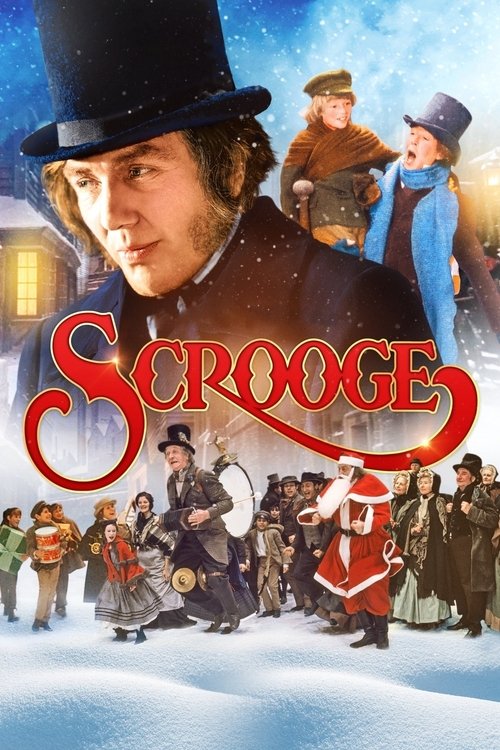
Scrooge
A musical adaptation of Charles Dickens' classic ghost tale starring Albert Finney.
Working with a tight budget of $5.0M, the film achieved a respectable showing with $6.0M in global revenue (+20% profit margin).
Nominated for 4 Oscars. 1 win & 10 nominations


Plot Structure
Story beats plotted across runtime


Narrative Arc
Emotional journey through the story's key moments
Story Circle
Blueprint 15-beat structure
Arcplot Score Breakdown
Weighted: Precision (70%) + Arc (15%) + Theme (15%)
Scrooge (1970) exhibits strategically placed narrative design, characteristic of Ronald Neame's storytelling approach. This structural analysis examines how the film's 15-point plot structure maps to proven narrative frameworks across 1 hour and 53 minutes. With an Arcplot score of 6.8, the film balances conventional beats with creative variation.
Characters
Cast & narrative archetypes

Ebenezer Scrooge
Bob Cratchit
Ghost of Jacob Marley
Ghost of Christmas Past
Ghost of Christmas Present
Fred
Belle
Tiny Tim
Main Cast & Characters
Ebenezer Scrooge
Played by Albert Finney
A miserly businessman transformed by ghostly visits on Christmas Eve into a generous and kind-hearted man.
Bob Cratchit
Played by David Collings
Scrooge's underpaid, long-suffering clerk who remains cheerful and devoted to his family despite poverty.
Ghost of Jacob Marley
Played by Alec Guinness
Scrooge's deceased business partner, condemned to wander in chains, who warns Scrooge to change his ways.
Ghost of Christmas Past
Played by Edith Evans
An ethereal spirit who shows Scrooge his lonely childhood and lost love, revealing the origins of his bitterness.
Ghost of Christmas Present
Played by Kenneth More
A jovial giant who shows Scrooge the joy and struggles of those around him in the present day.
Fred
Played by Michael Medwin
Scrooge's cheerful nephew who persistently invites his uncle to Christmas dinner despite repeated rejections.
Belle
Played by Suzanne Neve
Scrooge's former fiancée who left him when his love of money surpassed his love for her.
Tiny Tim
Played by Richard Beaumont
Bob Cratchit's frail young son whose innocence and potential death deeply affects Scrooge.
Structural Analysis
The Status Quo at 1 minutes (1% through the runtime) establishes Scrooge is established as a cruel, miserly businessman on Christmas Eve, demanding rent from poor tenants and refusing charity collectors. His cold-hearted nature and isolation from humanity are on full display.. Of particular interest, this early placement immediately immerses viewers in the story world.
The inciting incident occurs at 14 minutes when Marley's ghost appears to Scrooge in chains, warning him of his doom if he doesn't change his ways. Marley announces that three spirits will visit Scrooge this night—his last chance for redemption.. At 12% through the film, this Disruption aligns precisely with traditional story structure. This beat shifts the emotional landscape, launching the protagonist into the central conflict.
The First Threshold at 28 minutes marks the transition into Act II, occurring at 25% of the runtime. This shows the protagonist's commitment to The Ghost of Christmas Past arrives and compels Scrooge to journey into his own history. Scrooge reluctantly agrees to go with the spirit, crossing the threshold from his present reality into his past., moving from reaction to action.
At 57 minutes, the Midpoint arrives at 50% of the runtime—precisely centered, creating perfect narrative symmetry. Structural examination shows that this crucial beat The Ghost of Christmas Present reveals that Tiny Tim will die if the future remains unchanged. This false defeat devastates Scrooge—the stakes are raised from his own damnation to the death of an innocent child. The fun is over., fundamentally raising what's at risk. The emotional intensity shifts, dividing the narrative into clear before-and-after phases.
The Collapse moment at 85 minutes (75% through) represents the emotional nadir. Here, Scrooge discovers his own neglected grave—the unmourned dead man is himself. The ultimate "whiff of death" is literal: his own tombstone and the revelation that he will die alone, hated, and forgotten., indicates the protagonist at their lowest point. This beat's placement in the final quarter sets up the climactic reversal.
The Second Threshold at 90 minutes initiates the final act resolution at 80% of the runtime. Scrooge awakens in his bed on Christmas morning, alive and given a second chance. The synthesis occurs: he combines his business acumen and resources with newfound compassion and joy. He knows exactly what he must do., demonstrating the transformation achieved throughout the journey.
Emotional Journey
Scrooge's emotional architecture traces a deliberate progression across 15 carefully calibrated beats.
Narrative Framework
This structural analysis employs structural analysis methodology used to understand storytelling architecture. By mapping Scrooge against these established plot points, we can identify how Ronald Neame utilizes or subverts traditional narrative conventions. The plot point approach reveals not only adherence to structural principles but also creative choices that distinguish Scrooge within the fantasy genre.
Ronald Neame's Structural Approach
Among the 4 Ronald Neame films analyzed on Arcplot, the average structural score is 7.1, reflecting strong command of classical structure. Scrooge takes a more unconventional approach compared to the director's typical style. For comparative analysis, explore the complete Ronald Neame filmography.
Comparative Analysis
Additional fantasy films include Thinner, Ella Enchanted and Conan the Barbarian. For more Ronald Neame analyses, see Meteor, The Poseidon Adventure and First Monday in October.
Plot Points by Act
Act I
SetupStatus Quo
Scrooge is established as a cruel, miserly businessman on Christmas Eve, demanding rent from poor tenants and refusing charity collectors. His cold-hearted nature and isolation from humanity are on full display.
Theme
Fred, Scrooge's nephew, states the theme when he insists that Christmas is a time for kindness and generosity, even if Scrooge mocks him. The implicit question: Can a man change his nature, or is he doomed to his choices?
Worldbuilding
Scrooge's world is established through his interactions: dismissing carolers, rejecting his nephew's dinner invitation, grudgingly giving Bob Cratchit Christmas day off, refusing charity. His partnership with the deceased Marley and his complete devotion to money over human connection is revealed.
Disruption
Marley's ghost appears to Scrooge in chains, warning him of his doom if he doesn't change his ways. Marley announces that three spirits will visit Scrooge this night—his last chance for redemption.
Resistance
Scrooge resists and debates what he's witnessed. He tries to rationalize Marley's ghost as indigestion. He prepares for bed anxiously, oscillating between dismissal and dread as he awaits the first spirit.
Act II
ConfrontationFirst Threshold
The Ghost of Christmas Past arrives and compels Scrooge to journey into his own history. Scrooge reluctantly agrees to go with the spirit, crossing the threshold from his present reality into his past.
Mirror World
Scrooge witnesses his younger self at Fezziwig's party, seeing the joy and human connection he once knew. Belle, his lost love, represents the thematic mirror—the life of love and warmth he rejected for gold.
Premise
The "promise of the premise"—Scrooge tours his past with the Ghost of Christmas Past, then his present with the Ghost of Christmas Present. He sees the Cratchits' humble joy, Tiny Tim's precarious health, and Fred's party where guests mock but also pity him.
Midpoint
The Ghost of Christmas Present reveals that Tiny Tim will die if the future remains unchanged. This false defeat devastates Scrooge—the stakes are raised from his own damnation to the death of an innocent child. The fun is over.
Opposition
The Ghost of Christmas Yet to Come appears as a silent, ominous figure. Scrooge is shown increasingly dark visions: businessmen casually discussing a death, his possessions being stolen and sold, the Cratchits mourning Tiny Tim. The pressure intensifies as Scrooge realizes someone has died unmourned.
Collapse
Scrooge discovers his own neglected grave—the unmourned dead man is himself. The ultimate "whiff of death" is literal: his own tombstone and the revelation that he will die alone, hated, and forgotten.
Crisis
Scrooge falls into his grave, experiencing his own death and damnation. In this dark night of the soul, he desperately pleads for another chance, vowing to honor Christmas and change his ways. He grasps at hope in absolute despair.
Act III
ResolutionSecond Threshold
Scrooge awakens in his bed on Christmas morning, alive and given a second chance. The synthesis occurs: he combines his business acumen and resources with newfound compassion and joy. He knows exactly what he must do.
Synthesis
Scrooge executes his transformation: buying the prize turkey for the Cratchits, donating generously to charity, attending Fred's Christmas dinner, and ultimately raising Bob Cratchit's salary and becoming a second father to Tiny Tim. He spreads joy throughout London.
Transformation
Scrooge dances through the streets with children, fully embraced by the community he once shunned. The closing image mirrors the opening: same man, same city, but now radiating warmth, generosity, and human connection—a complete transformation.